The dog who disappeared for nine years, then came home
Doges Editorial · 2026-05-16 · 5 min read
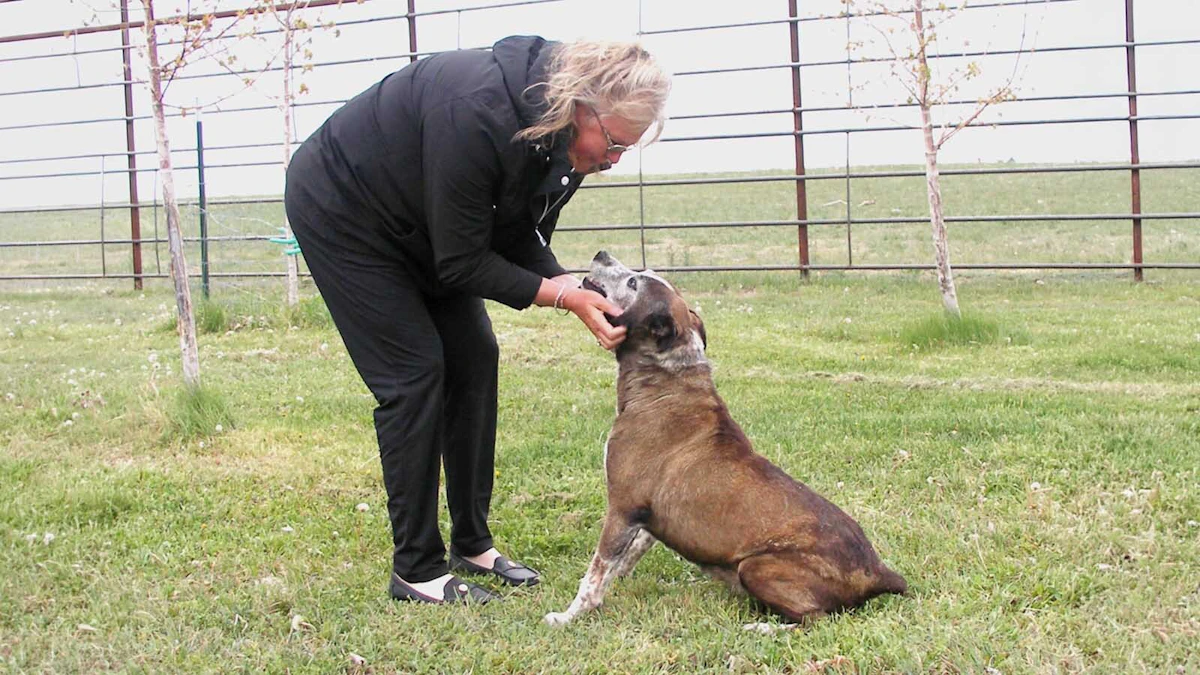
A Gillette, Wyoming family spent nearly a decade grieving a blue heeler named Ziva. Then, at 4:30 in the morning, a stranger spotted a stray dog a mile from home — and the microchip told the whole story.
It was 4:30 in the morning on March 27 when Lyndsey Bailey slowed her car on Union Chapel Road near Gillette, Wyoming. She was dropping her son off for an early bus to a track meet when she saw something moving along the shoulder of the road — a dog, old, limping, clearly having traveled some distance. She thought to herself: I hope that dog gets home. She had no idea the dog was already trying.
Nine years of not-knowing
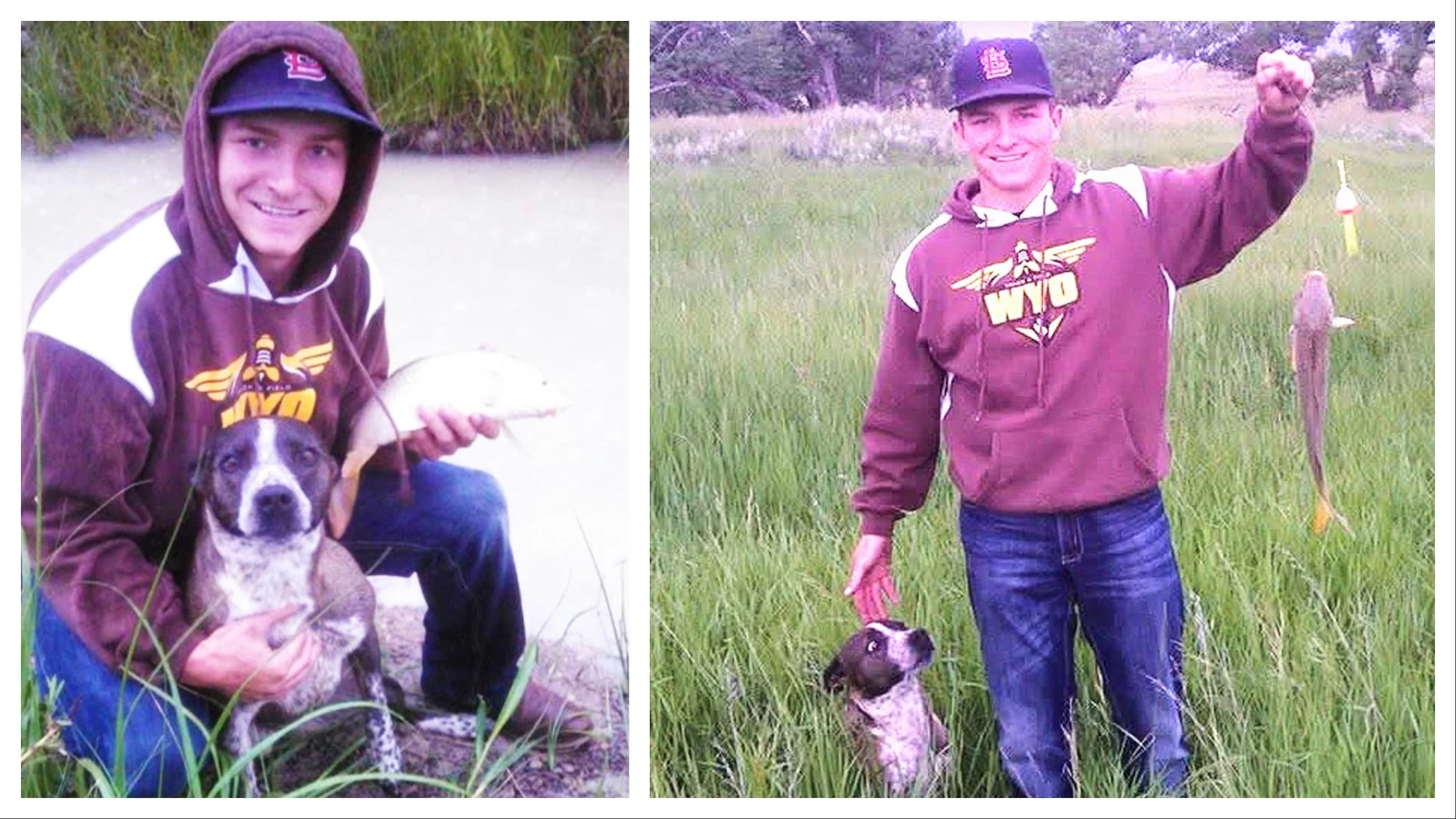
Ziva arrived as an 8-week-old puppy in 2012 — a blue heeler out of a pit bull, with a unique grulla coat and a white-banded face. She was the pick of her litter. Clark and Vicki Kissack, who run an oil field business 11 miles outside of Gillette, brought her home to their two sons and their small ranch.
She fell hardest for Justin, who was 17 at the time. They went fishing together. She went to college with him at Chadron State. Clark had a special whistle just for her. Most mornings he'd ask the house: "Wheeerrrrre's Justin?" — and Ziva would barrel down the stairs and pounce on her person. Sometimes the family had to spell Justin's name out loud just to keep her from losing her mind.
Then, in 2016, Ziva disappeared. She came back once — triumphantly, dragging a rope she'd chewed in half — and then vanished again. This time, she didn't come back.
The Kissacks searched for weeks: drove roads, checked ditches, posted flyers. Nothing. Weeks became months. Clark became convinced she'd been shot or hit on the highway. Vicki couldn't believe it. "She was tenacious and very athletic," she told Cowboy State Daily. "Because she came back the first time, I figured that if she could come back, she would."
But time passed in the way time does — the family built a new house, Clark and Vicki became grandparents — and eventually, a decade had gone by. The grief had compressed itself into something smaller, quieter, and locked away. Vicki had tried adopting another dog after Ziva disappeared. She gave the dog up within days. She couldn't do it.
The Facebook post, 23 minutes old
On a March morning this year, Clark and Vicki were having their usual coffee when Clark scrolled through a local Facebook lost-and-found group. Someone had posted a photo of a dog picked up along the road. The post was 23 minutes old. The dog had been found within sight of the Kissacks' kitchen window.
"He showed it to me and said, 'Does this dog look familiar?'" Vicki recalled. It was unmistakably Ziva.
I was frantic. I replied, 'That's my dog that's been missing for 10 years!'
— Vicki Kissack, owner
By the time the poster called back, county animal control had already collected the dog. So began the harder problem: how do you prove, after a decade, that a stray is yours?
Vicki called both local vet clinics. She couldn't remember whether they'd chipped Ziva after that first disappearance — they'd discussed it, she and Clark, after she came back the first time. Then a call came through from a clinic. They had. The microchip manufacturer's name? Home Again.
An old dog, a bad hip, a wagging stub
Before she went to pick Ziva up, Vicki told the shelter she'd had time to think: if a family with children had taken care of her for the past decade, she would step aside. Nobody called to claim her.
Ziva was 14 now. Deaf. Her eyesight was blurry. Her hips were bad. She was deeply dehydrated and couldn't stop pacing. She wouldn't eat or drink. When Vicki got down on her knees and called her name, Ziva walked the other direction.
"I knew rationally in my head that 10 years had gone by," Vicki said. "But in my heart, I guess I expected to see the dog I'd lost — not an elderly animal that didn't know me."
Desperate for any sign of recognition, Vicki drove Ziva back to their old house — the one she'd lived in as a young dog, the house with the stairs she'd bounded down every morning to find Justin. She helped the arthritic old dog up the steps.
She sniffed around and then turned to look at me and wagged her stub. She remembered the stairs.
— Vicki Kissack
She lives like a queen now
Six weeks on, Ziva refuses to be more than a step away from Vicki. She stands on her foot. Leans against her leg. If Vicki leaves town overnight, Ziva stops eating and grows ill. So now Vicki brings her slow old companion along, wherever she goes.
She knows she's with her family now. Clark and I decided she'll live the rest of her life like a queen.
— Vicki Kissack
Vicki is the general manager of three funeral homes in northeast Wyoming. She spends her days beside families in the worst hours of their lives. She knows grief the way professionals learn it — through other people's faces.
When Ziva came home, something flooded back that Vicki hadn't known she was carrying. "I'd never realized how much emotion I'd repressed over this," she said. "All I knew was that I hadn't allowed myself to attach to a dog ever since."
What Ziva leaves behind
This September, Vicki is organizing a collective pet memorial service — specifically for children, to give them space to grieve animals they've lost, among adults who take that grief seriously. She's thinking about bringing Ziva to it. "I have felt what you feel," she plans to say.
Ziva doesn't know any of this, of course. She doesn't know that she walked back toward a house she'd last seen as a young dog and her body remembered a staircase. She doesn't know that a stranger slowing their car at 4:30 in the morning started a chain of events that ended with a microchip and a family on their knees.
What she knows is that every morning, there's a foot to stand on and a leg to lean against, and the coffee is being poured, and no one is going anywhere.