Andy goes everywhere with him now: how a golden retriever is giving a retired Army colonel his life back
Doges Editorial · 2026-05-15 · 5 min read
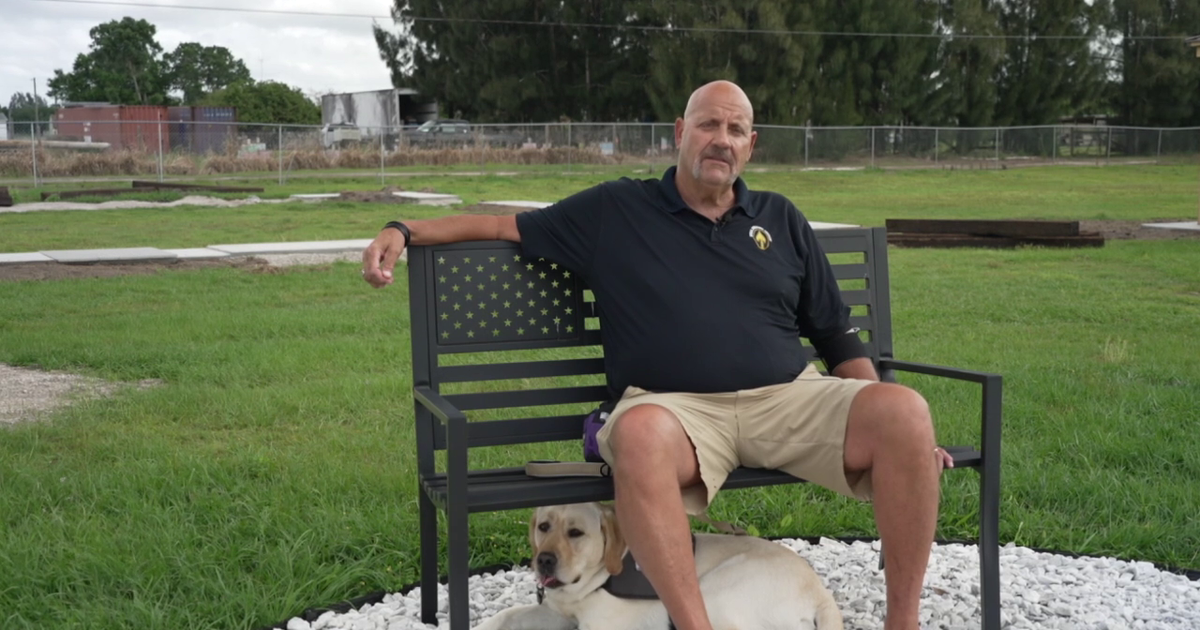
After 33 years in uniform, Col. Peri Anest came home carrying things that didn't show on any physical exam. A golden retriever named Andy — and the Florida nonprofit that trained him — is changing that.
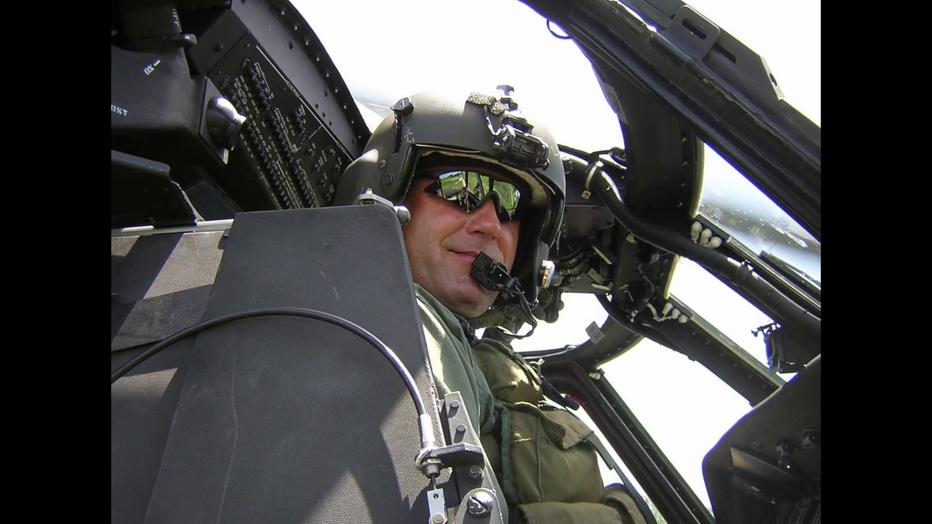
The nightmare doesn't announce itself. It arrives the way the worst things do — without warning, without regard for how many years have passed, without interest in rank or experience or the decorations on the wall. For Peri Anest, a retired U.S. Army colonel who gave 33 years of his life to the military and finished his career at U.S. Special Operations Command, the reckoning came after the uniform came off.
He had deployed around the world. He had led soldiers through things that needed leading through. He came home, and eventually — not immediately, but eventually — the things he had survived came home with him.
It didn't hit me right away. Some of the things, it took a while to manifest. Things that I can't unsee anymore, I cannot unhear, I cannot unsmell.
— Col. Peri Anest (Ret.), U.S. Army
The invisible weight of service
Post-traumatic stress doesn't respect rank or years of service. It doesn't disappear when the uniform comes off. For many veterans, the hardest battles begin only after discharge — in grocery stores, at crowded events, in bedrooms at 3 a.m. when a nervous system trained for vigilance keeps doing its job long after the threat has passed.
Anest eventually found his way to Valor Service Dogs, a nonprofit based near Wimauma, Florida, that trains golden retrievers and other breeds to recognize the specific signs of anxiety and PTSD in their veteran handlers — and to physically interrupt those episodes before they cascade. Founded a decade ago by Carol Lansford, the organization has now graduated 47 dog-and-veteran pairs.
That number, 47, represents 47 people who went from fighting invisible battles alone to having a trained partner at their side around the clock.
Meet Andy
Anest was paired with Andy, a golden retriever who came to him after approximately two years of specialized training. The dogs in the Valor program aren't emotional support animals in the general sense. They're trained to a specific and demanding standard: notice the behavioral and physiological cues that precede an anxiety episode — the breathing change, the muscle tension, the particular way the eyes begin tracking exits — and intervene before the spiral starts.
At night, Andy interrupts Anest's nightmares. In public spaces, he watches for the body-language signs that precede a panic response and grounds his handler before it takes hold. He goes to the grocery store. He attends crowded events. He makes it possible for a man who has spent decades conditioning his nervous system for the worst to exist, for a while, in something closer to ordinary.
It allows me to get out and do life again, live life.
— Col. Peri Anest (Ret.)
How the training actually works
The mechanism behind service dogs for PTSD is better understood now than it was even a decade ago. Research has shown that the presence of a trained dog can interrupt the threat-detection loop of a hyperactivated nervous system — not by suppressing it, but by introducing new sensory input the brain processes as safe. A dog's weight, breath, and proximity can all serve as neurological anchors in a moment of escalation.
What Valor trains dogs to do goes further: they become active monitors, watching the handler specifically, noticing before the handler does. For someone whose nervous system has been calibrated for years to expect the worst, having a second observer — one that responds to you and only you — changes the equation. You don't have to keep your guard up alone.
Andy now watches over Anest throughout the day. The grocery store is accessible again. Crowded events are survivable without always scanning for exits. The nightmares, when they come, are shorter.
The woman behind the mission
Carol Lansford founded Valor Service Dogs ten years ago. The work is slow by design — each dog requires approximately two years of training before placement, and the matching process is specific to the individual veteran. Lansford told FOX 13 News, which reported on the program in a story published May 11, 2026, that many veterans struggle in the transition to civilian life partly because they finally have to face trauma they spent years pushing aside while serving.
At any given time, there are veterans waiting. The program can be reached at valorservicedogs.org. The wait is real. The dogs are worth it.
Walks and the shape of an ordinary day
One thing that rarely appears in coverage of service dog programs is the role of daily movement. The twice-daily walk around the block. The morning routine that structures both handler and dog. The physical rhythm of leash and destination that gives the day a shape when everything else might feel formless.
Dogs, by their nature, enforce routine. They need walks at predictable times, regardless of what kind of night it was. For a nervous system still recalibrating from years of operational tempo, that built-in structure — the dog's own needs as an organizing principle — is itself part of the recovery. The body wants to move. The dog insists on it.
Anest mentions the grocery store and crowded events when he talks about Andy's impact. But the quieter version of what Andy provides lives in the ordinary hours: the morning walks, the steady rhythm of two lives moving together through a neighborhood, the way a leash in your hand can feel like an anchor when you need one.
A message for the ones still waiting
Anest is candid about the time he lost before he found Andy. The years spent believing he could manage it alone. The specific military-culture weight of asking for help, of acknowledging that something needed help at all.
Don't be like me and wait and think you can do it yourself. Pursue that avenue if you can for a service dog. It will change your life. It changed mine.
— Col. Peri Anest (Ret.)
There are 47 other veterans who could tell a version of this story. Forty-seven dogs who were trained to watch over someone in the specific way that turns out to matter most: not performing comfort on command, but paying attention continuously, noticing what the handler can't see about themselves, and showing up — leash on, nose down, eyes open — for every walk, every nightmare, every ordinary Tuesday that turns hard without warning.