A few minutes of tug-of-war did what treats never could
Doges Editorial · 2026-06-10 · 4 min read
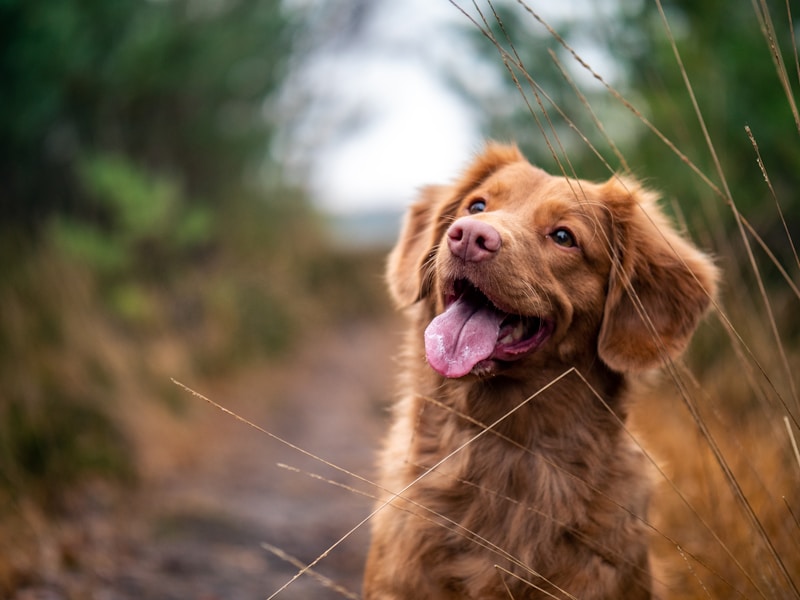
A randomized study from Linköping University found that a few minutes of interactive play each day — tug-of-war, hide-and-seek, peekaboo — measurably strengthened the emotional bond between owners and their dogs. Extra treat-based training did nothing of the sort.
Somewhere in Sweden, a researcher named Lina Roth sat down with a deceptively simple question: if you play more with your dog, do you actually feel closer to them? Not in a "well, obviously" way — in a measurable, randomized, control-group kind of way. The kind of way that lets you point at a chart and say: this caused that. The answer, published in Royal Society Open Science on April 22, 2026 by Roth and colleagues Per Jensen and Caisa Persson-Werme at Linköping University (DOI: 10.1098/rsos.252294), was yes. And the difference maker wasn't what most people would have guessed.
Three groups, four weeks, one surprise
Roth and her colleagues recruited 1,667 dog-owner pairs from across Sweden and asked them all to complete a detailed questionnaire about their relationship with their dog — how often they brought the dog along when visiting friends, whether they talked to the dog about things they wouldn't tell anyone else, how frequently they thought of dog ownership as more trouble than it was worth. The survey was measuring something researchers call emotional bond, and baseline scores varied widely across the group.
The researchers then divided the pairs into three groups. One was asked to play with their dogs more than usual — a few minutes each day, over four weeks. A second was asked to do more treat-based training: extra commands and rewards, structured sessions in the kitchen or the backyard. A third group was the control, carrying on exactly as before. After four weeks, every pair answered the same questionnaire again.
Why throwing a ball doesn't count
Here is the critical detail: the play had to be interactive. Roth was specific about what she meant — and what she didn't mean. Not fetch. Not tossing a ball while scrolling your phone on the other side of the yard. The games she prescribed were tug-of-war, rough-and-tumble wrestling, chasing each other, hide-and-seek, peekaboo, and what the study describes as teasing the dog gently with your fingers — the kind of play that requires both parties to pay attention, react, and improvise. Both of you, present.
Just throwing a ball isn't enough. As we were after the social interaction between dog and human, the games we proposed were for example tug-of-war, rough and tumble, chasing each other, hide-and-seek, peekaboo or teasing the dog a little with your fingers. You don't have to keep at it for long, it's more about paying attention to your dog's behaviour. A few minutes every now and then seems to make a big difference.
— Lina Roth, senior associate professor of ethology, Linköping University
The biology behind this distinction points toward oxytocin. A 2015 study in Science by Takefumi Nagasawa and colleagues at Azabu University found that sustained mutual gaze between dogs and their owners elevated oxytocin in both species — the same hormone that facilitates bonding between mothers and newborns and between humans more broadly. (doi:10.1126/science.1261022) Interactive play creates the same reciprocal loop: you initiate, the dog responds; the dog initiates, you react. Fetch routes the dog's attention toward a ball and away from you. The social circuit — the one that appears to trigger the bonding chemistry — never fully closes.
What the data showed
When the questionnaires came back, the play group had improved significantly on the emotional bond scale. The treat-training group showed no change compared to baseline. The control group showed no change either. Four weeks. A few minutes each day. Tug-of-war.
"This is a great result that you can only dream of," Roth said in a statement accompanying the study. She and her co-authors also noted that owners in the play group reported something the questionnaire didn't directly measure: their dogs seemed to view them differently. The dogs took more initiative in seeking interaction. They chose to be nearby more often. Adult dogs, uniquely among domesticated animals, maintain full play behavior throughout their entire lives — a trait preserved through selective breeding that wolves and other canids abandon at maturity. That persistent drive may be one of the key adaptations that made dogs such effective human partners: a social bridge, available whenever you pick up the other end of the rope.
The rescue dog problem
One reason this study matters beyond the obvious is the context Roth chose to frame it in. A significant number of dogs aren't raised from puppyhood by the people who end up owning them. Rescue dogs, re-homed dogs, dogs that pass through multiple households — these animals miss what ethologists call the socialization window, the critical early period when bonds form most easily and most deeply. In dogs, that primary window closes at roughly three to twelve weeks of age, with some researchers placing its effects as late as sixteen weeks — a tight span that most rescue dogs have long since passed when they meet their new owners.
The traditional wisdom has been that this window, once missed, is simply gone. You do the best you can. The study suggests otherwise: the bond is not fixed at birth. It can be built, deliberately, in adulthood — and play, specifically interactive play, is one of the more effective tools for building it.
Today, many dogs change homes in the middle of their lives. With rescue dogs, you don't have the advantage of growing up with your dog. This means that you miss the so-called socialisation window early in your puppy's life, which is important for relationship building. And then play can be a very good way to build a new good relationship even with adult dogs.
— Lina Roth, senior associate professor of ethology, Linköping University
What this looks like on an ordinary morning
Of the original 1,667 pairs, 408 generated fully analyzable data — the threshold being a documented increase in play time on at least eight of the 28 days. That's a rigorous standard. It still produced a statistically significant effect on emotional bond. The study isn't prescribing daily structured play sessions. It's describing minutes — unscheduled, low-stakes minutes where both parties are genuinely in it together.
Tug-of-war before work. A round of hide-and-seek while dinner cooks. Running in opposite directions across the yard and seeing who gets there first. The games don't need to last long. They do need to be real — you, actually there, watching the dog, responding to what they do.
There is a particular kind of attention that play requires, and that a dog can feel the absence of. A walk where you're mentally somewhere else is different from a walk where you're watching to see which smell stops them cold, or nudging them toward a puddle to see what they do. Your dog is already watching you for the first sign that you're open to it. Tomorrow morning, between the leash and the coffee, you might try picking up the other end.