What happens in your body when a dog sits beside you
Doges Editorial · 2026-05-15 · 5 min read
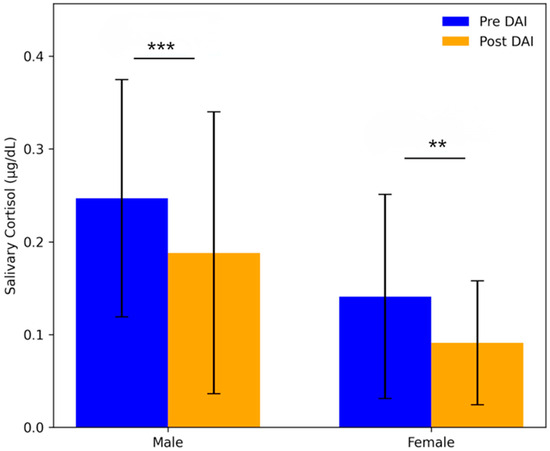
A peer-reviewed pilot study published May 6, 2026 measured cortisol in Ukrainian soldiers with PTSD before and after therapy dog visits. The results were significant — and harder to explain than just "dogs are comforting."
In a military hospital ward in Kyiv, sometime last year, a golden retriever named Jessie walked in between the beds. The floor was linoleum. The light was institutional. The men in those beds had PTSD — some couldn't sleep, some couldn't sit still, some had been running on emergency physiological mode for so long that their nervous systems had simply stopped knowing how to come down. Jessie settled beside one of them. She didn't do anything in particular. She just stayed.
Measuring what a dog does to the body
What happened next, in the aggregate, across dozens of sessions in hospitals in both Kyiv and Vinnyzja, is now documented in a peer-reviewed pilot study published May 6, 2026 in the journal Psychiatry International. Researchers Sandra Foltin, Svitlana Kostenko, and Lisa Maria Glenk measured salivary cortisol — the body's primary stress hormone — in Ukrainian military personnel with PTSD before and after visits from therapy dogs. The result was statistically significant: cortisol levels dropped, measurably, after the dogs came through.
Cortisol is worth pausing on. In a healthy nervous system it peaks in the morning to help you wake up, then falls through the day in a predictable arc. In a body with PTSD, that arc breaks down — the system calibrated for crisis keeps running on crisis-mode even when the immediate threat is gone. Sleep fragments. Concentration scatters. Emotional regulation becomes exhausting, grinding work. There is no switch to flip.
But apparently there is a dog who helps.
The team behind the sessions
The Dog Helps to Live initiative is run by three Ukrainian women — Kateryna Strilets, Nadiia Torchuk, and Kateryna Havrylchenko — who before Russia's full-scale invasion worked as civilian dog trainers and breeders. When the war changed everything, they turned what they knew into something they could offer. Their team now includes five dogs: Jack Russell terriers Azart and O'Hara, and golden retrievers Jessie, Sandra, and Mike.
The golden retrievers are large, calm, silky-coated — the kind of dog that makes people want to sit down beside them. The Jack Russells bring different energy: spark, adaptability, the ability to reach patients who might find a quieter dog too easy to look past. Together, they cover a wide range. Soldiers experiencing severe emotional distress. Children in special schools. Patients in psychiatric wards.
These volunteer dogs are not medical therapy animals. They visit wounded soldiers, psychiatric hospitals, special schools, and inclusive resource centers not to treat anyone, but to sit nearby and gently break the silence.
— Rubryka, reporting on the Dog Helps to Live initiative
The dog who absorbs the room
Research has long shown what any therapy dog handler already suspects: when humans interact with dogs, cortisol tends to drop while oxytocin — the hormone associated with trust and social bonding — tends to rise. The dog appears to interrupt the stress response. What this costs the dog is a question the science is only beginning to ask seriously.
A companion study published in the journal Animals in January 2026 — from the same research group, this time measuring cortisol in the therapy dogs themselves — found something complicated. Ukrainian therapy dogs showed lower long-term cortisol markers than a German control group doing similar work under peaceful conditions. Their bodies appeared to have adapted to chronic stress over time. But the therapy sessions themselves — the actual work with patients — did not produce additional spikes.
The interpretation: the war environment had altered the dogs' physiological baseline. The job hadn't. The dogs were doing their work fine. It was everything surrounding the work that was slowly changing them.
After six months of this work, some of our dogs went gray.
— Dog Helps to Live handler, speaking to Rubryka
What the numbers don't explain
The cortisol data describes part of what happens in that hospital ward. It doesn't explain Jessie — why she settles without being asked, how she reads the particular stillness before tears, the quality of silence that means someone is about to speak for the first time in a while. Dogs don't have access to biometric readouts. They read something else.
The therapy teams in Kyiv and Vinnyzja had been doing this long enough that their dogs had developed what you might call a working knowledge of military hospitals. They knew the smell of the place. They knew how the days moved. They walked in like regulars — calm, purposeful, without the wariness of a dog encountering a new environment.
Something in that familiarity matters. A dog who has learned to trust the room gives the room something to trust back.
Presence as something measurable
The cortisol findings don't suggest dogs cure PTSD. They suggest something more modest and perhaps more interesting: that a dog sitting beside you can temporarily interrupt the body's stress response in a way that is real, repeatable, and measurable in saliva. For a nervous system that has been running on emergency power for months or years, even a temporary interruption is not a small thing.
Research shows that when people interact with dogs, levels of cortisol, the stress hormone, decrease. At the same time, oxytocin levels, the hormone linked to trust and social bonding, increase.
— Rubryka
The walk you already take
The dogs at the Ukrainian hospitals are doing something extraordinary in extraordinary conditions. But the underlying mechanism — the way a dog's presence shifts the body toward something more like safety — isn't reserved for war zones or therapy programs or peer-reviewed pilots. It happens in ordinary life, with ordinary dogs, every morning.
The next time you're carrying something hard — a difficult week, a sleepless night, the slow accumulated weight of things unresolved — pay attention to what happens when the leash goes on and your dog turns to look at you. Something in your body shifts. It's been happening your whole life together, quiet and unremarkable and real. We've been calling it love. Turns out it's also biochemistry.