The dog who never got a single application
Doges Editorial · 2026-06-18 · 5 min read
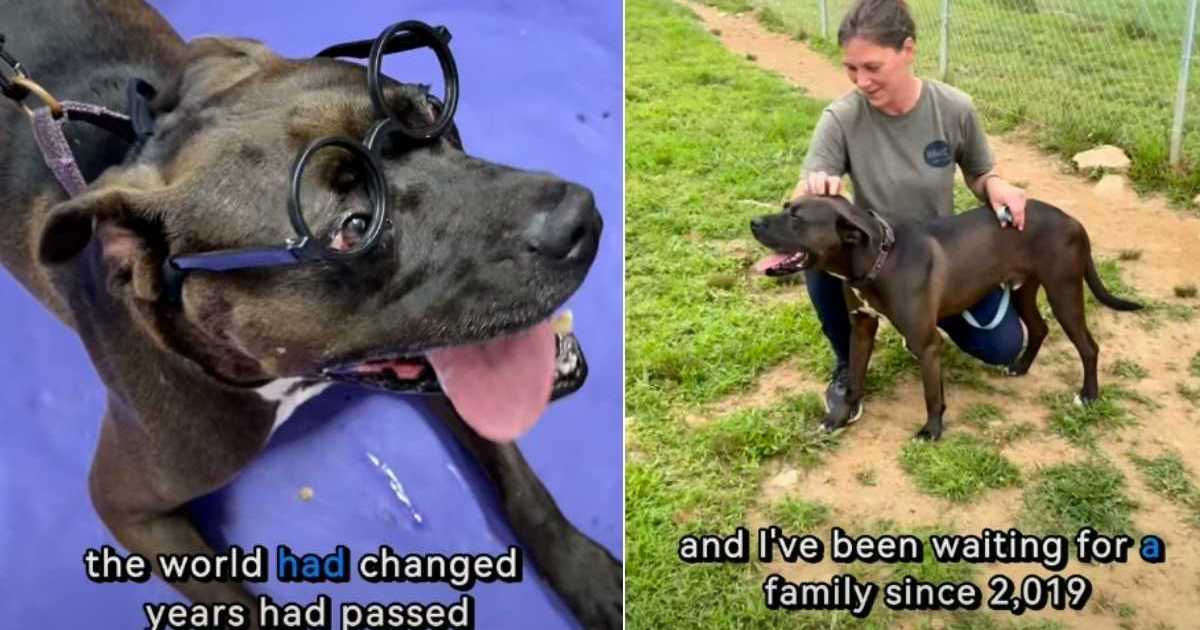
Logan has lived at a small rescue in the North Georgia mountains for over seven years. In all that time, not one person has ever submitted an adoption application for him.
The drive from Atlanta to Blairsville, Georgia takes about two hours, climbing up into the Blue Ridge foothills where the air changes and the towns get quieter. In early June, three people made that drive to meet a shelter dog they had never seen in person. They knew almost nothing about Logan except this: he had been at Castoff Pet Rescue for more than seven years, and in all that time, nobody had ever submitted an adoption application for him. Not one inquiry. Not a single email.
He was rescued from animal control when he was ten months old. He recently turned eight. The math takes a moment to sit with — he has spent his entire adult life inside a kennel in the mountains of northern Georgia, watching other dogs come and go, waiting for something that has not come.
What a volunteer found when she got there
Kendall had been visiting Logan for years. She had taken him on doggy day outs — a few hours of normal life outside the shelter, walking a real street, sitting in a real yard. She had photographed him, shared his photos online, written about him more times than she could count. Then she reached out to the Instagram account @sharing.lov, which spotlights overlooked rescue animals, and told them about Logan.
The account's creator drove north with two others: Erika from @rescueme_atl, and Diego, a pet photographer. They expected a difficult dog — anxious, reactive, carrying seven years of disappointment in his body language. They found something else entirely.
Logan is sweet, gentle, affectionate, and incredibly well-behaved. We were told he graduated from a prison training program and truly is the kind of dog most families dream of having. No one knows why Logan has been overlooked for so long.
— @sharing.lov, Instagram, June 2026
The prison training program nobody noticed
Prison dog training programs pair rescue dogs with incarcerated handlers for extended periods — often several months — of daily work on basic obedience and social skills. The dogs learn to walk on a loose leash, to wait at doorways, to sit before meals, to settle in a crate without distress.
Logan completed one of those programs. He passed. He returned to his kennel at Castoff Pet Rescue, and he has been there ever since.
These dogs receive months of uninterrupted daily contact with a single handler. Florida Department of Corrections programs have documented 100-percent adoption rates for shelter dogs that complete their training, per the Florida Corrections Foundation (correctionsfoundation.org/fdc-dog-training-and-adoption-programs). A research analysis published by the Animal Legal Defense Fund found that prison-trained dogs show measurably higher training scores and adoption readiness than dogs prepared through conventional volunteer pipelines (aldf.org/wp-content/uploads/2023/03/Impact-of-Prison-Dog-Programs.pdf). Logan has the certificate, and his behavior reflects it.
Not one
The number that stops people when they hear Logan's story isn't 2,557 — though that was the count of days he had spent at the shelter as of June 11, 2026. It's the zero. In more than seven years, not a single person has ever submitted an adoption application for him. Kendall has taken him out for day trips. She has shared his story dozens of times, tagged friends, written captions. The @sharing.lov video received 15,000 likes and more than 2,000 comments. People forwarded it. People cried.
The applications still haven't come.
Researchers have studied various factors that affect how long shelter dogs wait for adoption. One is breed labeling: a 2016 study published in PLOS ONE by psychologist Lisa Gunter and colleagues at Arizona State University found that dogs labeled as pit bulls spend, on average, three times as long in shelters as lookalikes — dogs with near-identical physical features but a different breed designation on their kennel card. When one Florida shelter removed breed labels entirely, adoptions of pit bull-type dogs climbed from 52 to 64 percent within a year, and euthanasia of the breed fell 12 percent. Logan is listed as a Pitbull mix. (Gunter LM, Barber RT, Wynne CDL. PLOS ONE. 2016. pmc.ncbi.nlm.nih.gov/articles/PMC4805246)
The word the Instagram post used to describe Logan's situation was "invisible." It is a precise word. Nobody has mistreated him. The shelter staff know his face. Kendall knows his step. But there is a particular kind of loneliness in being seen — really seen, up close, through a camera lens — and still passed over. In being the dog that every visitor walks past on their way to a different kennel.
The life he has not lived
He doesn't know what it's like to have a couch to curl up on. He doesn't know what it's like to sleep in a bed beside someone who loves him. He doesn't know what it feels like to finally be home.
— @sharing.lov, Instagram, June 2026
This is what sits heaviest about Logan's story — not the duration, exactly, but the catalog of specifics he has missed. The ordinary things. He knows shelter routines. He knows which volunteers bring treats. He knows the sound of the morning feeding. What he does not know is a particular front door, a particular family's smell, a particular route through a particular neighborhood.
He has never learned which corner on a morning walk means he is almost home. He has never figured out where the neighbor's cat sits so he can slow down before he passes it. He has never stood at a back door and waited for someone to open it and let him in.
Dogs build their inner maps walk by walk. They accumulate knowledge the way sediment accumulates — slowly, through repetition. Logan has no map yet. At eight years old, with a training certificate from a prison program and a temperament that volunteers describe as "the kind of dog most families dream of," he is still waiting to begin.
What the shelter knows
Castoff Pet Rescue is a small operation in Union County, North Georgia. They have kept Logan safe for all eight of his years, and they intend to keep doing that for however long it takes. But what they want — what Kendall wants, what the three people who drove two hours want — is for Logan to leave.
His ideal home, according to the shelter, is a calm one. A family with a female dog around his size. Space for a large dog who is gentle by nature and well-mannered by training. Someone who is not looking for a puppy. Someone who can give an eight-year-old Pitbull mix the last, best chapter of a life that started in a kennel.
2,557 days, and counting
Let's make sure Logan's 8th year is the year everything changes.
— @sharing.lov, Instagram, June 2026
The Instagram video is making its way around. The comments number more than two thousand. People are tagging their friends. The shelter's contact information sits at the top of every post. None of it has produced an application yet, but the reach of the video is still growing, and sometimes these things move slowly and then all at once.
Logan doesn't know about any of that. He knows Kendall's footstep coming down the hall, and whether today is a day-out day or a stay-in day. He is, by every account, a good dog — patient in a way that most dogs are not asked to be, steady in a way that costs something.
If you live in Georgia, or know someone who does, or know someone who knows someone — Castoff Pet Rescue is contactable through their Instagram account @castoff_pet_rescue. Logan is there. He does best with female dogs his size. He is eight years old, and he has been ready for a very long time.