Fifteen years, one injection, and a pug named Pugtato who can finally breathe
Doges Editorial · 2026-05-24 · 5 min read
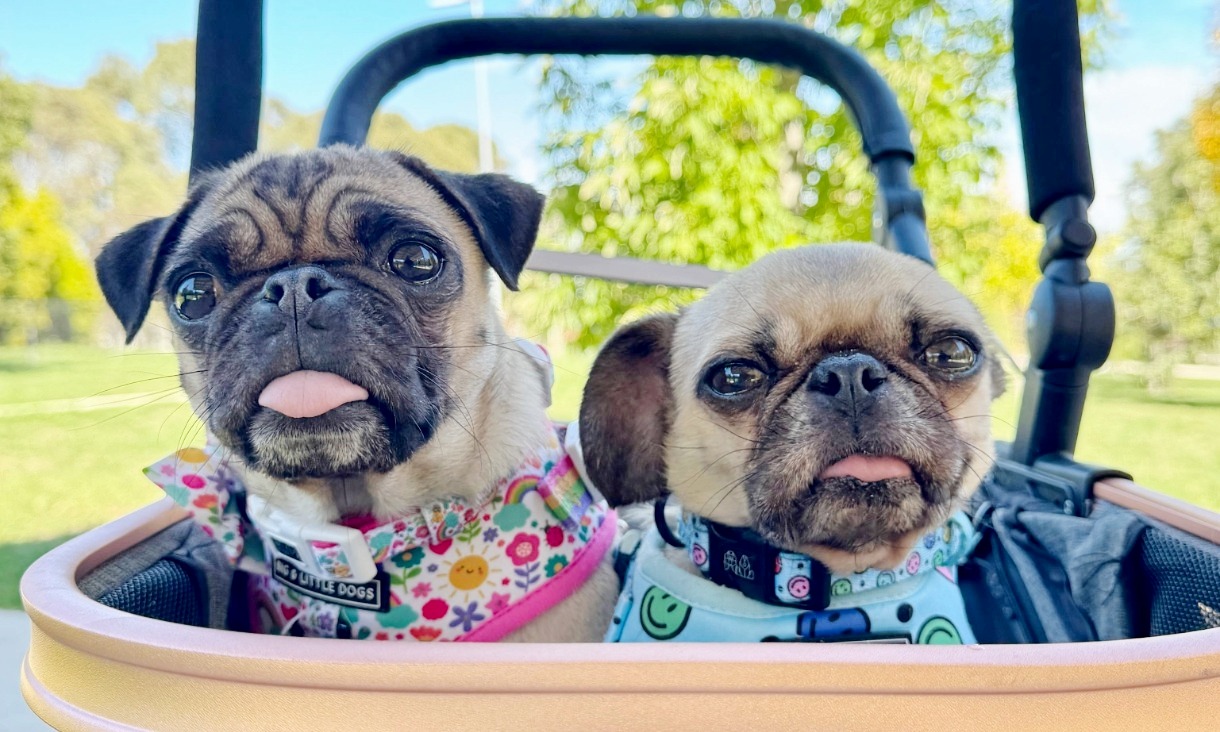
Australian scientists developed a single injectable treatment that improved breathing in all six flat-faced dogs tested — including a pug named Pugtato — without surgery, in a trial 15 years in the making.
Before the injection, Pugtato couldn't finish a three-minute walk. He would stop, strain, and make the sounds that pug owners know too well — the whistling wheeze, the labored panting that doesn't sound like effort but like panic. After the injection, he completed the same walk in less time, without those sounds. Researchers at RMIT University in Melbourne filmed both attempts and published the results in The Veterinary Journal. The treatment is called Snoretox-1, and it has been 15 years in the making.
The scope of the problem
Brachycephalic Obstructive Airway Syndrome — BOAS — affects an estimated half of all pugs, French bulldogs, and British bulldogs. The condition is the direct result of decades of selective breeding for the flat-faced appearance that made these breeds social-media favorites: the compact skull, the wide eyes, the squished nose. The skull shortened. The soft tissue inside it did not.
The result is a throat crowded with excess tissue that was never supposed to fit there. The dog breathes through a corridor that's too narrow, struggles to eat comfortably, overheats on walks, sleeps restlessly, and in severe cases lives years fewer than it otherwise might.
Decades of selective breeding for the popular flat-faced appearance have unfortunately led to serious breathing problems. In severe cases, the condition has been shown to shorten a dog's life by up to four years.
— Tony Sasse, Managing Director, Snoretox, and Adjunct Professor, RMIT University
Why the existing treatment falls short
The current standard of care is surgery: widening the nostrils, removing airway-blocking throat tissue, sometimes multiple procedures at a cost that can run into the thousands. It is invasive. It is not guaranteed. According to Sasse, research shows that up to 60% of affected dogs still experience breathing problems after surgery — and 7% don't survive the procedure at all.
The behavioral alternatives — diet, weight management, activity limits — help manage the condition but don't fix the underlying anatomy. Owners of flat-faced dogs often normalize the snoring and the strain because they have always heard it and because there has never been anything else to offer.
How Snoretox-1 works
Snoretox-1 is an injectable treatment that uses a modified tetanus toxin — rendered safe through careful engineering — to improve the muscle tone in the floor of the mouth. Strengthening that tissue has a cascading effect: the throat stays more open, airflow improves, and the dog can breathe, eat, and exercise in ways it previously couldn't.
In short-snouted breeds, the soft tissue in the upper airway hasn't adapted to the shorter skull. This leaves excess tissue crowded into a smaller space, where it can obstruct airflow. The therapy strengthens the muscles at the front of the airway, helping support the throat and maintain airflow during breathing.
— Professor Peter Smooker, RMIT biotechnologist, who has spent 15 years developing the underlying technology
The trial was small — six British bulldogs with severe BOAS, each assessed before and after treatment. All six improved by at least one full grade on the standard BOAS severity scale. The researchers had the dogs attempt a short three-minute walk, which none of them could previously complete without notable distress. After treatment, all six finished it. With reduced breathing noise. With better speed.
Pugtato, and how long the benefit lasts
Pugtato is the name that will be remembered from this trial. The pug's before-and-after footage — released by RMIT University alongside the paper — shows clearly what the researchers meant when they described "noticeably reduced breathing noise and effort." Before: the familiar struggle. After: a dog moving with a lightness flat-faced breed owners rarely get to see.
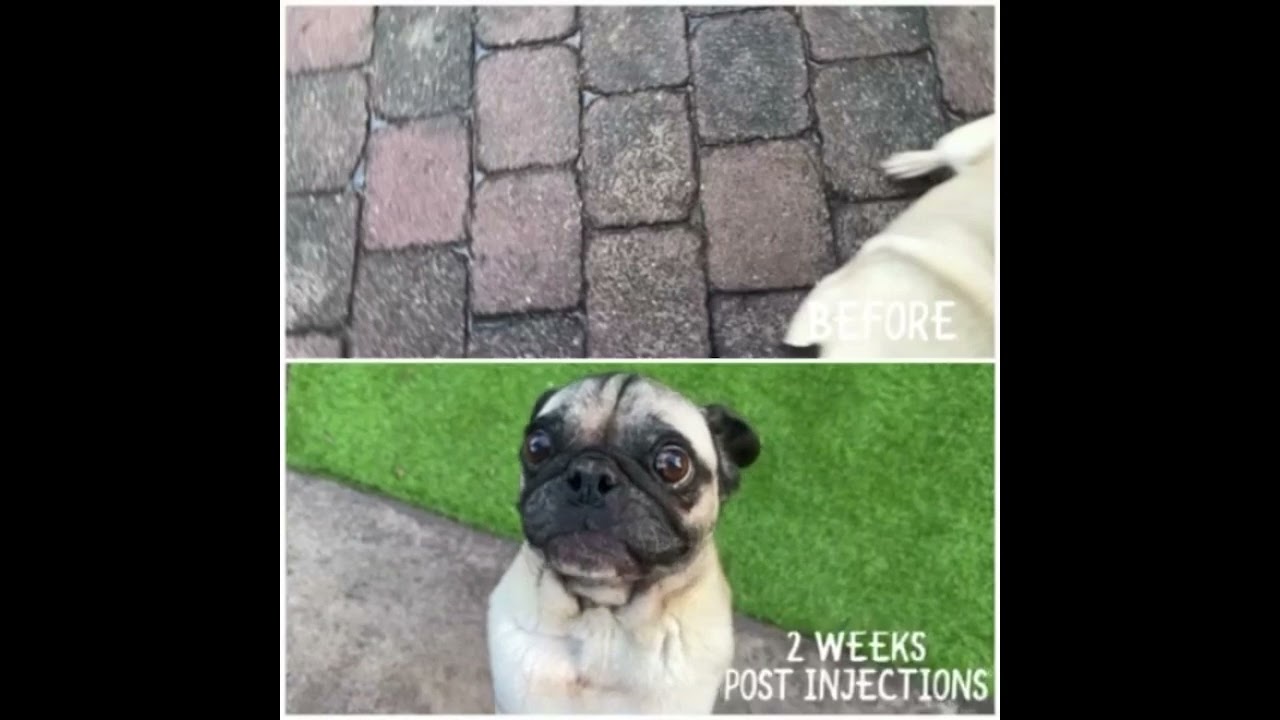
The duration of the benefit varied across the six dogs but held up well: the shortest benefit lasted 20 weeks. The longest extended to 53 weeks — more than a year from a single injection. Those timeframes exceed what any other nonsurgical treatment has produced. Two dogs showed mild and temporary side effects related to injection placement. No serious adverse events were observed.
We also observed improvements in dogs that had not responded well to previous surgery. Further research and regulatory approvals are required before the treatment can be offered more widely, but these positive results provide an early indication that we are on the right path.
— Tony Sasse, Snoretox Managing Director and RMIT Adjunct Professor
What comes next
Snoretox-1 is not yet on the market. Regulatory approval processes for veterinary treatments take time, and the researchers are continuing to expand the trial. A version of the technology may eventually have applications beyond dogs — the same mechanism that firms up airway tissue in bulldogs could, with adaptation, address muscle-tone conditions in other animals and potentially in humans.
Sasse has been explicit about this scope: the company sees BOAS as the right place to start because of the scale of need and because veterinary regulatory pathways can move faster than human medicine — but the underlying platform, in his framing, has wider ambitions.
What it means for the 50% of flat-faced dogs that have this
Almost every owner of a pug, a French bulldog, or a British bulldog has spent time watching their dog stop on a warm afternoon and deciding whether to push on or turn back. Weighing the dog's need to move against the sounds it makes when it tries. Those dogs want the same things other dogs want: the end of the block, the smell of the park, the full circuit of a morning loop. They just can't always have it.
Snoretox-1 is not a cure, and the trial was six dogs. But Pugtato finished a walk he couldn't finish before. That is a specific thing that happened to a specific dog, and it happened because someone spent 15 years on a problem that the industry had mostly shrugged at. That's worth paying attention to.