The dogs no one stopped to save are now the ones stopping crime
Doges Editorial · 2026-05-27 · 5 min read

In Plainfield, Indiana, a nonprofit called Redemption Ranch K9 Rescue takes shelter dogs hours from euthanasia and trains them for police work. The May 2026 graduating class included a Lab thrown from a moving car and a Malinois one checkmark away from being euthanized.
Walker, a yellow Labrador retriever, was thrown from a moving vehicle on an Indiana interstate. Nobody stopped. By the time he reached a shelter, he had months of heartworm treatment ahead of him, and nobody was betting on a future in law enforcement.
He graduated this May as a certified police K9.
The Dogs at the Back of the Kennel
Redemption Ranch K9 Rescue, an Indiana-based nonprofit based in Plainfield, held its latest K9 graduation ceremony in May 2026. The dogs that crossed the stage—or the closest thing to one, in a police department parking lot at dusk—were not the kind that get featured in breeders' catalogs. They were the ones at the back of the kennels: too energetic, too easily miscategorized, already running out of time.
The organization's motto is "Shelter to Shield." Since its founding, Redemption Ranch has trained dozens of former shelter and rescue dogs for careers in law enforcement and public service, placing them with small agencies that couldn't otherwise afford a trained K9. Departments in rural and underfunded communities where a $15,000 to $20,000 trained dog simply isn't in the budget.
Most of them simply needed purpose, structure, and someone willing to see their potential. Watching them transform from discarded shelter dogs into confident working dogs is something incredibly special.
— Rob Prichars, Founder, Redemption Ranch K9 Rescue
Maverick, Blitz, Remington
Maverick arrived from one of Indiana's most overwhelmed shelters. When Redemption Ranch staff first saw him, they counted his ribs from across the room—every rib and hip bone visible beneath his coat. He gained thirteen pounds during training. By graduation, he was thriving in detection work, preparing for a future in police service.
Blitz, a Shepherd mix, had narrowly escaped euthanasia. Remington, a working-line German Shepherd, had been pulled from a surrender situation—someone had given him up, his file nearly closed. Both graduated in May with handlers who had seen what they were capable of before the dogs had any reason to believe it themselves.
Spartan, Formerly Dennis
The most striking graduate may be the one who came closest to not being here at all. K9 Spartan—renamed from Dennis by his handler, Rosiclare Police Chief Brian Burton—arrived at Redemption Ranch as an emaciated Belgian Malinois from a high-kill shelter. His file flagged him as aggressive. The behavior that earned him that label was jumping. He liked to jump on people.
"He was one checkmark away from being another statistic," Redemption Ranch wrote on his profile page. "Another body in a black bag. Another dog the world decided wasn't worth understanding." A shelter volunteer named Erica Dewey-Melinger read him differently. She saw a dog desperate for someone to believe in him. She fostered him with her family, showed him safety and consistency, and arranged his placement with Redemption Ranch before anyone else could reach his paperwork.
Chief Burton chose the name Spartan because Rosiclare was historically known as the FluorSPAR Capital of the World. His children, Riley and Maverick, already call him "Spar Spar." A community member named Lana Pedigo attended his graduation and bought him a $2,010 bulletproof vest. Spartan already knows to lift a leg when it's time to put it on.
Into the Schools
Not all of this year's graduates are headed to narcotics detection. Otis—a foxhound who arrived at the shelter carrying enough anxiety to make him effectively unadoptable—has a different assignment ahead. His handler, Officer Benjamin Walker, has one goal in mind: the hallways of local schools.
He just seemed like a really good dog. I've never handled a hound dog before, and he just seemed like he was going to be really sweet—and especially taking him into the schools, that was kind of our goal with this dog.
— Officer Benjamin Walker, Otis's handler
The Model Behind the Mission
Every Redemption Ranch dog completes a 160-hour training program before certification, with no days off. Every graduate meets or exceeds national police standards, according to the organization. The difference from a conventional working-dog program is sourcing: these animals cost nothing to acquire. They come from shelters that were running out of room.
This matters practically. For small and rural departments, a trained K9 represents a significant budget challenge that many simply can't clear. Redemption Ranch is funded through donations and community support, making the program available to agencies that have simply gone without—not because they didn't want a K9, but because no one had found a way to make the math work.
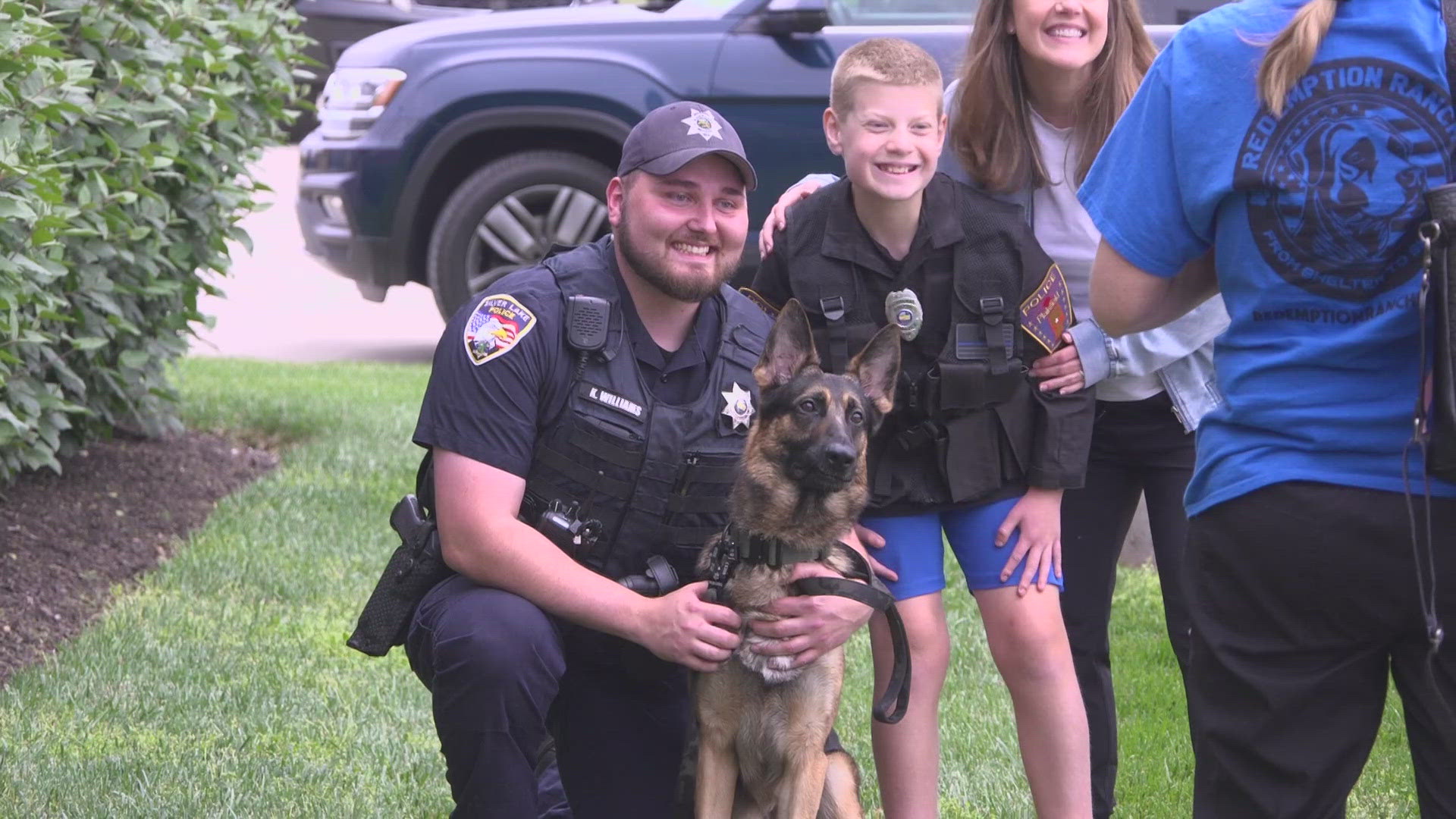
What Purpose Looks Like
High-drive dogs—the ones most likely to end up in Redemption Ranch's program—need more than food and a kennel. They need a job. Not because they're difficult, but because they were built for sustained, purposeful activity. The structure of a training program, a handler who walks the same routes, the signal that it's time to go—that's what these animals were waiting for, in the shelter, before anyone came looking.
Walker is training in detection and tracking now, somewhere in Indiana, mapping new terrain every week alongside a handler who stopped for him when a highway didn't. He's not waiting by any front door anymore.
The dog that someone threw from a window found the thing that looks, from the outside, a lot like purpose. The next time you see a working dog on its route—collar on, nose down, moving with intent—you might wonder what it came through to get there.