Your dog wants to take you somewhere new, and science says you should let them
Doges Editorial · 2026-06-06 · 4 min read
DOGES
A new University of Edinburgh study of 192 dog owners found that doing novel, adventurous things with your dog — not just daily walks — reduces depression symptoms and deepens the bond. Here's what the researchers found, and what it suggests about the walks you haven't taken yet.
Think about the first time you took your dog somewhere truly different. Not the dog park three minutes from your apartment, not the same loop around the same block. A forest trail, a stretch of coast, a neighborhood you'd never walked before. Your dog was different there — more alert, nose working in long, deliberate arcs, pausing at things you couldn't see. And maybe you were, too.
That feeling — the sense of encountering the world freshly, of noticing things you normally walk past, of being slightly more awake than usual — has a name in psychology. Researchers call it self-expansion. And a study published in Human-Animal Interactions in March 2026 suggests it might be one of the most underestimated things your dog can do for your mental health.
What self-expansion is — and why it matters for your relationship
Self-expansion is the psychological experience of growing through a relationship. When you feel that a bond is expanding your sense of self — giving you new perspectives, new skills, new ways of moving through the world — you experience that relationship as more alive and more meaningful. Psychologists have studied this in romantic partnerships for decades: couples who regularly do new things together report higher satisfaction. The novelty isn't really the point. The growth is.
The theory was developed to explain why early relationships feel electric and established ones can feel flat. The answer researchers found wasn't simply habituation — it was that the expansion had slowed. People stopped growing together. Activities became routine. The relationship stayed the same shape it had always been.
Until recently, almost no one had asked whether the same dynamic could exist between a person and their dog.
What 192 dog owners revealed
Led by Annalyse Ellis alongside colleagues from University of Edinburgh's psychology and neuroscience departments, the study surveyed 192 UK dog owners about the activities they did with their dogs — how common those activities were, how often they occurred, and how much each one seemed to expand their sense of who they were. The team also measured participants' levels of depression, anxiety, and loneliness, and asked how satisfied they were with the relationship.
The results aligned precisely with self-expansion theory: less common activities registered as more self-expanding. Owners who did the most unusual things with their dogs — hiking unfamiliar trails, trying scent work or agility for the first time, visiting places neither of them had been before — reported the strongest feeling of personal growth through the relationship. And that feeling, in turn, predicted lower symptoms of depression and higher relationship satisfaction.
Both self-expanding behaviors and self-expansion perceptions play an important but overlooked role in the human-dog relationship.
— Annalyse Ellis and colleagues, Human-Animal Interactions (2026)
The depression connection
The most striking finding wasn't about relationship quality — it was about mental health. Owners who reported higher self-expansion through their dog relationship showed significantly lower levels of depression. The research identified a pathway: novel activities feed the feeling of self-expansion, and self-expansion in turn predicts lower depression scores. Not as a replacement for clinical care, but as a genuine, measurable effect.
Self-expansion perceptions didn't independently predict anxiety or loneliness in the same data — those results were more mixed. But the depression finding was consistent. Given how common depression is, and how incremental the routes out of it often feel, the idea that the quality of time with your dog matters as much as the quantity is worth taking seriously.
The study's participants were 192 UK dog owners, which means the sample is modest and the findings are exploratory. But they align with a growing body of research on novelty, growth, and mental health — applied, for the first time, to the specific context of the human-dog bond.
What counts as self-expanding (and what doesn't)
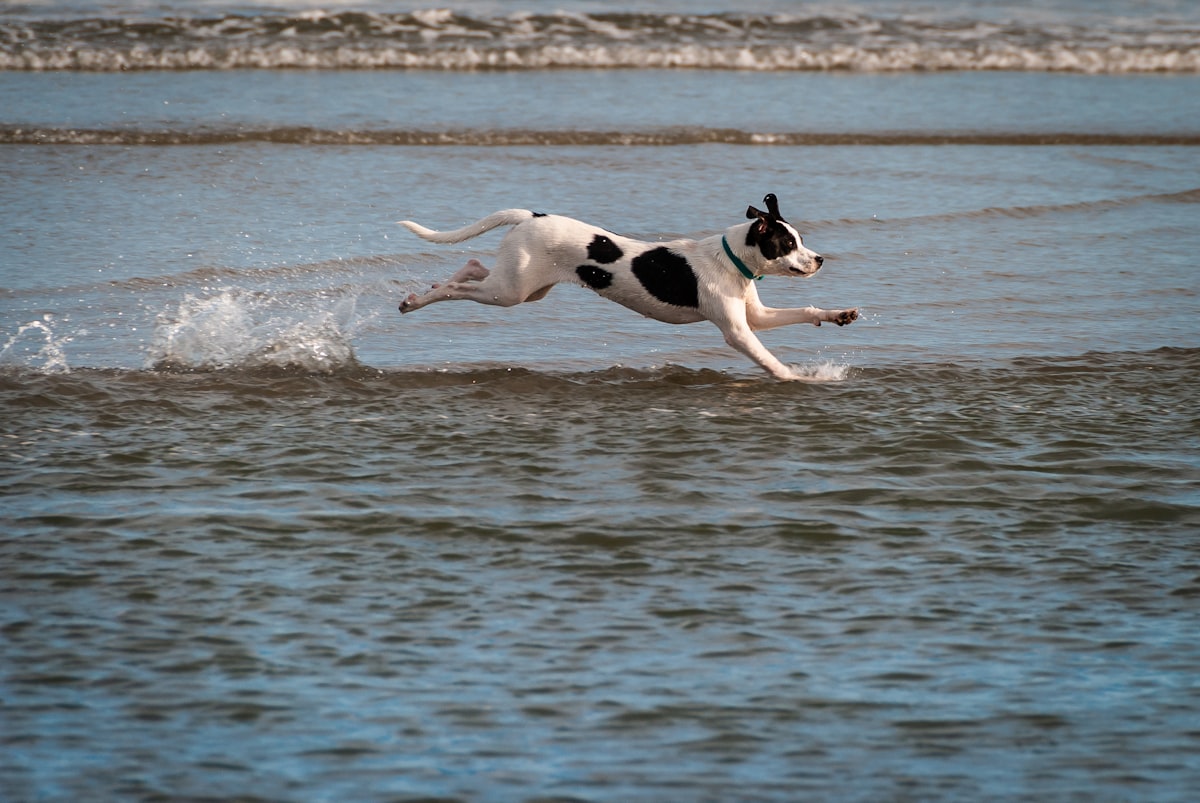
This is where the research gets practical. Self-expansion isn't about doing more — it's about doing different. A walk where you follow your dog's nose down a street you've never been down is categorically different from a walk where you tug them away from distractions to maintain your pace. One is a shared adventure. The other is an errand.
Agility training reveals a dog's problem-solving ability. Scent work uncovers a focus that casual walks never tap. A long trail on unfamiliar terrain shows you how your dog navigates uncertainty — and shows your dog a version of you it hasn't seen either. These are windows into an animal you share your life with but still, somehow, don't fully know. That not-knowing — and the willingness to explore it — appears to be what matters.
Less common activities were perceived as more self-expanding, based on self-expansion theory principles.
— Ellis et al., Human-Animal Interactions (2026)
The walk you haven't taken yet
There's a quiet implication in this study that's easy to overlook. If novelty predicts self-expansion, and self-expansion predicts better mental health, then the walks that feel boring are doing something — or failing to do something. A loop around the same block, at the same time, every morning: it's not nothing. Your dog is getting exercise. You're spending time together. But if that's all the relationship ever is, you might be leaving the most interesting part of it untouched.
Dogs are essentially professionals at noticing what humans ignore — the smell of a particular morning, the way light hits frost differently in December than in June, the squirrel that uses the same route across three yards every single afternoon. Whether we follow them into that noticing, or just tug the leash and keep moving, is largely up to us.
The next time you find yourself in a familiar routine, it might be worth asking: what would it feel like to go somewhere neither of you has been? Not because science demands it. Just because there's something on the other side of that unfamiliar turn, and your dog already knows it.