Ren walked graduation with him
Doges Editorial · 2026-06-24 · 4 min read
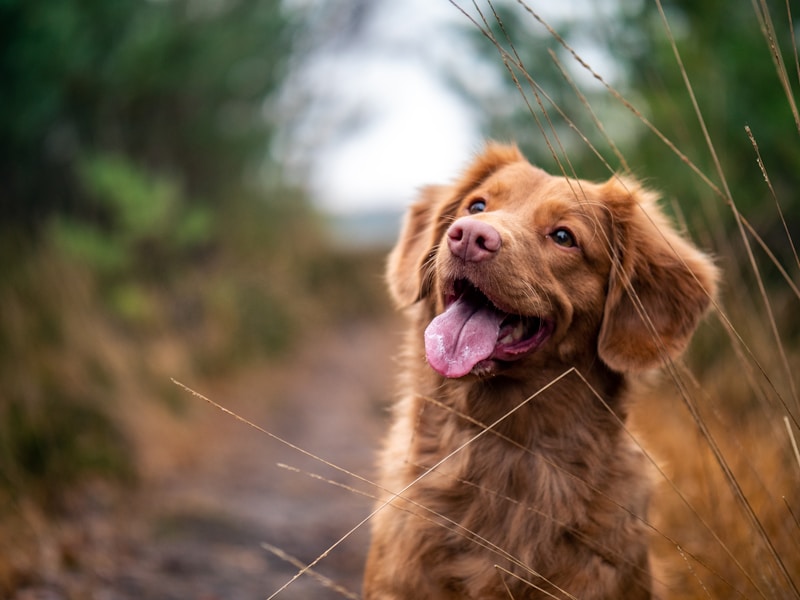
Army veteran Peter Tong spent years managing a hip injury, anxiety, and depression before he could go back to school. When he finally crossed the graduation stage at Polk State College this June, his service dog Ren was the reason he made himself go.
The walk across a graduation stage takes about forty-five seconds. For Peter Tong — Army veteran, former information technology specialist in the 112th Signal Battalion at Fort Bragg, North Carolina — it had taken fourteen years. He did not walk it alone. Beside him was Ren, a service dog who had been with him through every late night and long semester it took to get there, and who crossed the Polk State College stage in June 2026 as if that was exactly what she was supposed to do. Because it was. (Via USA TODAY.)
A different kind of service
Tong enlisted in 2009 and trained as a 25 Bravo, the Army's designation for information technology specialists. It felt like the beginning of a career. In 2012, a hip injury ended it. He came home from Fort Bragg navigating physical recovery alongside things that are harder to put on a medical form: anxiety, depression, the specific exhaustion of starting over in your mid-twenties when the plan you had built your identity around is suddenly gone.
Years later, he started thinking about going back to school. His therapist — the one who helped him put words to what he had been carrying — made a suggestion.
I was working with a therapist and he told me, 'Hey, a service dog would do you some good.'
— Peter Tong, Army veteran
He applied. He waited. And then Ren arrived. The moment he saw her, something that had felt abstract — the idea of having help, of being allowed to need it — became suddenly, unexpectedly real.
The first time I laid eyes on Ren, it was really emotional because I was like, 'Holy crap, it's actually happening. It's here — she's here.'
— Peter Tong
What she reads in a room
Nearly one in four veterans who served after September 11, 2001 has been diagnosed with post-traumatic stress disorder, according to research from Purdue University's College of Veterinary Medicine. Service dogs trained for PTSD work perform specific tasks: interrupting panic attacks, positioning themselves as a physical buffer in crowded public spaces, creating an anchor during moments of acute distress. But what Ren did for Tong went well beyond the trained tasks.
A 2018 trial at Purdue, led by Marguerite O'Haire and Kerri Rodriguez and published in the Journal of Consulting and Clinical Psychology, enrolled 141 post-9/11 veterans with PTSD — 75 paired with a trained service dog, 66 on a waitlist receiving standard care alone. Veterans with service dogs showed clinically significant PTSD reductions; on a standardized depression measure, their scores averaged a full standard deviation below the waitlist group (Cohen's d = −0.91, p < .001). That result matters alongside a harder number: dropout and non-response rates for standard PTSD treatment can run as high as 50 percent. Service dogs appear to keep veterans inside recovery when treatment alone has struggled to. Not as a replacement, but as what the researchers called a complementary treatment — something that makes the harder work possible. (https://pmc.ncbi.nlm.nih.gov/articles/PMC5788288/)
She learned to read him. Specifically, she learned how a bad day looks when someone tries to keep it hidden — from the room, from themselves.
If I start crying or if I'm having a tough day and I sit down and put my head down, she scoops under me and makes me sit up. She's like, 'We're not doing this. You're not going to be sad. You're going to be happy. You have no choice.'
— Peter Tong
That attentiveness — tracking someone's emotional state and intervening before it spirals — is what distinguishes a trained service dog from other forms of support. Through semesters at Polk State, Ren never left his side. If his concentration broke, she noticed. If he struggled, she stayed. 'If she is working, everything could just be burning down around us and she's like, "I'm working for dad,"' Tong said.
Wrestling with going
When graduation approached, Tong found himself with a question he hadn't anticipated: did he actually want to attend? The auditorium. The crowd. His name over the public address system. The whole apparatus of public celebration — which requires a person to show up in front of strangers and be recognized — can be genuinely difficult for someone whose anxiety lives exactly there.
Ren was how he resolved it. Not by eliminating the anxiety, but by absorbing some of its cost. That had been the arrangement from the beginning: she didn't fix the hard days, she stood in them alongside him.
I really wrestled with going to graduation. I was like, 'Do I really want to go? Do I really want to walk across the stage?'
— Peter Tong
Forty-five seconds
When Tong's name was called, he walked across the Polk State stage. Ren walked beside him. From the audience, it was a moment — a veteran and his service dog, noted and moving. From where Tong was standing, it was the culmination of fourteen years: the injury, the years of rebuilding, the late nights at a school desk, the semester he almost didn't start, the days when Ren scooped her head under his and refused to let him stay down.
Having Ren on the stage with me was that extra layer of comfort. Just having her next to me, walking beside me.
— Peter Tong
For every veteran carrying this alone
Tong has a degree now. He has a service dog who walked the graduation stage with him. And he has a message for any veteran who might be carrying what he once carried without telling anyone about it.
You're not alone. There is help. There are resources. Utilize your resources and get the help you need.
— Peter Tong
Ren doesn't know what a graduation is. What she knows is Peter Tong: how he moves, how his breathing shifts when a day turns hard, when to push in close and when to simply stay near. That knowledge is built the same way it always is — through years of daily life together, the ordinary mornings before they got to this one. The walks before breakfast. The routes worn into their neighborhood. The corner where she waits while he pauses, and has learned not to rush him. The bond lives in the movement, in the small accumulated dailiness of being somewhere together. That June afternoon at Polk State was extraordinary. What made it possible was every ordinary day they had already walked through, side by side.