The dogs buried beside Peru's ancient elite, and what their bones reveal about us
Doges Editorial · 2026-05-27 · 5 min read
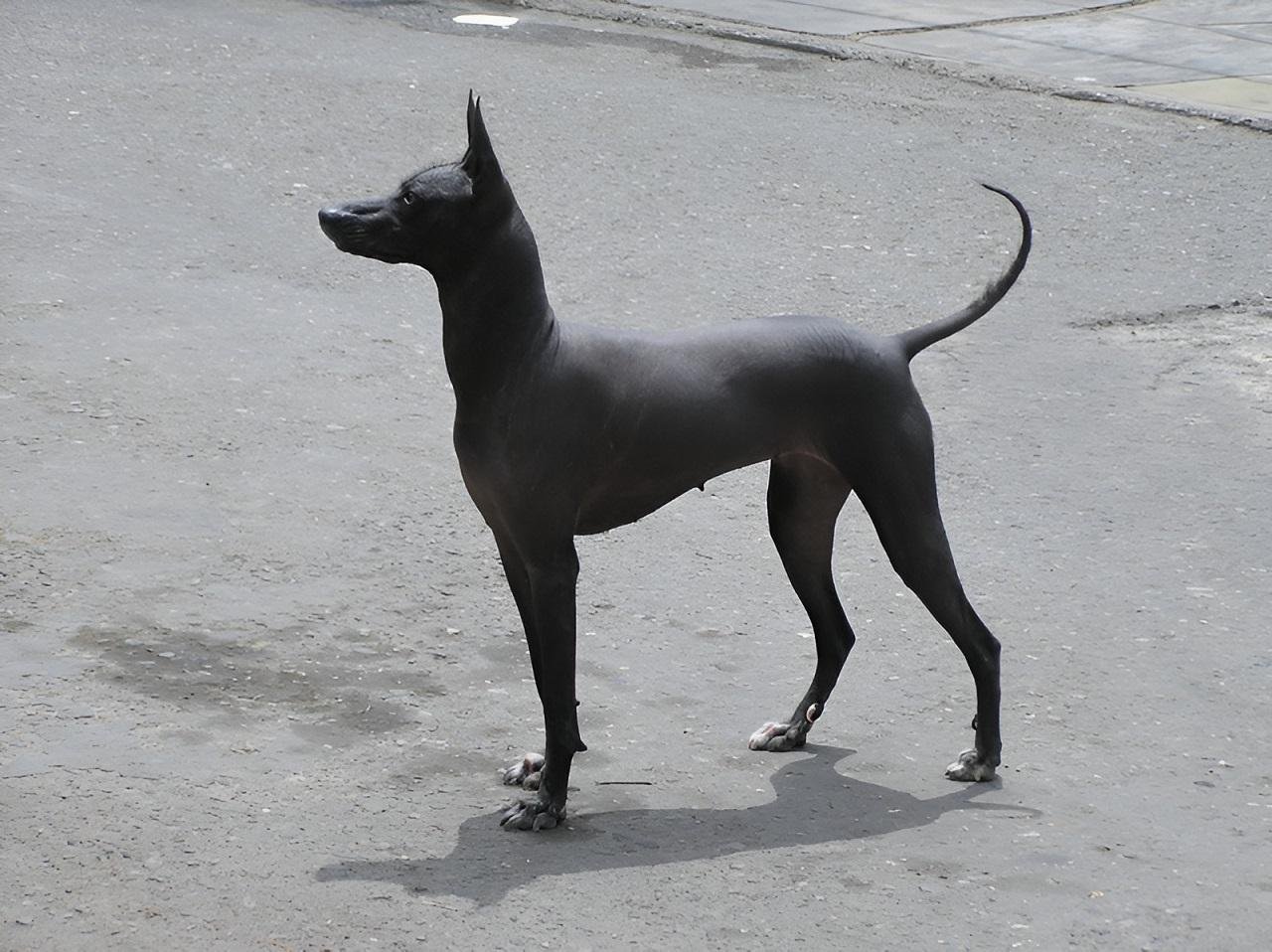
A new study in the Journal of Anthropological Archaeology has found the first physical remains of Peruvian hairless dogs at a 1,200-year-old Wari Empire site — including a mummified skull still painted with ceremonial pigment and a puppy buried alongside an elite craftsman.
Sometime around 750 CE, in a desert on the Pacific coast of what is now northern Peru, a small dog was placed in a tomb. The tomb was inside Castillo de Huarmey — the administrative and ceremonial center of the Wari Empire, a civilization that dominated the central Andes for nearly five centuries before the Inca rose to power. The dog was buried beside an elite craftsman: someone who worked with gold, silver, and bronze for the empire's ruling class. The puppy placed with him was six to eight weeks old.
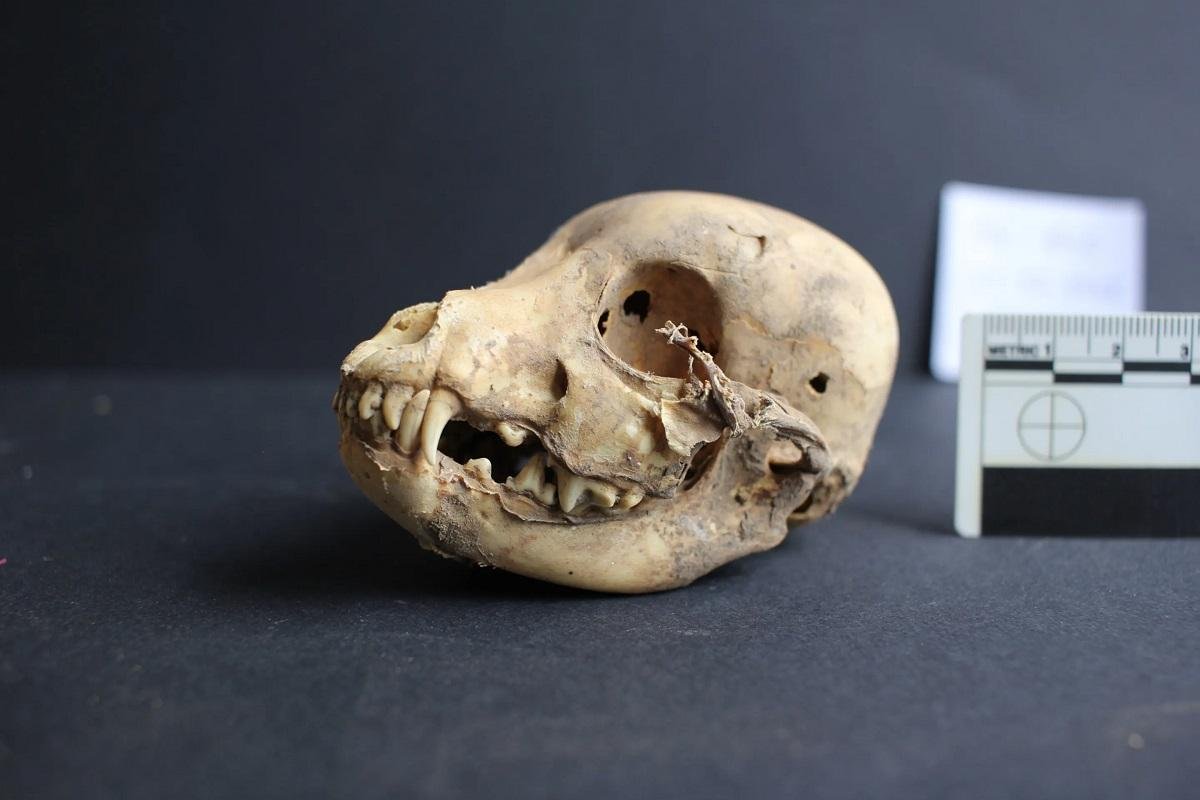
Nobody knows what either of them was called. In the hyper-arid coastal desert, the preservation conditions are extraordinary — woven textiles, decorated pottery, hair, organic pigments — but names do not survive. What survived, in burial chambers excavated by archaeologists from Dartmouth, the University of Warsaw, and partner institutions, was bone. And, in one exceptional case, bare skin: a dog's skull still covered in the smooth, hairless integument of a Peruvian hairless dog, painted with red cinnabar — the ceremonial pigment the Wari used for their most significant dead.
A new study published in the Journal of Anthropological Archaeology brings these dogs, 1,200 years later, into the light.
The empire and the desert
Castillo de Huarmey sits approximately 190 miles north of Lima on one of the most arid coastlines on earth. The site spans 110 acres and functioned as a major Wari administrative and production center from roughly 600 to 1050 CE — 400 years before the Inca Empire. It was largely unknown to archaeologists until 2010. Since then, excavations have produced extraordinary finds: the first undisturbed Wari royal tomb in 2012, containing 58 high-status women; elite craftsmen's burial chambers unearthed in 2022; thousands of artifacts including gold and silver tools, fine textiles, and decorated ceramics.
A 1970 earthquake collapsed one of the site's sides, opening burial chambers to looters and to time. Most of the animal remains — including the dog bones — were found in the upper, more disturbed layers. That they survived at all is a testament to the desert's inhospitable generosity: the air is so dry that organic material, given even minimal protection, lasts for centuries.
341 bones, 19 dogs, one extraordinary skull
The research team recovered 341 bone specimens from at least 19 dogs. Three of those animals were identified as likely Peruvian hairless dogs, using a distinctive diagnostic marker: the breed's genetic mutation links hairlessness to the absence of specific premolars and molars. The missing teeth are as readable as a paw print.
One skull was found with skin still attached — bare, smooth, unmistakably the skin of a hairless dog — dusted with red cinnabar. The Wari used cinnabar on their most significant dead. They used it on this dog. Whether that reflects reverence, ritual obligation, aesthetic practice, or something we don't have a precise word for is not determinable from the bones alone. What is determinable is that someone applied the pigment deliberately, to an animal they buried with care, in the ground of a major imperial site.
Our findings indicate that humans and dogs coexisted at this Wari site, but reconstructing their bond is challenging, as past emotions are difficult to capture through archaeological methods.
— Weronika Tomczyk, research associate, Dartmouth
The puppy and the craftsman
Among the most precisely documented findings was a 6-to-8-week-old puppy buried alongside one of the elite craftsmen in the site's artisan galleries. The craftsman worked with precious metals for the Wari ruling class. He received an elaborate burial. The puppy was placed with him — young enough that it would have been entirely dependent on human care for its survival.
The puppy's isotopic record, encoded in its tooth enamel, shows something specific: it was fed a diet resembling that of human children — high in cultivated foods, carefully provided. This puppy was not scavenging. It was being fed. And when the craftsman died, it went with him.
Maize, camelids, and scraps — a life isotopically reconstructed
Isotopic analysis of carbon, nitrogen, oxygen, and strontium in the animals' teeth and bones allowed the researchers to reconstruct where each dog lived and what it ate at different life stages. Teeth record early life; bones record the period just before death.
Most of the Castillo de Huarmey dogs spent their entire lives near the site. But their diets varied considerably. Some ate maize — a prestige crop in the ancient Andes — suggesting access to human food stores and probably a close household relationship. Others have isotopic profiles matching the camelid herds (llamas and alpacas) the Wari kept, suggesting they were herding dogs that traveled with animals through the region. Still others appear to have subsisted on food waste around the settlement's edges, tolerated rather than maintained.
What this produces is a picture familiar from almost any human settlement across time: dogs occupying many different relationships with the people around them simultaneously — companion, worker, scavenger, ritual object — depending on which household, which individual, which moment in a life.
The dog that holds a musical instrument
Among the ceramic artifacts recovered at Castillo de Huarmey was a vessel shaped like a dog: a seated figure in the distinctive morphology of the Peruvian hairless breed, depicted holding what appears to be a musical instrument. Anthropomorphized. Given the posture of a performer or a dignitary. The bare body rendered with care.
Dogs appear throughout pre-Columbian Andean coastal pottery — their representation is a long tradition, not a surprise. What is striking, at Castillo de Huarmey, is having both forms of evidence simultaneously: the ceramic dog and the physical dog bones from the same site, the representation and the animal that was represented. The ancient Wari made art about dogs. They also buried dogs with the people they cared about most. Both things were true at the same time.
A relationship with contradictions built in
The study's authors are careful not to sentimentalize what the evidence shows. The same site that contains a puppy buried beside a craftsman also contains dogs that appear to have lived at the settlement's margins, scavenging. The same species that received ceremonial pigment was, for other people in other contexts, a pest or an annoyance.
People in the past had often contradictory relationships with the animals, just as they do today: a pet for one group of people could at the same time be considered a pest by their closest neighbors.
— Weronika Tomczyk, Dartmouth
This is, on reflection, precisely accurate about our own moment too. Dogs are loved and neglected, pampered and abandoned, declared national symbols and left on beaches near death, sometimes within the same geography, sometimes within the same week. The Wari, it turns out, were not so different.
The breed that survived
The Peruvian hairless dog — the Viringo — is still here. Peru declared it a national symbol in 2000. There are breeders, conservation programs, and enthusiasts on multiple continents dedicated to a breed that has existed on the South American coast for at least 1,200 documented years — and in archaeological representation for much longer.
When you look at a modern Viringo — long-legged, smooth-skinned, alert-eared, with a face that carries something prehistoric in its proportions — you are looking at something close to what walked the grounds of Castillo de Huarmey when the Wari Empire was at its height. The particular genetic mutation that makes a dog hairless and removes its premolars has propagated through more than a millennium of changing empires and collapsing civilizations and is still here, walking on a leash in Lima.
The 6-to-8-week-old puppy in the craftsman's tomb had not yet learned anything about the empire it was born into. It knew warmth, and food, and the hands of the person it was with. These are the oldest things about the relationship between dogs and people — older than the Wari Empire, older than the Inca, older than farming. The bones in the desert hold them, carefully, long after everything else is gone.