The Pentagon names its new battlefield-medicine program after dogs
Doges Editorial · 2026-05-31 · 4 min read
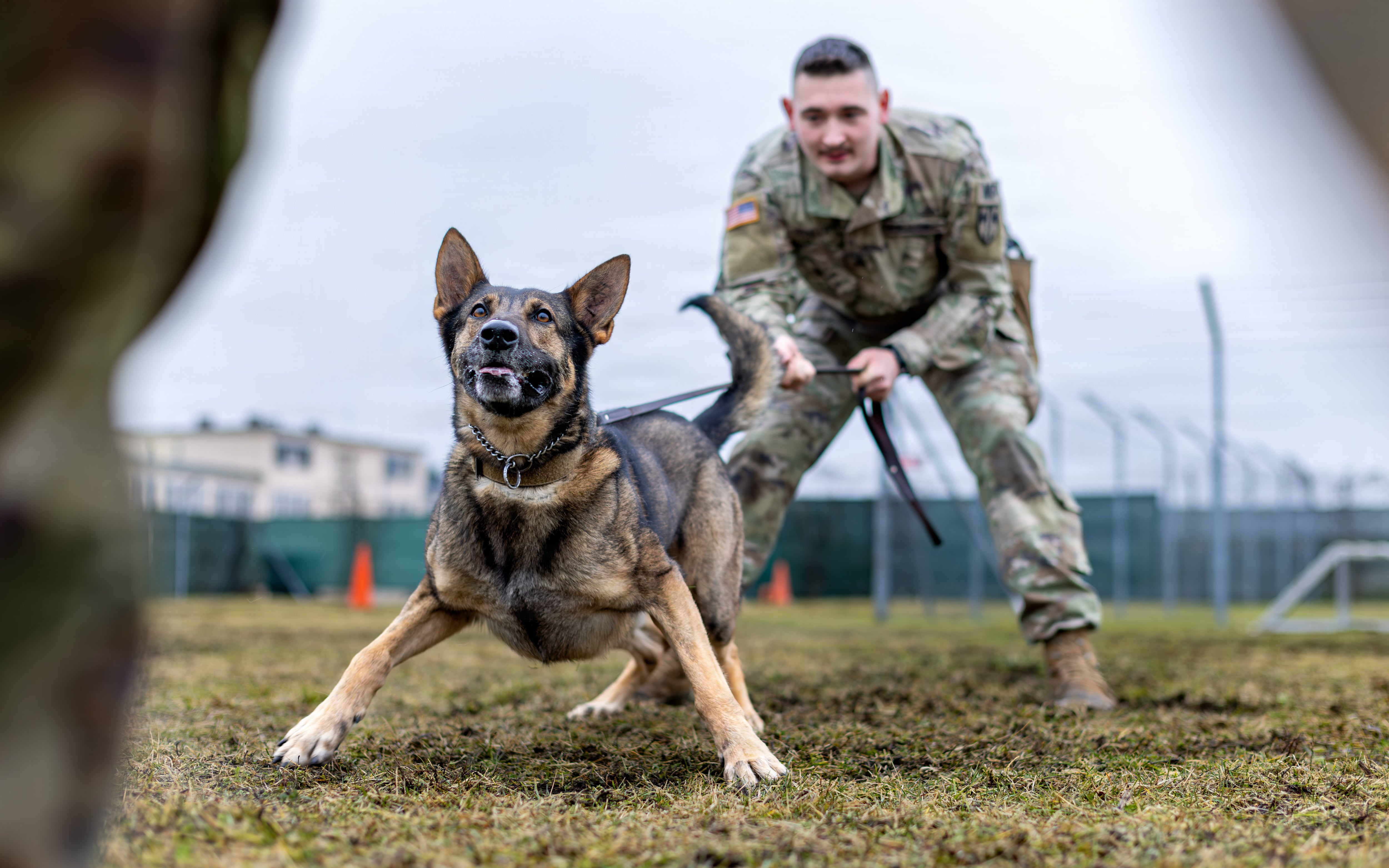
A package of four new Pentagon research initiatives — including DARPA's aptly named BARK program — will push battlefield medicine for military working dogs closer to the standard their service demands.
Every military working dog goes into situations that would test any soldier. They walk point on explosive sweeps — moving through a space before their human counterparts do, absorbing the first contact with whatever is there. They clear buildings. They spend careers running toward exactly the kind of danger their handlers are trained to avoid. What they don't always have, when they come back injured, is a medical system that matches the scale of what they do.
On May 26, 2026, Military Times reported that the Pentagon has launched a package of four research initiatives aimed at improving medical care for military working dogs — three from the Defense Health Agency (DHA) and one from DARPA. The initiatives address traumatic brain injury, hemorrhage, toxic exposure, and a broader push to develop medical tools that work across both dogs and humans in the field. Proposals are due June 3. Source: Military Times (https://www.militarytimes.com/news/your-military/2026/05/26/the-pentagon-wants-to-improve-medical-care-for-wounded-military-dogs), May 26, 2026.
The Scale of the Problem
The DHA's solicitation documents don't soften the picture. Between 25 and 40 percent of all military working dog trauma cases involve traumatic brain injury. For severe TBI cases, the prehospital mortality rate exceeds 40 percent. That means that nearly half of the dogs who suffer the worst head injuries die before they can reach a treatment facility — not because treatment isn't possible, but because the diagnostic tools and prehospital protocols for canine TBI have not kept pace with the demands placed on the animals.
TBI in the MWD carries an extremely high mortality rate with a prehospital mortality of over 40% for severe TBI cases. It is estimated that 25% to 40% of all MWD trauma cases are accompanied by TBI, but there is limited data concerning the short- and long-term effects of TBI on the performance and health of the MWD.
— Defense Health Agency, solicitation document
Hemorrhage tells a parallel story. Uncontrolled bleeding following traumatic injury accounts for more than 45 percent of all military working dog battlefield deaths. One of the DHA projects specifically seeks shelf-stable canine whole blood products — something that can survive field temperatures for more than three years without refrigeration, ready to use in the kind of forward environment where a supply chain is not an option.
The Third Problem: Toxic Exposure
A third DHA initiative addresses something less visible: toxic industrial chemical exposure. Military dogs working in hazardous environments can absorb dangerous substances through their skin or respiratory system. External decontamination — the wash-down procedures used when a dog exits a contaminated area — is reasonably developed. Internal decontamination, when the substance is already in the bloodstream, is not. The project asks for kits that can detect specific toxins and then treat them or filter them from the blood using hemoperfusion systems.
Think about what military dogs actually do: they walk into rooms before their handlers do, move through smoke and rubble, and spend more time in close contact with unknown chemical hazards than almost anyone else on a mission. They enter first. The medical system that awaits them is only now beginning to catch up.
BARK
DARPA's contribution to the package carries one of the more inspired acronyms in recent defense research: BARK, for "Broadening Availability of Regimens for K-9s." The ambition is unusual — develop medical technologies that work for both dogs and humans simultaneously, so that a field medic carrying one kit can treat either patient without carrying two separate sets of equipment.
Medical technologies that are interoperable and compatible across humans and dogs can address unmet needs of valuable MWDs while lessening the burden on medics, logisticians, and other contributors to force health protection.
— DARPA, solicitation document
The specific technologies DARPA is seeking include universal synthetic plasma for transfusions, real-time sensors for temperature and blood pressure, plasma-filtering devices that can remove incompatible antigens, and shared physical tools like splints and tourniquets. The physiological similarities between dogs and humans are close enough that much of this is plausible. In a forward operating environment, every piece of medical equipment that serves two patients rather than one is a logistics advantage — and, implicitly, a statement about whose life matters.
What This Really Acknowledges
The most significant thing about these programs isn't the specific technologies being funded. It's the acknowledgment, written into official Defense Department solicitations, that the dogs who go in first deserve battlefield medicine equal to the role they perform. These initiatives come in part because of documented problems — reports of poor health conditions for dogs at military base kennels, and a recognized gap between the operational demands placed on military working dogs and the veterinary medical research supporting them.
Military working dogs are not support animals in a soft sense. They are trained for years at significant cost and perform tasks that directly save human lives. The gap between their operational role and the medical system available to them when they are wounded has been, until now, large enough to constitute its own quiet failure.
What Comes Next
Military medical urgency has a long history of producing techniques that eventually reach civilian life. Trauma protocols developed for the battlefield have reshaped emergency rooms. Blood banking advances refined for combat use were adopted by hospitals. The shelf-stable whole blood products and real-time physiological monitoring tools being developed for dogs in forward operating bases will, at some point, find their way to the veterinary hospital in your neighborhood.
The dog who goes for a walk with you in the morning is the beneficiary, in some small way, of every generation of military veterinary research that came before. These new programs add to that line. The deadline is June 3, and then the work begins.