A blood test that finds your dog's cancer before you find the lump
Doges Editorial · 2026-05-21 · 6 min read
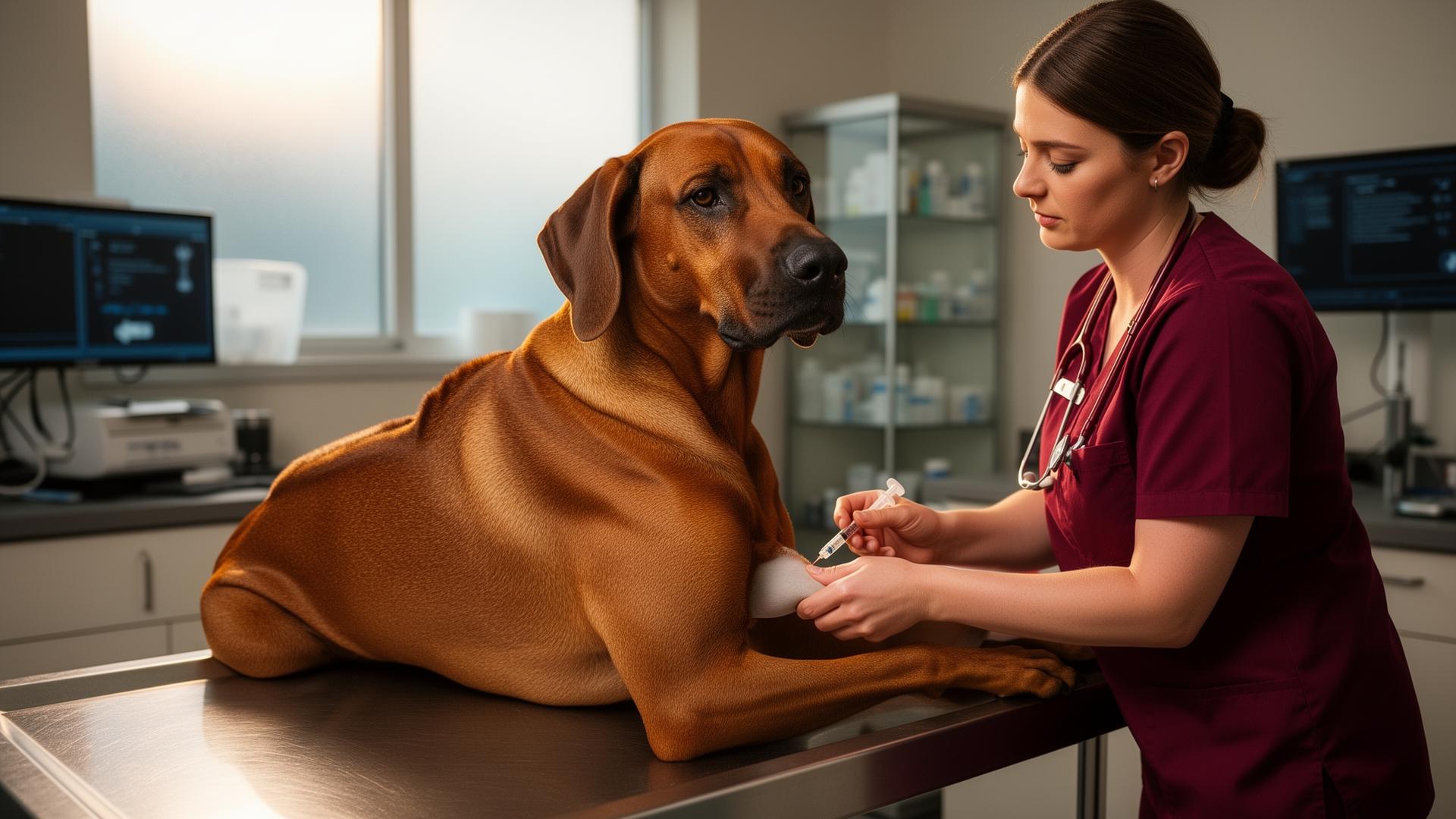
A 2026 study in Frontiers in Veterinary Science has validated OncoCan, a liquid biopsy that reads cancer DNA fragments floating in a dog's bloodstream — potentially detecting tumors months before they become visible, from a single routine blood draw.
Cancer kills roughly one in four dogs over the age of two. For dogs over ten, the number climbs to nearly one in two. Those statistics have been known for years. What veterinary medicine has not had — until very recently — is a reliable way to catch the disease before the lump appears under your fingers, before the dog stops eating, before the crash that brings you to an emergency clinic at midnight.
A 2026 paper in Frontiers in Veterinary Science introduces OncoCan, a liquid biopsy assay that reads a tumor's genetic fingerprint from a single tube of blood. The study was reported this week by PawPulse, citing the primary research available at doi.org/10.3389/fvets.2026.1768078. It is the kind of result that, if it holds up in broader clinical deployment, changes what the annual vet visit can do.
The problem with finding it too late
Most canine cancers — lymphoma, hemangiosarcoma, osteosarcoma, mast cell tumors — are found only after something has obviously gone wrong. You feel a mass during a belly rub on a Tuesday evening. Your dog loses energy over a stretch of weeks that you attribute to age before the vet finds the cause. The standard diagnostic path that follows is three steps: feel it, image it, biopsy it. Each step takes time. Each step adds stress to an animal who is already unwell.
By the time that process begins, the tumor has usually been growing for months — sometimes longer. Earlier detection doesn't just improve odds; it often determines whether treatment is even possible.
What a liquid biopsy actually is
A liquid biopsy doesn't begin with finding a lump. It begins with a blood draw. As tumors grow, they shed dying cells, and those cells release tiny fragments of DNA — called cell-free DNA, or cfDNA — directly into the bloodstream. That floating DNA is a quiet signal, invisible to touch and imaging, that something is wrong. A liquid biopsy captures and measures it.
In human medicine, the same approach now powers early-detection tests for colon and pancreatic cancer. OncoCan adapts the method for dogs. The research team isolated plasma from two groups of dogs — healthy controls and dogs with confirmed malignant tumors — then used digital PCR to quantify cfDNA concentration alongside a panel of canine-specific tumor markers.
What the 2026 study actually showed
The results were unambiguous on the core question. cfDNA levels were significantly higher in dogs with cancer than in healthy controls. Levels scaled with tumor burden — dogs with metastatic disease had the highest readings. And the test picked up something more useful than a static snapshot.
Cell-free DNA dropped after successful surgery or chemotherapy and rose again before clinical relapse was visible on imaging.
— Frontiers in Veterinary Science, OncoCan study (2026)
That last finding is the most significant. A test that tracks treatment response and detects recurrence before a scan can see it is not just a diagnostic tool — it is a monitoring tool that fundamentally changes the follow-up care conversation. The assay required only 2 mL of plasma and returned results in under twenty-four hours.
Why this is different from what already exists
Blood tests for canine cancer are not entirely new. Tests for canine lymphoma, for example, have been available at some specialist practices for several years. But those existing tests are disease-specific — they look for one type of cancer at a time. OncoCan takes a different approach: it flags abnormal cfDNA regardless of where in the body the tumor is sitting, then prompts a targeted follow-up to localize the source.
This is the diagnostic pivot that matters. The test doesn't replace imaging or biopsy. It decides whether to start the conversation — and starts it earlier, when options are still open.
The breeds at highest risk
Some dogs carry an outsized cancer burden by birthright. Boxers, Bernese Mountain Dogs, Flat-Coated Retrievers, Golden Retrievers, and Rottweilers all have hereditary predispositions to specific malignancies. Hemangiosarcoma is a particular concern in Goldens; histiocytic sarcoma runs through Bernese Mountain Dogs at rates that have long alarmed breeders. For owners of these breeds, a recurring blood test returning a simple "monitor" or "investigate now" verdict would change every annual exam.
But the test is not only relevant to high-risk breeds. Because cfDNA flags abnormal cellular activity regardless of cancer type, any dog heading into the age window where cancer prevalence climbs — roughly past seven or eight — is a plausible candidate for periodic screening.
What a future vet visit might look like
Picture the routine in 2027 or 2028: your dog comes in for its annual exam. During the standard blood panel, the technician draws one extra tube. A day later, the lab returns a cfDNA score with a recommendation — normal, watch in three months, or bring them in for imaging now. For dogs already in cancer treatment, the same test serves as a relapse monitor: cheaper and far less invasive than repeated CT scans, returning a clear signal before symptoms reappear.
What it cannot do — yet
OncoCan is a signal, not a verdict. An elevated cfDNA reading does not tell you your dog has lymphoma or osteosarcoma. Inflammation, recent surgery, and even unusually vigorous exercise can transiently elevate cfDNA in the bloodstream. The test narrows the field; it does not close the case. Interpretation remains the vet's job, and for now the test is most likely to appear at specialist veterinary hospitals before it reaches general practice.
OncoCan is the first peer-reviewed, broadly applicable blood-based cancer signal for dogs that performs well enough to deploy. Combined with imaging and genetics, it pushes canine oncology toward earlier, gentler, smarter detection.
— PawPulse, citing the 2026 Frontiers in Veterinary Science study
The takeaway for right now
While OncoCan rolls out to specialist clinics, the everyday cancer prevention story hasn't changed: healthy weight, regular vet exams, a balanced diet, a watchful eye. Catch the subtle changes early. Don't skip the annual bloodwork. Ask your vet what screening options are available for your dog's age and breed.
But the direction of travel in veterinary oncology is unmistakable, and the 2026 OncoCan study is a clear marker on the road. A blood draw that can flag cancer before you find the lump — before the crash, before the too-late diagnosis — is not a distant promise. It is a peer-reviewed paper in a major veterinary journal, published this spring. What comes next is getting it into the room where your dog gets weighed every year.