Two hundred days, a six-second wink, and a three-hour drive
Doges Editorial · 2026-06-24 · 5 min read
Large dogs' median shelter stay more than doubled between 2019 and 2023, according to Shelter Animals Count. Mystic, a bilingual German Shepherd at the Benton-Franklin Humane Society in Kennewick, Washington, waited 200 of those days — until a six-second clip of him accidentally winking at the camera brought someone three hours across the state.
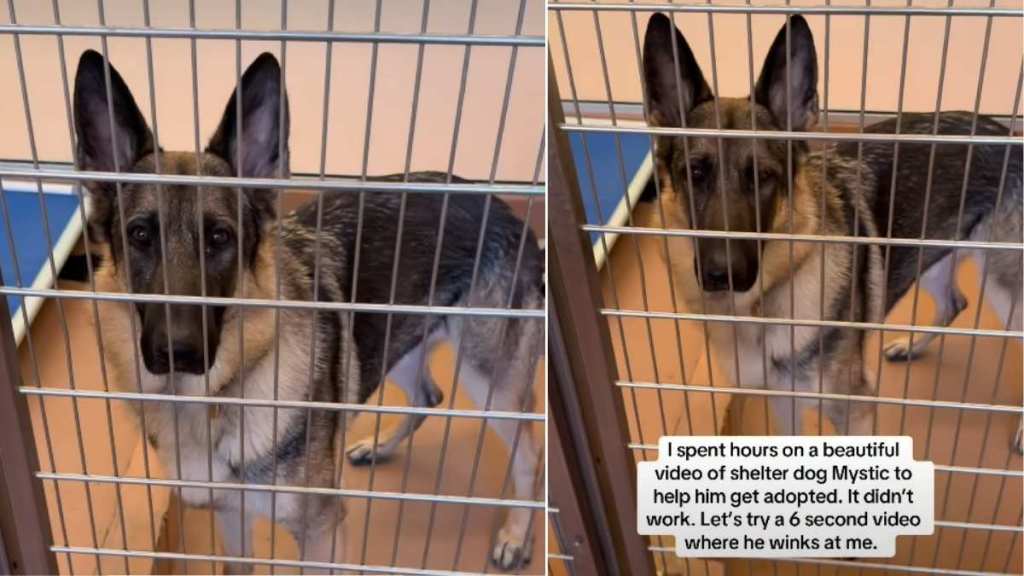
The video is six seconds long. A camera zooms out from a kennel info card and suddenly there he is — a three-year-old German Shepherd sitting perfectly still inside his run at the Benton-Franklin Humane Society in Kennewick, Washington. He looks at the camera. One eye closes. Just once. Volunteer and photographer Julie Saraceno gasps aloud in pure disbelief, and then the clip ends. That wink, and that gasp, and more than two hundred days of waiting, turned a shelter dog into a story people couldn't stop sharing.
Mystic has been at the shelter since late 2025. If you could read a résumé for a shelter dog, his would stand out immediately: he takes commands in both English and Spanish, though his ears perk up especially fast when he hears sentado — sit — or ven — come. He loves pool time. He will chase a herding ball until someone runs out of arm strength. At around 40 kilograms, he carries himself like a dog who knows he deserves a job, which means the right home will be an active one: somewhere with older kids, no cats, and room for a dog who genuinely needs to be moving.
The volunteers who kept trying
What is harder to explain is why someone like Mystic waited more than 200 days. He is smart, playful, and clearly attached to the people around him. But long-stay dogs at busy shelters often struggle with visibility — they get passed over by people drawn to puppies, or avoided by adopters who feel uncertain about larger breeds. Julie had already posted a longer video of Mystic playing outside with a herding ball; it was a good video, careful and affectionate, but it didn't move the needle. So she pivoted to something shorter: just his face, just that wink.
The wink video picked up more than 1,500 likes in its first nine hours online. Comments filled with people saying they were sharing it, tagging friends, begging the right person to see it. Others wrote that their own German Shepherds did the same thing. The internet did what it sometimes does with a dog who has been waiting too long: it decided this one mattered.
Why large dogs wait
Mystic's 200-day stay is long by any measure, but it sits inside a documented national trend. Data from Shelter Animals Count shows that large dogs' median shelter stay more than doubled between 2019 and 2023, rising from 11 days to 21. Adoptions of large dogs fell a further 9% in the first half of 2025 compared to the same period in 2024, while adoptions of small dogs rose 6% over the same stretch. The ASPCA has flagged the same pattern: large dogs are staying in shelters longer than at any point in the past five years, adding sustained pressure to a system already stretched thin. German Shepherds — energetic, large, and often perceived as requiring an experienced home — sit squarely at the center of that problem.
The day someone drove three hours
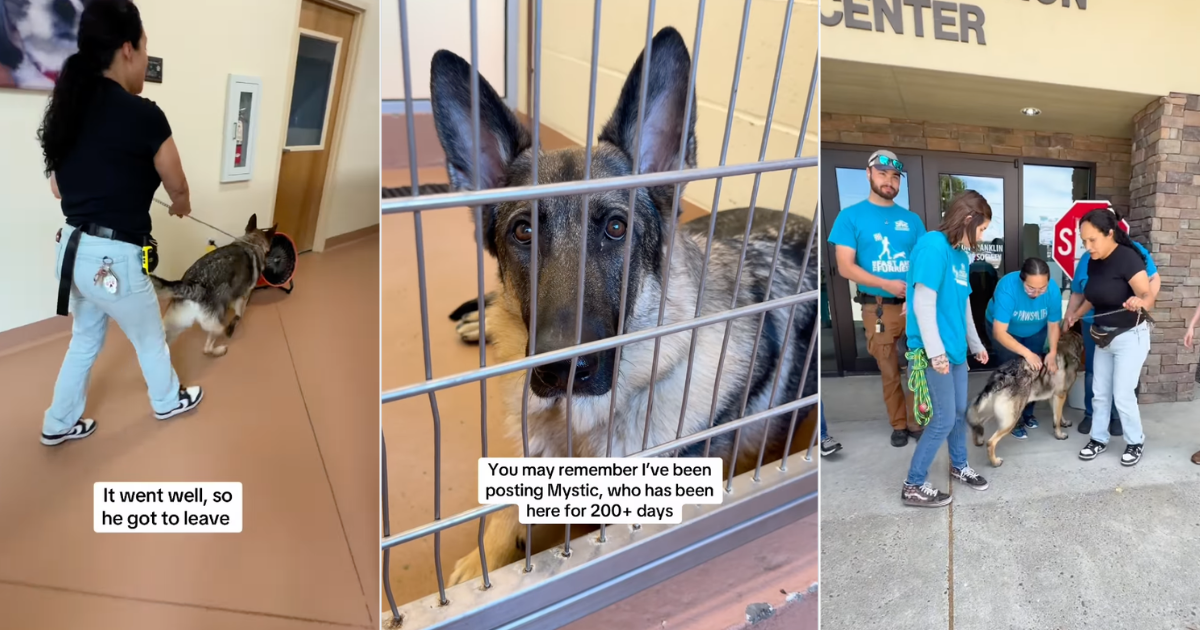
Four days after the wink video began circulating, a stranger made the drive. More than three hours, according to the shelter, to reach a dog they had seen on a phone screen. The introductory meeting went quietly well. Staff who had known Mystic for the better part of a year started to sense that this was actually happening — that the long wait was ending not in the ordinary way that shelter adoptions often do, with a family who had been searching nearby, but with a specific person who had seen a specific six-second video and made a decision.
The goodbye
Julie arrived with a leash and found the hallway already filling with people. Staff lined up along the kennel corridor as Mystic walked out toward the lobby, stopping to sniff his favorite people as he passed, unhurried, as if conducting his own farewell on his own terms. Once outside, everyone gathered for a final group photo. Hands scratched his back. People told him out loud that they loved him.
It was a special day.
— Julie Saraceno, shelter volunteer, @jsaraceno
Mystic crossed the parking lot to his new owner's car and leaped into the back seat in a single motion. Then, because he is Mystic and 200 days of waiting is behind him now, he immediately climbed into the front passenger seat. The farewell video gathered more than 5,700 likes from people who had been following his story since the wink. One person in the comments wrote: "Go Mystic! I call shotgun!"
What a long shelter stay costs a dog
Shelter life for a high-energy dog like Mystic is a particular kind of endurance test. The days have a sameness to them — the same walls, the same sounds of other dogs and the squeak of supply carts — broken up by walks with volunteers, training sessions, and visits from people who turn out not to be the right fit. Volunteers like Julie show up not because the work is glamorous but because they have learned that visibility is often the difference between a dog who waits two weeks and one who waits two hundred days.
Trying to sleep in a shelter is like trying to sleep with noisy neighbors. You can't get in a good nap during the day.
— Dr. Lisa Gunter, animal scientist, Arizona State University
Research published in the journal Animals in 2023 by Virginia Tech scientists Drs. Lisa Gunter and Erica Feuerbacher — analyzing outcomes for 1,955 dogs across 51 U.S. shelters — found that brief community outings increased a dog's likelihood of adoption by five times. Overnight foster stays pushed that figure to fourteen times (https://www.mdpi.com/2076-2615/13/22/3528). The mechanism isn't acute stress relief; it's the visibility those moments generate, and the firsthand account a potential adopter hears. The kennel info card, the ball in the yard, the six-second wink: each was a different attempt to put the right dog in front of the right person.
What finally worked was the smallest, most accidental thing. Mystic didn't perform for the camera. He just looked at it and blinked. The realness of the moment — Julie's audible gasp, his absolute composure — was the thing that spread. What comes next will be shaped by all the ordinary things that shelter life can't provide: the morning exits, the long sniff breaks, the afternoons in a yard that is permanently his. The wink was just the introduction.