The dog who spins for the trash truck, and what his joy is really about
Doges Editorial · 2026-05-13 · 4 min read
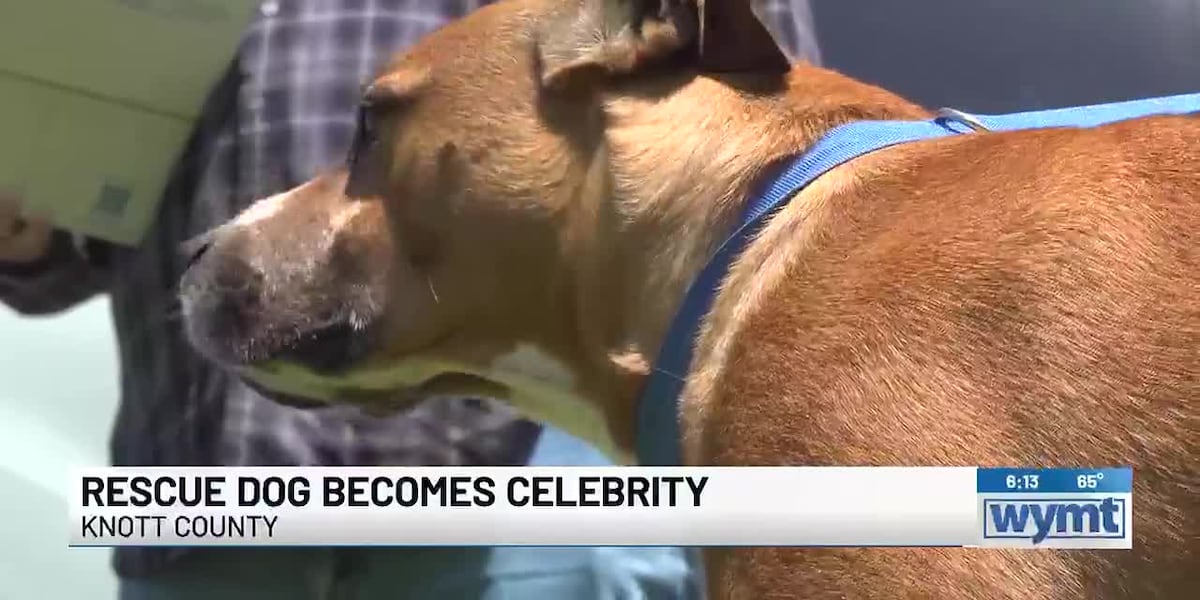
Murphy spent nine months as a stray in the Kentucky hills before a family finally caught him. Now he greets the Rumpke truck every Monday with a full-body spin his family calls the Murph-nado — and the viral joy is pointing at something much larger than one happy dog.
Before the truck rounds the corner onto Murphy's road in Knott County, Kentucky, his ears go up. He can hear it coming from about a mile away — a diesel engine working through the Appalachian hills — and from that moment forward, everything in his body is committed. The tail goes first. Then the whole torso. By the time the Rumpke trash truck appears, Murphy is already at the fence line, spinning. His family calls it the Murph-nado.
It happens every Monday. It has happened every Monday for five years. Someone filmed it. Someone shared it on Facebook and TikTok. Thousands of people — most of them nowhere near eastern Kentucky, never having heard a garbage truck grinding through mountain switchbacks at seven in the morning — watched a rescue dog express complete, uncomplicated joy and felt something lift. As WYMT reported on May 11, 2026, the Murph-nado has made an unlikely celebrity out of a dog who used to sleep in the hills and wonder where his next meal was coming from.
A Rescue Story Behind the Spin
Murphy's weekly ritual didn't begin on a fence line. It began somewhere out in the Knott County hills, where he spent nine months surviving on his own. His owner, Heather Pigman, remembers the effort to catch him — the traps that didn't work, the coaxing that went nowhere. Dogs that have lived outside that long learn wariness the way people learn a second language: fluently, without thinking about it. Murphy had learned it well.
Then, one day, he came to Pigman's two daughters. And that was it.
Murphy was a stray for about nine months, and we tried to trap him, we tried everything, and we just got really lucky, and he came to my two girls, and that was it. He's been here since.
— Heather Pigman, Murphy's owner
Five years later, Murphy sits in the yard every Monday and listens. He can hear the truck from a full mile away, Pigman says. He waits — still, intent, his whole body coiled — and then the truck appears, and he spins. The same routine, the same fence, the same driver who already knows to look for him.
There's just so much negativity, and it was a moment that I would enjoy every week — so I wanted to share it with my animal-loving friends, and they do. They love him.
— Heather Pigman
What Trash Truck Drivers See
Troy Catron, Rumpke's eastern Kentucky operations manager, wasn't surprised his drivers knew about Murphy before anyone in management did. Drivers spend their days moving through communities — past front porches and fence lines, past dogs that bark and dogs that wait and watch. They notice what stays and what goes. They had noticed Murphy. They had started looking forward to Mondays.
It's a real problem, and any good relation we can have to help — whether it's just being in a position where a dog can chase our truck around — if it makes that dog happy, we want to be involved.
— Troy Catron, eastern Kentucky operations manager, Rumpke
That 'real problem' Catron mentions is the stray dog population across rural eastern Kentucky. Rumpke drivers encounter strays regularly on their routes — not as a news item, but as a routine fact of working these roads. Most of those dogs don't have a Heather Pigman waiting. Most of them don't have a fence to spin along. They have a road, and whatever comes next.
The Weight Behind Fifty Dogs
Murphy is Pigman's success story. She has others. Since 2017, she has quietly taken in more than 50 dogs found near her home in Knott County — holding them, caring for them, finding space in rescues when space opens up. It is slow, unglamorous work. It doesn't go viral. But it keeps animals alive through the gaps of an overburdened system, one dog at a time, in between the phone calls to shelters that are already full.
She talks about the economics of it plainly. In eastern Kentucky, where mountain roads separate many communities from the nearest veterinary clinic, a routine procedure — a neuter, a vaccination, an emergency visit — is not always accessible. The problem in this region isn't a lack of love for dogs. It's cost, distance, and the mobile infrastructure that either exists or doesn't.
There's not a lot of people that can afford the vet bill now. So I think more spay and neuter clinics, mobile vet clinics — because some of these people can't even make the trip, and shelters are full, rescues are full.
— Heather Pigman
Where the Murph-nado Goes From Here
Now that Murphy's Monday ritual has found an audience, Pigman wants to use it for something beyond the smile. T-shirts and bumper stickers are in development, with proceeds earmarked for a local rescue organization. A dog's weekly spin along a fence line, captured on a phone and shared a few thousand times, might end up funding the mobile clinic that catches the next stray before he spends nine months in the cold.
Murphy doesn't know any of that. He knows the sound of a Rumpke truck at approximately one mile. He knows the fence, the corner, the precise moment it's time to start moving. He has been counting on this Monday ritual for five years — the same thing, at the same time, on the same stretch of road, with the same people watching from the porch.
The Meaning in the Mundane
For a dog who spent nine months with nothing he could count on, that predictability is not a small thing. That is everything — the certainty that the truck will come, that the spin is acceptable, that someone is watching from the yard. A rescue dog's deepest luxury is a routine he can believe in.
The next time you clip the leash on the same hook, in the same hallway, at more or less the same hour you always do — pay attention to what happens in your dog. The way they arrive in the moment. The way their body telegraphs anticipation before you've even made it to the door. Murphy's Murph-nado is just the visible version of something every dog does when they know what's coming and trust that it will.