The dog who waited at the waterfall
Doges Editorial · 2026-06-04 · 5 min read
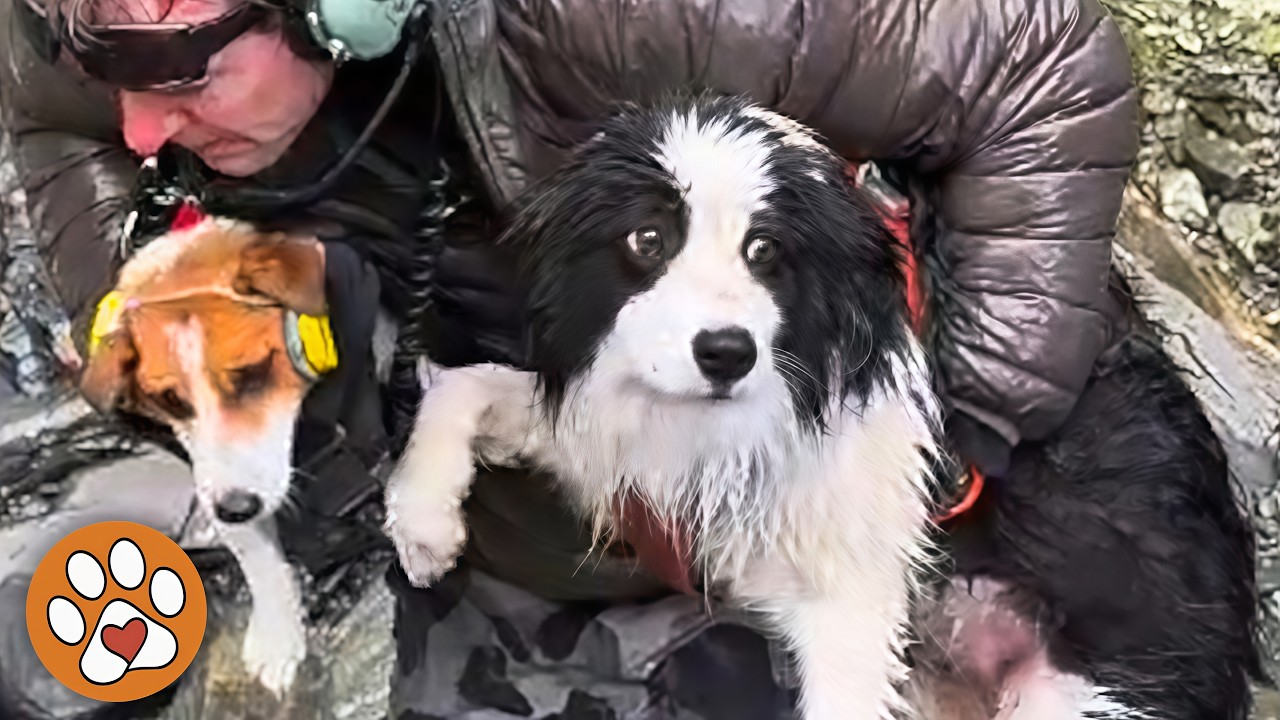
A young hiker fell 180 feet down a waterfall in New Zealand's backcountry. Rescuers airlifted her out and left her border collie Molly behind in the spray and silence. Molly waited eight days.
The helicopter came in low over the Arahura Valley on the morning of March 24, rotor blades cutting through the mountain mist. Below, on the rocks at the base of a 55-meter waterfall deep in New Zealand's South Island, a rescue crew found Jessica Johnston — seriously injured, barely conscious. They loaded her carefully into the cabin and rose into the white sky above the Campbell Range. They left without Molly.
Eight days in the mist
Molly is a four-year-old border collie, black and white, the kind of dog who memorizes every switchback on a trail and knows which way you'll turn before you do. Nobody saw her fall. Nobody knew whether she'd tumbled down the waterfall with Johnston or scrambled off into the bush. For eight days, no one knew if she was alive.
The accident happened on the Campbell Range, a remote stretch of the West Coast reachable only by helicopter. The Arahura River runs cold through its mossy gorges. There are no roads in, no cell signal, no easy way to search. The valley floor is all shadow and spray.
From her hospital bed, Johnston wrote on Facebook: "I'm absolutely blown away with the support everyone has given her so far from the kindest of strangers. Thank you for helping bring my Molly back home."
A gut feeling and a fundraiser
Lillian Newton runs Precision Helicopters New Zealand out of Hokitika Gorge, a few valleys from where Molly went missing. When she heard the story, she said she had a gut feeling that the dog was still alive. She launched a fundraising campaign with a target of NZD 2,500 — just enough to fund one more flight into the valley.
Within six hours, strangers had pledged more than NZD 11,500 — roughly USD 6,600. People who had never met Jessica Johnston, who had never heard of the Campbell Range, who would never know the outcome firsthand, sent money because the image of a border collie alone at the base of a waterfall was one they could not sit with. Lillian stopped the campaign and passed the news to her father.
Matt Newton is a former rescue helicopter pilot who knows those valleys well. He called the hospital.
I contacted her in hospital and said I'd go for a look for (Molly).
— Matt Newton, Precision Helicopters New Zealand
The thermal camera
Newton searched the valley several times and found nothing. The terrain was unforgiving — sharp mossy rock, cold spray from the falls, deep gorge shadow. On the fourth attempt, the team borrowed thermal imaging equipment from a local operator and went back in.
The shape appeared on the screen within an hour. Warm, still, alive.
We struck jackpot within about an hour. As we made our way up the river, we could see the dog in the thermal, and then we could visually see it.
— Matt Newton, Precision Helicopters New Zealand
Molly was exactly where Johnston had fallen — just a few meters, Newton said, from the spot where her owner had been airlifted away. The rescue team's theory: she had spent eight days slowly moving back toward the last place she had been with Jessica, navigating through wet rock and cold spray, navigating by some internal logic that had nothing to do with GPS and everything to do with loyalty.
Sausage, Bingo, and a barbecue
Getting Molly out safely required hovering the helicopter close to the cliff face while a crew member named Wayne climbed down to the rocks. Wayne had thought to bring his own dog — a Jack Russell terrier named Bingo — in case Molly was too frightened to approach a stranger. After offering her a piece of sausage, Wayne picked the border collie up under one arm, Bingo tucked under the other, and carried them both back to the helicopter.
Molly was bedraggled and hungry but in "surprisingly good condition" — Newton's words, delivered with the matter-of-fact understatement of someone who has done difficult things in the mountains and tries not to make a production of it.
She knew what we were up to, I think. She behaved real well. She didn't run away, and she was pleased to be rescued.
— Matt Newton, Precision Helicopters New Zealand
The volunteers who had organized the search from the helicopter base had planned to take turns in the air. The rescue happened so quickly that there was nothing left to do when word came through. "Instead we just had a big barbecue and all had a cuddle with Molly," Newton said.
The reunion
Johnston, still recovering from her injuries, arrived hours after the rescue. No one described that moment in clinical terms. Newton reflected on what it meant for her recovery. "I think that'll speed up her healing process somewhat," he said. "Having your dog back, that's for sure."
What a dog knows about returning
In one sense, this is a story about community — about how NZD 2,500 became NZD 11,500 in an afternoon, how a former rescue pilot pointed his nose at a remote valley for strangers he had never met, and how a man named Wayne thought to bring a Jack Russell just in case. That part of the story says something important about what people do for each other and for dogs.
But the part that stays is what Molly actually did in those eight days. She didn't flee the valley. She moved, slowly, back toward the last place she had been with Jessica. She was at the base of the waterfall, as close to the last known coordinates of her person as the terrain allowed, when the thermal camera caught her shape glowing warm against the cold rock.
Border collies are bred to map terrain, to follow the shape of things, to hold position until called. But dogs of all kinds seem to carry some version of this — a deep orientation toward the human they've chosen, expressed not in barking or running but in staying close to the last known place. The next time your dog pauses on a familiar path and turns to check that you're still behind them, you'll know a little more about what that turn means.