Krakka Went Underground. It Took 48 Hours, a Drone Team, and a Pair of Bare Hands to Get Her Back.
Doges Editorial · 2026-06-07 · 4 min read
DOGES
A four-year-old terrier disappeared for two days near a Yorkshire village — until her owner heard a faint whimper from a nettle patch and found her buried three feet down in a collapsed rabbit warren.
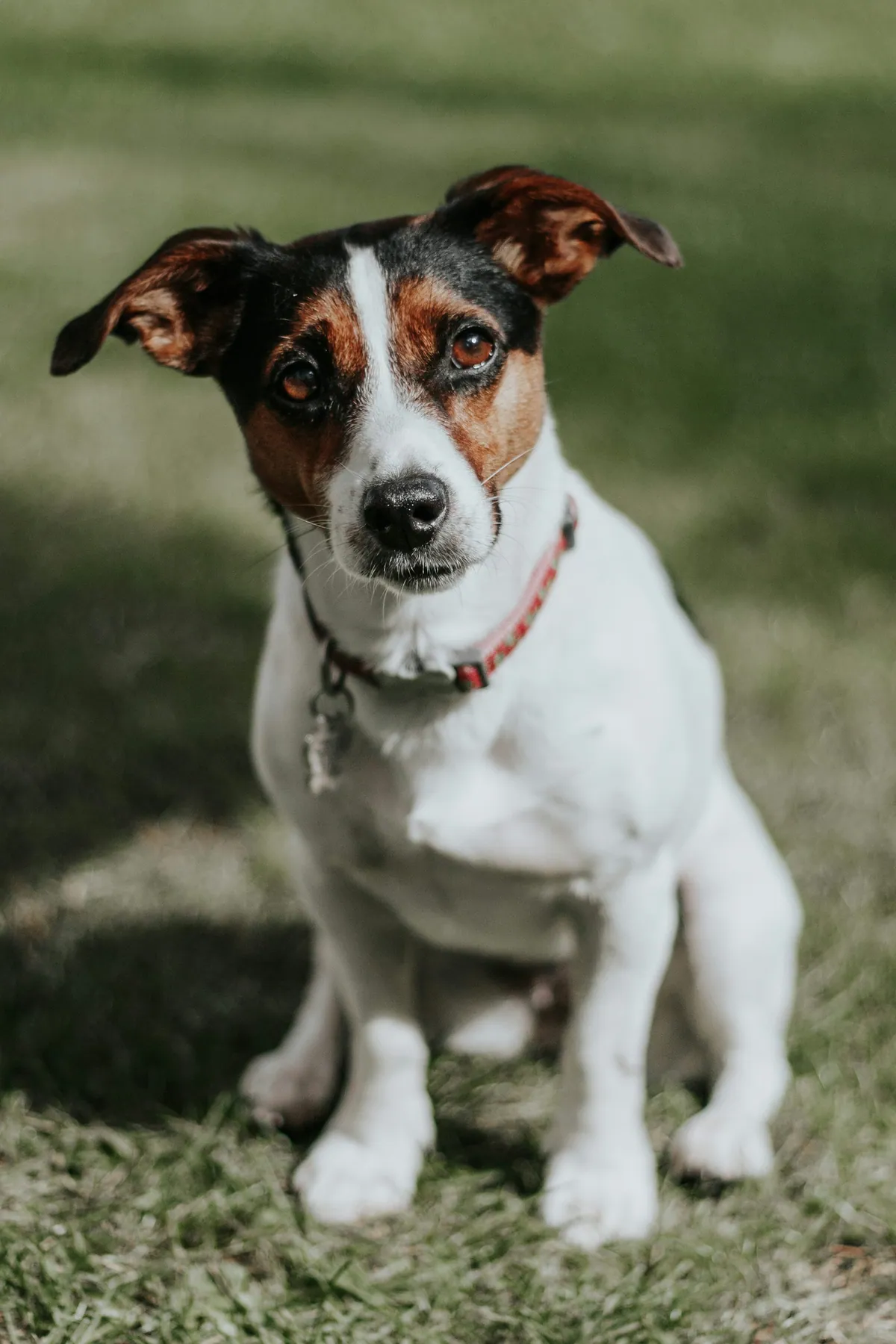
On April 30, Glynis Elgey's four-year-old terrier Krakka disappeared near the village of Shiptonthorpe in East Yorkshire. She was white, brown, and black, with the particular wiry self-assurance that terriers carry like a birthright — and she had, in all likelihood, gone down a rabbit hole.
That was the working theory. Terriers were developed over centuries for precisely this: pursuing quarry underground, navigating tunnels too tight for larger dogs, going into warrens where humans couldn't follow. The instinct runs deep. The problem, when it activates in the wrong warren at the wrong moment, is that sometimes a terrier goes in and doesn't come back out.
The landscape around Shiptonthorpe doesn't advertise its rabbit population. The village sits in the East Riding of Yorkshire, where flat agricultural land gives way to hedgerows, overgrown field margins, and the kind of undisturbed patches where rabbits excavate over decades without attracting attention. A terrier's nose knows what a human's eye misses. The warren Krakka entered on April 30 had almost certainly been there for years.
Calling In the Drone Team
Glynis and her partner David Hudson searched the fields and hedgerows around Shiptonthorpe. They called. They walked the ground she might have covered. When the area offered nothing back, they called in Steve Priestman, a search-and-rescue drone pilot based in Hull, and his colleague Jennifer Zarek.
Drone SAR has changed what's possible in animal searches. A pilot can cover in twenty minutes what would take hours on foot, looking for heat signatures, movement, anything that distinguishes a living animal from the landscape. The technology is particularly useful in dense terrain — a dog hiding in undergrowth that would take hours to search by hand shows up almost immediately from above.
We tried searching for her with a drone, but we couldn't find any sign of her.
— Steve Priestman, drone SAR pilot, Hull
The drone found nothing. No heat signature, no movement, no sign of Krakka anywhere near the surface. One day passed, then two. By May 2, forty-eight hours had gone by with no leads. The possibilities that occur during a search like that — the ones you don't say out loud — had started to feel more present.
A Whimper in the Nettles
Then someone heard something.
Faint, from the direction of a nettle patch — the kind of sound you'd dismiss if you weren't listening with the specific attention of a person who had been searching for two days. But Glynis was listening that way, and what she heard was a whimper.
Priestman moved toward the nettles. They were dense, the kind that sting through a jacket sleeve if you're not careful, and the sound was coming from inside them — or rather from below them. The drone had searched the surface and found nothing because Krakka wasn't on the surface.
That's when we realized Krakka was trapped below the surface.
— Steve Priestman, drone SAR pilot
The rabbit warren had collapsed. A small landslide — the right word is almost too dramatic for something that happened quietly, invisibly, underground — had shifted the soil while Krakka was inside it. She had gone down, and the tunnel had come down around her. Tree roots had grown around her abdomen. She was roughly three feet below the surface, in the dark, and she had been there for two days.
She was alive. That much was clear from the whimper.
Twenty-Five Minutes
The excavation required patience. You can't rush when a dog is wedged in a collapsed tunnel, when tree roots are threaded around her body, when the wrong movement could shift more soil onto an animal who's already been underground for forty-eight hours. Priestman and the search team worked carefully, loosening the earth, widening the opening, moving toward her.
It took twenty-five minutes. Then a paw appeared in the dirt — white-tipped, unmistakable, belonging to exactly the dog they'd been looking for.
So, then we set to digging — all we could see was a paw. We were so thrilled. We thought we would never see her again.
— Glynis Elgey, Krakka's owner
Then the rest of her: the brown-and-white body, the root-marked abdomen, the blinking eyes adjusting to the May light. Forty-eight hours underground, in a collapsed warren, in the cold and the dark. Krakka came up.
The Kiss
I was so excited when we found her and she was alive. The first thing she did when we got her out was give me a kiss.
— Glynis Elgey, Krakka's owner
Priestman said later that the relief was something he wouldn't forget. 'We were all so relieved. It was an incredible feeling knowing she was going to be OK.' A veterinarian checked Krakka and found no serious injuries — malnourished and shaken, but physically intact. Two days underground, with tree roots for company, and she came out ready to be kissed.
The Second Hole
Terrier owners will not be surprised by what happened next.
Almost immediately after being pulled from the warren that had held her captive for two days, Krakka walked toward another rabbit hole and began investigating it. Glynis stopped her.
The instinct that got Krakka into trouble — the thing that pointed her nose at that warren on April 30 and sent her underground — was entirely intact. The experience had not revised it. The warren had collapsed on her, tree roots had pinned her in the dark, and she had spent two days unable to move or be found; none of that had updated the terrier calculus that says: there is a hole, and what is in the hole is interesting.
There is something in that moment — the immediately-investigating-again — that captures something essential about dogs. The world does not stop being interesting because something went wrong in it. The nose follows the scent regardless of the previous outcome. Krakka went underground and came back and the first thing she did was kiss her person and the second thing she did was look for another hole to go down.
The drone that couldn't find her from the air found her with ears, in a nettle patch, three feet down. The technology failed; the listening worked. Some searches still come down to standing still long enough to hear something small.