The stray who came home: how a city found Kaddu
Doges Editorial · 2026-05-18 · 5 min read
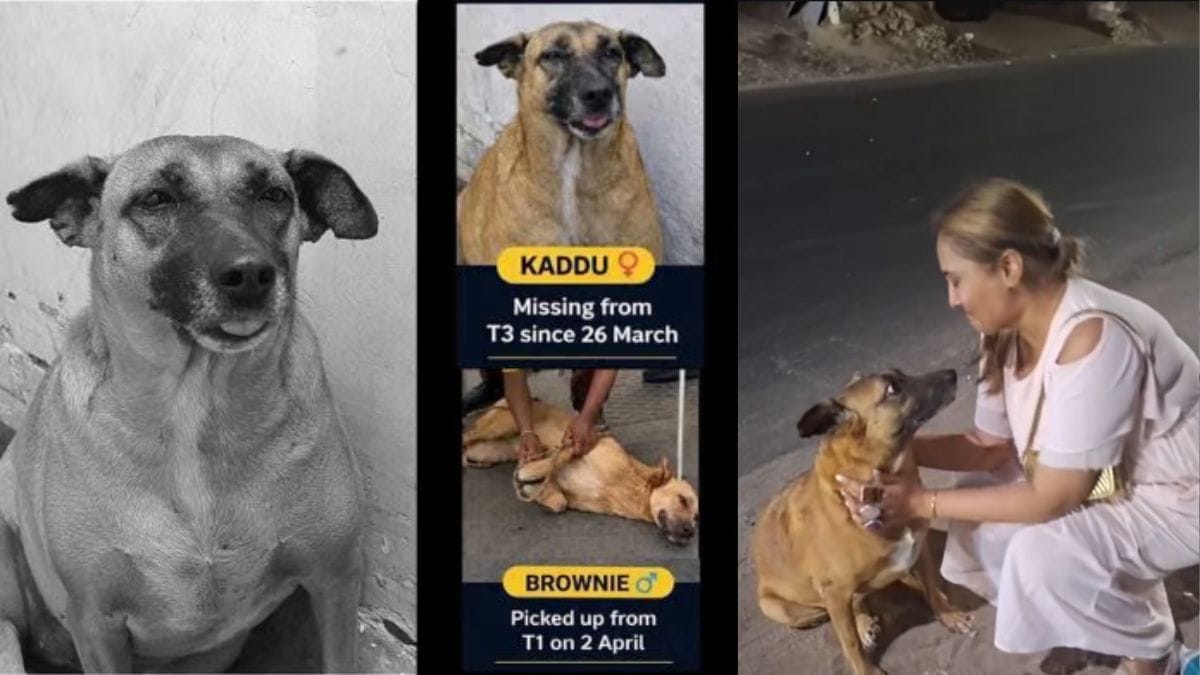
For twelve years, a toothless dog named Kaddu lived at Delhi's international airport, known to thousands of travelers and staff. When she vanished, an unlikely network of night-shift feeders mobilized to find her.
Near the food stalls on the arrivals level at Delhi's Indira Gandhi International Airport, a gap-toothed, grey-muzzled dog named Kaddu had a favourite sleeping spot. She had been sleeping there, more or less, for twelve years — through three terminal expansions, through tens of millions of flights, through the comings and goings of everyone from construction labourers to Bollywood stars. She was 12 years old, toothless, and deeply familiar to anyone who spent time in that terminal. Ground staff saved food for her. Travellers on long layovers photographed her. She was, in the specific and irreplaceable way of a community animal, a living fixture of the place.
On March 26, 2026, she was gone. A video began circulating on WhatsApp — Kaddu pinned to the ground by animal control officers, a noose around her neck, being loaded into a vehicle. Within hours, that video had been seen by hundreds of thousands of people. Animal welfare groups filed complaints. A Delhi court criticised the police investigation for a lack of "serious efforts." Bollywood actor Tabu dropped a comment of support online. Kaddu had vanished, and the city had not forgotten her.
The video that changed everything
The disappearance of a street dog from an Indian airport might seem like a local story. In practice, Kaddu's case became something bigger — a test of whether a dispersed, informal community of animal carers could function as something like an organised search operation. The activist and lawyer networks that mobilised around Kaddu's case were not a formal rescue society. They were, at their core, feeders: people who show up every morning and evening to particular corners, parks, and footpaths to feed the stray dogs in their territory. In a city of 20 million people, that network is enormous.
An army of feeders
Animal welfare activist Jasmeet Kaur described to ThePrint how the search was coordinated. Feeders across the neighbourhoods adjacent to the airport — Dwarka, Mahipalpur, Shahbad Mohammadpur — began comparing notes. They shared Kaddu's photo in WhatsApp groups. They asked fellow feeders to check unfamiliar dogs at their spots. They connected with workers living in construction camps near the airport perimeter. The search was conducted largely in the early morning hours and late at night, when feeders do their rounds.
Many dog lovers took up the cause of searching for the missing dogs by connecting with fellow feeders in the city. Feeders operating in residential areas near the airport would keep an eye out at their feeding spots, parks and footpaths in their localities, hoping the two might show up.
— Jasmeet Kaur, animal welfare activist
Weeks passed with no sightings. Then a month. A second dog from the airport — Brownie, whose capture had also been filmed — remained missing as well. The feeder network began to suspect that Kaddu had been moved somewhere inside the airport's boundary rather than taken to a distant shelter. The wall around IGI Airport is ten feet high, and large stretches of it border residential and commercial zones invisible from the terminal.
Found in the dead of night
It was a local feeder named Mohit Lamba who finally found her. On one of his late-night search rounds near Shahbad Mohammadpur — a village that sits directly behind the airport, separated from the runway by the boundary wall — Lamba began knocking on the doors of offices and construction sites, asking workers if they had seen a hairless older dog. He brought his elderly mother with him.
At a commercial office building on the outskirts of the village, the guards knew exactly who he was talking about. They had been feeding Kaddu every evening for more than a month. She had wandered in through an open gate shortly after she disappeared from the terminal, and she had stayed. When Lamba showed them the missing posters being circulated online, recognition was instant. Within minutes, video of Kaddu flooded WhatsApp animal rescue groups across the city.
The guards who had been feeding her every night for over a month had gotten very attached. When they were told that Kaddu needs to be moved from the office so a permanent home can be found for her, the guards were in tears, they pleaded with Mohit not to take her away from them.
— Jasmeet Kaur, animal welfare activist
The weight of small kindnesses
There is something worth sitting with in that image: the night-shift guards, working their rounds in a commercial building on the edge of an industrial zone, feeding an old dog in the dark, growing attached over six weeks. They had not been following the social media campaign. They did not know about the Delhi court case or the activist networks or the hundreds of thousands of views on the original video. They had simply fed a dog who showed up, and then they wept when she left.
India has an estimated 35 million street dogs. For most of them, the safety net is exactly this kind of care: feeders who show up before dawn, construction workers who set out water, guards who share their dinner. It is not formal and it is not organised. It is the accumulated weight of small, daily decisions by people who could have walked past — and did not.
A home at last
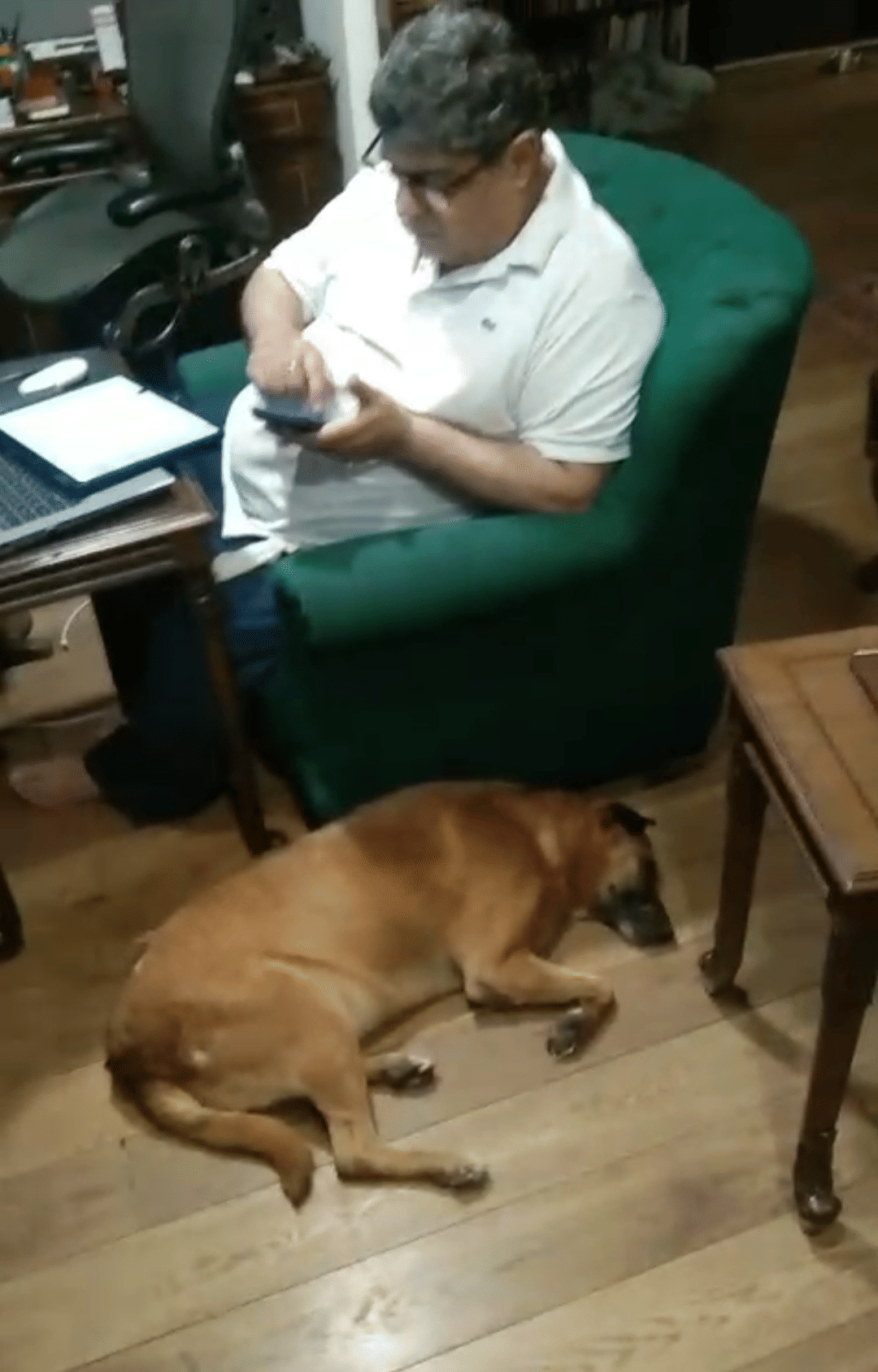
Senior Advocate Percival Billimoria adopted Kaddu shortly after her return. He told ThePrint she was adjusting slowly — she had spent twelve years as a stray, so she preferred the garden to the house, and still watched the gate with the careful attention of a dog who had always made her own decisions about where to go.
More than the wealthy, it is the poor who take care of street animals. Amongst the wealthy there are not many takers for strays as they prefer exotic dog breeds which cost a lot. Caring for stray animals is something the well-to-do must learn from the poor.
— Percival Billimoria, Senior Advocate, Kaddu's adopter
One home found; one search still going
Brownie, the other dog who went missing from IGI Airport on the same day in March, has still not been found. The feeder network is still looking. The WhatsApp groups are still active. Somewhere in a village near the airport perimeter, or inside a compound, or in the care of someone who doesn't yet know they are sheltering a dog the internet is looking for — Brownie is out there. The people who found Kaddu have not stopped.
Kaddu is in her garden in Delhi now, learning what it means to have one gate and know it is hers. Somewhere in the same city, the people who fed her for twelve years at the airport are still out before dawn, making their rounds, noticing what's changed. That kind of attention — daily, unglamorous, stubbornly consistent — is what found her. It's what finds most things worth finding.