Shot on a Monday, home by Saturday
Doges Editorial · 2026-06-29 · 5 min read

On June 23rd, a two-year-old German Shepherd named Havoc was shot while helping Columbus police stop a homicide suspect. Four days later, four law enforcement agencies escorted him home from the hospital.
On the afternoon of June 23rd, a call pulled Cpl. Brent Wilson and his K9 partner Havoc to Baker Plaza Drive in Columbus, Georgia. A homicide suspect — Jerome Willis, 33 — had just shot a Dollar General store manager on Victory Drive and fled the area. Havoc, a two-year-old German Shepherd cross-trained in narcotics detection, tracking, and suspect apprehension, was deployed to help locate and contain him. During the operation, Havoc was shot.
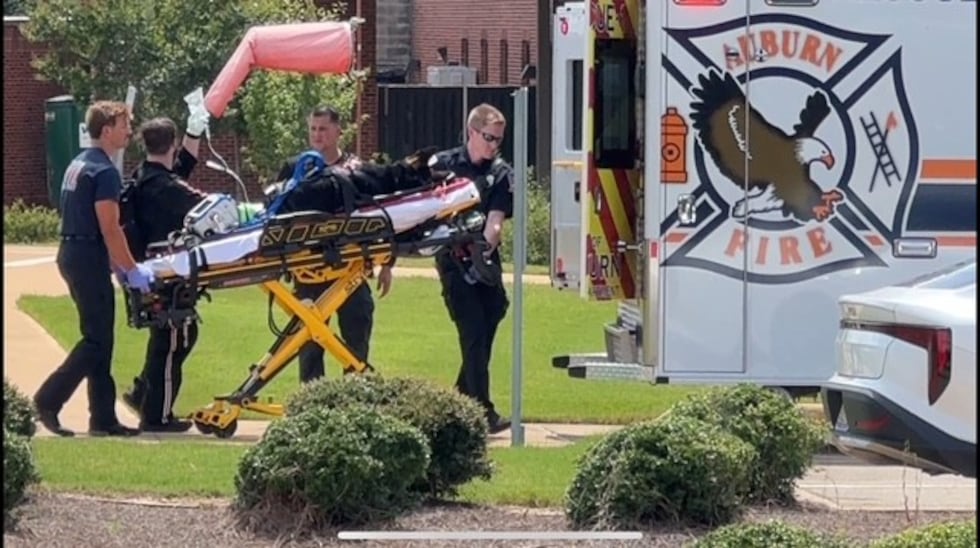
The situation resolved fast and badly for Willis, who was shot and killed in the parking lot of the old Muscogee Elementary School. But the price of stopping him had already been paid. Columbus police loaded Havoc into an emergency transport and he was airlifted to the Bailey Small Animal Teaching Hospital at Auburn University, roughly forty miles southwest of Columbus. He arrived on a stretcher.
By Tuesday night, Columbus PD confirmed Havoc was in stable condition and would need surgery. He got it. And on Saturday morning, June 27th — four days after he had been rushed through those hospital doors — he was discharged. Multiple law enforcement agencies were waiting in the parking lot to take him home.
A dog built for difficult work
Havoc is two years old, which in law enforcement K9 terms means he is just reaching the beginning of his working prime. German Shepherds in police service typically work eight to ten years before retirement, so a full recovery would mean he has the better part of a decade ahead of him in the field.
He is certified in three disciplines, which is unusual even among working K9s. Most police dogs specialize: either patrol and apprehension, or narcotics detection, or tracking. Havoc does all three. On a given shift, he might indicate on a concealed drug cache during a vehicle stop, follow a scent trail across miles of ground, or assist in taking a fleeing suspect into custody when officers need backup. That range makes him one of the more versatile working dogs in the Columbus Police Department.
What every working dog accepts
The Officer Down Memorial Page, which has tracked police K9 deaths in the United States for decades, recorded eight working dogs killed by gunfire in 2022 — out of eighteen K9 line-of-duty deaths that year. The national record of K9 injuries short of death is not formally maintained; most departments have no centralized system for reporting wounded dogs. What is known is that roughly eight dogs per year do not make it home from the kind of call Havoc ran on June 23rd. He is part of a story the national record largely does not tell.
K9 officers risk their lives keeping our communities safe, and K9 officers face the same dangers as human officers: shootings, stabbings, attacks, accidents, and other line-of-duty-related fatalities.
— Project Paws Alive, annual K9 memorial tracking
The behavior that took Havoc into danger on June 23rd is not an accident of temperament. It is the precise thing his training was designed to build. Through hundreds of repetitions during their preparation, working K9s are shaped to move toward the thing the handler directs them at — the suspect, the vehicle, the building — and to hold that engagement under conditions most dogs would break from. A bullet is among the conditions this training cannot prepare for, which is also what makes the outcome carry the weight it does.
Four agencies, one procession
When the Bailey Small Animal Teaching Hospital cleared Havoc for discharge on the morning of June 27th, something unscripted took shape in the parking lot outside. Four separate law enforcement agencies had assembled for the drive home: the Auburn Police Department, the Opelika Police Department, the Lee County Sheriff's Office, and the Columbus Police Department's own motor squad. Motorcycles and patrol cars from four separate jurisdictions — different budgets, different uniforms, different chains of command — formed a single slow-moving procession out onto the Alabama roads toward the Georgia state line.
Nothing required this. There is no protocol that mandates a multi-agency escort for a K9 being discharged from a veterinary hospital. It happened because the officers involved decided it was the right thing to do — which is, in some ways, a more interesting reason than protocol would be.
The legal and ceremonial recognition of K9 officers in the United States has expanded considerably over the past decade. Many states have passed laws making the killing or serious injury of a police dog a felony, rather than a property crime. When a K9 is killed in the line of duty, formal funerals have become standard in many departments — flag-draped caskets, honor guards, officers standing at attention in long lines. Havoc was not killed. But his escort home carried the same impulse behind it: that some occasions deserve to be marked publicly, and that doing so signals something about what the work means.
What four days of waiting looks like
K9 handlers rarely appear prominently in news coverage of their dogs' injuries. The focus, understandably, lands on the animal. But the experience of being a handler during those four days — of watching your working partner be loaded onto a helicopter, of waiting on surgery reports and vital sign updates, of measuring good news by the absence of bad news — is not a small thing to carry.
The relationship between a handler and a K9 doesn't map cleanly onto most professional partnerships. Handlers often live with their dogs. The dog sleeps in the house. The handler administers medication, tracks behavioral changes, learns the specific sounds each bark makes and what they mean. Research on the physiology of human-dog interaction shows that brief contact between a handler and a working dog measurably reduces cortisol in both — the stress hormone drops in the person and the dog simultaneously. Four days without that contact, waiting on news from a surgical ward, registers in the body as well as the mind.
The bond that shows up in data
In 2023, researcher Sydney Schultz at Boise State University measured handler-K9 attachment using standardized psychological scales. K9-handling officers scored significantly higher on attachment measures than the general public reports with companion animals — a statistically significant difference with a Cohen's d of 0.60 and p-values below 0.001 across all three subscales. They also reported lower stress than non-K9 officers in the same departments. The working relationship, the data suggests, does something to a person that ordinary dog ownership does not quite replicate.
The close-knit bond between officer and K9 is highly unique due to the constant pressure of life-threatening work.
— Sydney Schultz, The Influence of K9 Partners on Law Enforcement Officers, Boise State University, 2023
Cpl. Wilson was not physically injured on June 23rd. In the specific accounting of K9 work, that is only one of the ways a day can be hard.
Three months, and then back
Columbus police officials confirmed that Havoc is expected to make a full recovery in approximately three months. That is an optimistic timeline — it suggests the surgery resolved the critical damage and that the team at Auburn is confident in his long-term prognosis. Cross-training in three disciplines is not something a department rebuilds overnight; the fact that officials are talking about recovery rather than replacement is itself significant.
The three months ahead will look, from the outside, like a quiet walk back to normal. Rest comes first. Then careful, supervised movement. Then the kind of structured exercise that resembles play but is really rehabilitation — fetching things, running short distances, rebuilding strength and range of motion around whatever the surgery repaired. On the sore days, Havoc will move more carefully and Cpl. Wilson will notice. On the good days, he will run in a yard and look like a perfectly healthy dog, because that is largely what he will be.
By the time autumn settles over Columbus, if everything proceeds as the veterinarians expect, they will be back on shift together. The department will send them toward another difficult call, and Havoc will do what he has spent two years being trained to do, which is move toward the hard thing rather than away from it. The bullet he took in June will be a scar by then. Scars are not damage. They are just part of the record of a working life.