What a Lagos street learned from three dogs on a leash
Doges Editorial · 2026-06-16 · 5 min read
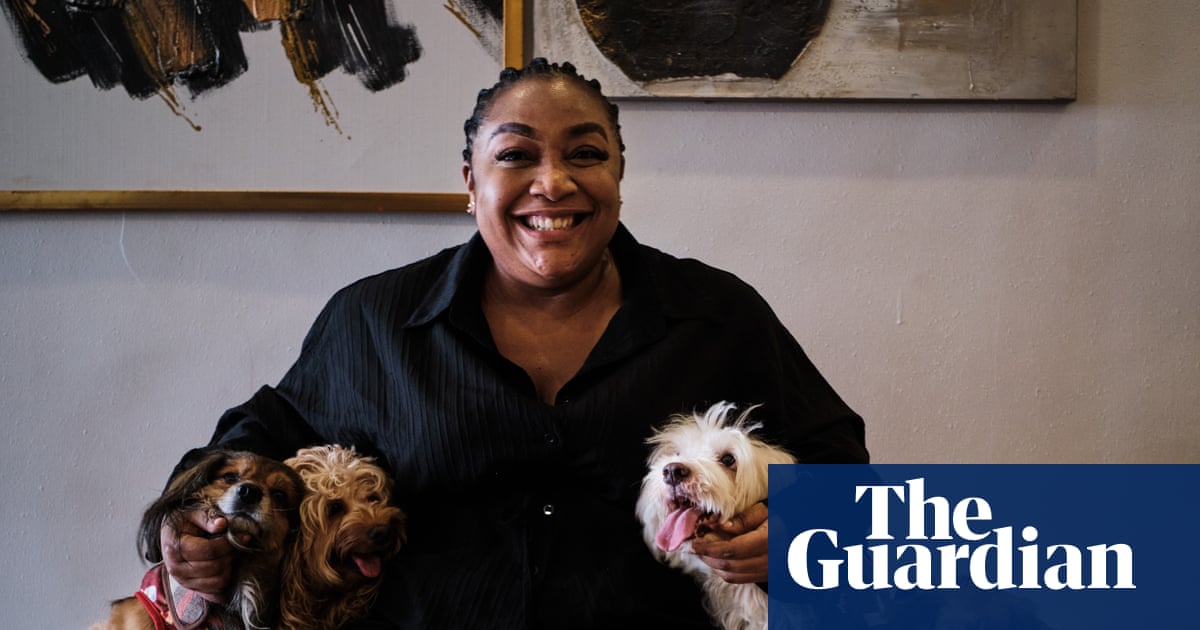
In Nigeria, where dogs have long been kept as guard animals or slaughtered for pepper soup, a growing community of Lagos owners, vets, and animal welfare advocates is quietly rewriting the script.
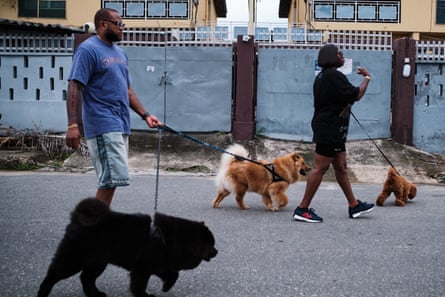
On a weekend morning in the Maryland district of Lagos, Izien Aigbodion steps onto the pavement with treats in one pocket and a water bottle in the other. His three dogs — a poodle and two chow chows — pull gently at their leads. A neighbour pauses. Dogs are common in this neighbourhood, but not like this: not out on the street, not walking unhurried beside their owner through the warm Nigerian morning. Reported in The Guardian this week, Aigbodion's walk is a small act in a large and quietly unfolding transformation.
The animal they kept behind gates
For most of Nigeria's recent history, the dog has lived behind walls. Guard animals, rarely companions — their job was the yard, the gate, the bark that kept strangers back. In some parts of the country, particularly across the south, dogs also appear on restaurant grills and in open markets. Locally known as "404" (the nickname borrows from the Peugeot model associated with speed and toughness), dog meat sells for roughly £13 to £25 a kilo. It carries cultural significance in some communities — valued not only as food but for its perceived spiritual properties: a protector from evil spirits, a ritual intermediary, a symbol of loyalty.
This is the tradition Aigbodion walks through every weekend. And it is shifting. Not dramatically, not all at once, but visibly — in the shelters fielding new inquiries, in the dog trainers and groomers whose client lists have grown, in the Facebook adoption groups that now count thousands of members in cities that had none a decade ago.
"People believe that dogs can only follow orders," Aigbodion said, stopping to calm his most skittish chow chow. "But when you live with them, you come to appreciate things like loyalty, emotion, even empathy."
A movement built on careful language
Jackie Idimogu, an anti-animal cruelty campaigner and founder of My Dog and I, has been building that shift for years. Her organisation runs advocacy campaigns, educational events, and the annual Lagos Dog Carnival — now in its seventh year — which has become one of the city's most distinctive annual gatherings of dog owners. Idimogu's approach is deliberate: she frames the movement not as a rejection of Nigerian culture but as an evolution of it.
We are not asking Nigerians to abandon their traditions, but to adopt a new relationship with their dogs and pets, one grounded in compassion, responsibility and respect. This is about progress, not rejection.
— Jackie Idimogu, founder of My Dog and I
The Lagos Dog Carnival was built not just to celebrate dogs but to celebrate the owners who invest in them. "We now care for dogs in more thoughtful, stylish ways," Idimogu says. "That's why we launched the Lagos Dog Carnival — to recognise how much dog dads and dog moms invest in their pets and to honour their loyal companionship." When thousands of people walk their dogs through the same park on a single morning, the image of what a dog's life can look like changes at street level.
Rabies and the unregulated market
Dr. Mark Ofua, a veterinarian and founder of St Mark's Animal Rescue Foundation, approaches the same conversation from a different direction. He has spent years treating and rehabilitating abandoned animals — and tracking the public health consequences of Nigeria's informal dog trade. Rabies kills an estimated 10,000 people annually in Nigeria, according to the Global Health Observatory — part of a global burden of roughly 59,000 deaths a year, nearly all concentrated in Africa and Asia.
The unregulated dog-meat supply chain amplifies that risk. Animals sold in open markets rarely receive veterinary care. Many are former hunting dogs who have been exposed to wildlife-borne illnesses before changing hands.
Spent hunting dogs should not be introduced into dog markets at all; doing so is a major risk to public health.
— Dr. Mark Ofua, founder of St Mark's Animal Rescue Foundation
Nigeria has no national law expressly banning the killing of dogs for meat. The 1990 Criminal Code prohibits cruelty and neglect, but enforcement is rare. Advocates like Idimogu and Ofua are working within those constraints, focusing less on legal prohibition than on cultural change — which, they argue, is both more durable and more likely to succeed.
The child in the room
The most striking argument for change comes not from statistics but from a therapy session. Sunday Agbonika, a vet and founder of the Dogalov HumAn Support Initiative in Abuja, uses rescue dogs to provide therapy for children with special needs. He has watched the moment, repeated many times, when someone who regarded dogs only as guards or food sources finds themselves in the room when a nonverbal child begins to respond to a dog's quiet presence.
The change is instantaneous once they understand what these dogs can do. When a nonverbal child begins to interact and respond, you know that dog is no longer something to be locked away or thrown in the pot, but part of the healing process.
— Sunday Agbonika, founder of Dogalov HumAn Support Initiative
What the vet carries
For Dr. Ofua, the emotional dimension of the problem is inseparable from the scientific one. He treats abandoned and abused animals, rescues and rehabilitates dogs others have discarded. "Dogs are called man's best friend for good reason: people raise them, live with them and form deep bonds," he says. "For those of us who feel this bond, seeing dogs killed, eaten or sold in open markets is deeply painful, especially knowing there are no dog farms and that nearly every dog slaughtered for meat was once someone's pet — often killed and eaten by the very owners it trusted."
His path forward is not condemnation but alternative livelihoods and direct experience. When people from the dog-meat trade see the animals working as therapy companions for children with disabilities, something shifts. "For those in the dog-meat trade, I believe offering alternative livelihoods is a viable pathway," Agbonika says. "When they understand that these animals are vital to our health and wellbeing, it can trigger a paradigm shift."
The names nobody used to ask
Aigbodion continues his Saturday walks through Maryland. He has been doing them long enough that the street's reaction has changed. The neighbours who once watched with confusion — wondering why anyone would spend time and money on an animal they thought incapable of the things he describes — are asking different questions now.
"Now people stop to ask their names and even stroke them," he said. "Some admit they never realised how emotional and intelligent dogs could be."
These are quiet moments — a question on a footpath, a hand reaching toward a chow chow that wasn't raised to trust strangers. They don't resolve the deeper debates about culture, poverty, or public health. What they do is something smaller and more persistent: they turn an abstract argument into a Saturday morning encounter. They give the dog, for a minute, a name.
The chow chow nudges Aigbodion's leg. There might be another treat in that pocket.