The walk that kills more dogs in summer than the car
Doges Editorial · 2026-06-29 · 5 min read
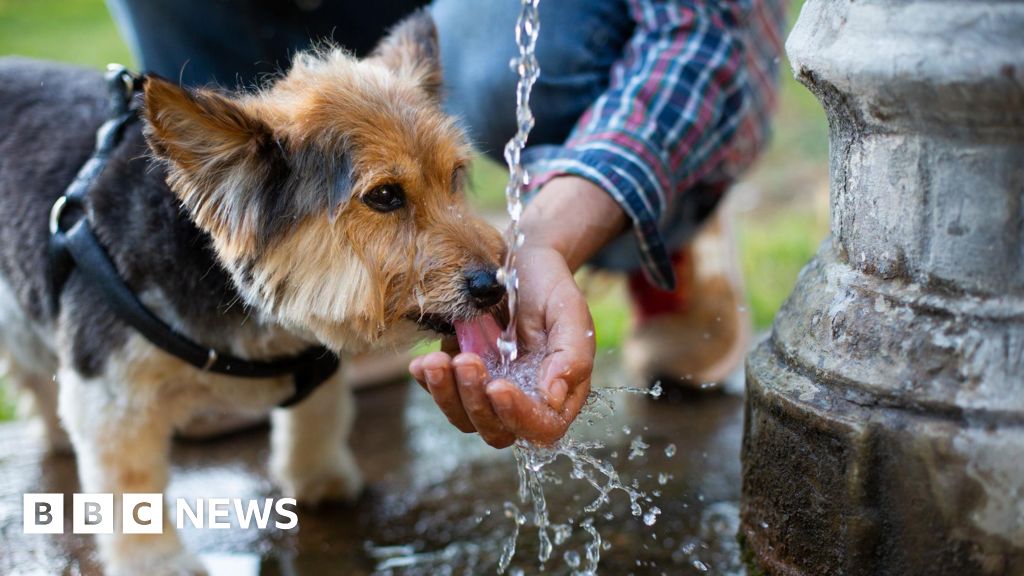
When temperatures climb, the rules of a dog walk change completely — from timing and route to what to carry and what never to do if your dog overheats. Here's what vets and the RSPCA say actually helps.
A 2020 Royal Veterinary College study reviewing the records of 905,543 dogs found that 74% of canine heatstroke cases were triggered by exercise — not hot cars, not sitting outdoors in the sun, but walking and running in warm conditions. Dogs are ten times more likely to develop heat-related illness from a summer walk than from being left in a vehicle.
The morning light is golden, the air still cool, and your dog is already at the door. It's a good morning for a walk. By eleven o'clock, that same route on the same pavement could put your dog in a veterinary emergency. The gap between a safe walk and a dangerous one is smaller in summer than in any other season, and it narrows faster than most people realise.
The five-second pavement test
The RSPCA recommends a simple check before every summer walk: press your hand flat to the pavement and hold it there for five seconds. If you can't hold it for the full count, the surface is too hot for your dog to walk on. Tarmac and concrete absorb heat throughout the day and release it slowly; on a warm afternoon, pavement surface temperatures can run 20 degrees Celsius or more above air temperature, reaching levels that cause full-thickness burns on a dog's paw pads within sixty seconds of contact.
Dog paw pads look more durable than they are. They contain fatty tissue that provides some insulation against cold ground but offer no meaningful protection against heat. A dog walking on hot pavement often won't show obvious distress until the damage is already done — the adrenaline of a walk, and a dog's reluctance to stop, can mask pain until the animal is back indoors and has settled down.
The best times to walk in summer
The practical answer is early and late: before eight in the morning, or after eight in the evening, when both the air temperature and the ground temperature have had time to fall. This isn't simply about keeping your dog comfortable — it's about maintaining a margin of safety. A dog that begins to overheat during a walk may deteriorate quickly, and the gap between looking fine and being in genuine distress is shorter when it's warm than at any other time of year.
Exercise is the most common trigger for heatstroke in dogs — it is the combination of exertion and heat, not simply being outside on a warm day, that tips the balance.
— RSPCA
The RSPCA has been consistent on this point for several years. A dog's internal temperature rises during exertion. In cool weather, panting and increased blood flow to the skin handle the surplus heat without difficulty. In warm weather, those mechanisms are working against a much smaller margin, and in dogs that are older, overweight, or have pre-existing respiratory conditions, they can become overwhelmed within a few minutes of moderate activity.
What heatstroke looks like
The early signs are easy to miss on a summer walk: heavier panting than usual, more drooling, a slight slowing of pace. Dogs pushing through early heat stress can look, to an inattentive eye, like dogs that are simply enjoying themselves. The later signs are unmistakable — foaming at the mouth, confusion, an inability to walk straight, shaking, sudden weakness in the hindquarters, vomiting, and in severe cases, seizures.
The transition between those two phases can happen in minutes. A dog that seems completely fine on the outward leg of a walk — particularly if that leg involves running, play, or any uphill section — may collapse on the return. This is why timing matters as much as duration: the heat the body has accumulated on the way out is still present on the way home, and the margin for error is already smaller than it was at the start.
The fatality rate concentrates the mind. UK research has found that roughly one in seven dogs presenting to a vet with signs of heatstroke die from it — but 98% of those seen early, with mild signs, survive. The difference between those outcomes is almost entirely about how quickly you act.
How to cool a dog down correctly
The instinct is to wrap a hot dog in a wet towel. This is wrong, and potentially counterproductive. Wet fabric traps heat against the body rather than allowing it to escape. The correct approach is to move the dog to shade immediately, then pour water that is cooler than the dog's body temperature directly over the coat, focusing on the neck, armpits, and groin where blood vessels run close to the surface. Use cool or tepid water, not ice or very cold water — a sudden temperature drop causes peripheral blood vessels to constrict, which prevents heat from escaping the body and can cause shock.
Pour cool water over the dog rather than wrapping them — you want the heat to escape, not be trapped. And always get the dog to a vet, even if they seem to be recovering.
— RSPCA heatstroke guidance
The key phrase is even if they seem to be recovering. Internal organ damage from heatstroke — including kidney injury and damage to the gut lining — can occur without obvious external signs, and may only become apparent hours after the animal appears stable. Getting a vet assessment on any dog that has shown signs of heat stress is not a precaution. It's the appropriate response.
Flat-faced breeds need a different calculation
Bulldogs, French bulldogs, pugs, boxers, and other brachycephalic breeds — those with compressed nasal passages and shortened airways — pant less efficiently than other dogs. Since panting is the primary mechanism by which dogs release body heat, any reduction in that efficiency translates directly into a faster rate of heat accumulation. In practice, this means a flat-faced dog on a warm day is in a higher risk category than most other breeds on a genuinely hot one. Their safe temperature window is narrower in both directions.
The VetCompass data shows how unevenly that risk falls across breeds. In a 2016 survey of 905,543 UK dogs, Chow Chows had the highest one-year heatstroke incidence at 0.50% — likely due to their dense double coat rather than airway anatomy — followed by Bulldogs at 0.42% and French Bulldogs at 0.18%. The national average across all breeds was 0.04%.
The RSPCA advises that owners of brachycephalic breeds treat cooling aids — damp cloths, cooling mats, access to air conditioning — as part of routine warm-weather care rather than emergency measures. Prevention is easier than intervention, and the physiological margin these breeds are working with is genuinely smaller than it appears.
Beaches, sunscreen, and what to carry
Sand retains heat in the same way tarmac does, and can burn paw pads just as effectively. Many dogs will drink sea water when they're thirsty and unsupervised, which can cause salt toxicity, particularly in smaller breeds. If you're taking a dog to the beach in summer, bring your own fresh water and offer it often — don't rely on finding a tap or a willing stranger with a bowl.
Light-coloured dogs, especially those with pink skin on their noses and ear tips, can get sunburned just like people. Dog-safe sunscreen on those areas is worth the two minutes it takes.
— RSPCA
Dog-specific sunscreen is available from most pet shops and vets, and matters because standard human sunscreen contains zinc oxide and PABA, both of which are toxic to dogs when ingested — and dogs reliably ingest anything applied to their face. Apply it to the nose, ear tips, and any visible skin on dogs with thin or light-coloured coats, especially if you'll be near reflective surfaces like water or pale sand.
The walk that still makes sense in summer
None of this means summer walking is inherently dangerous, or that dogs should simply stop going out when it's warm. It means the rules change, and the margin for error shrinks. A short walk at dawn, on a shaded route, at a pace that keeps the panting manageable, with water available throughout — that is not a compromise on your dog's daily life. That is what a summer walk looks like.
The reward is the same as any other time of year: a dog who has been outside, who has worked their nose through the overnight layers of scent on the pavement, who has had the particular satisfaction of moving through the world with you. Summer doesn't change what a walk is. It just changes when you go, and how you come home.