After the smoke cleared on I-64, Hennessy was still there
Doges Editorial · 2026-06-26 · 5 min read
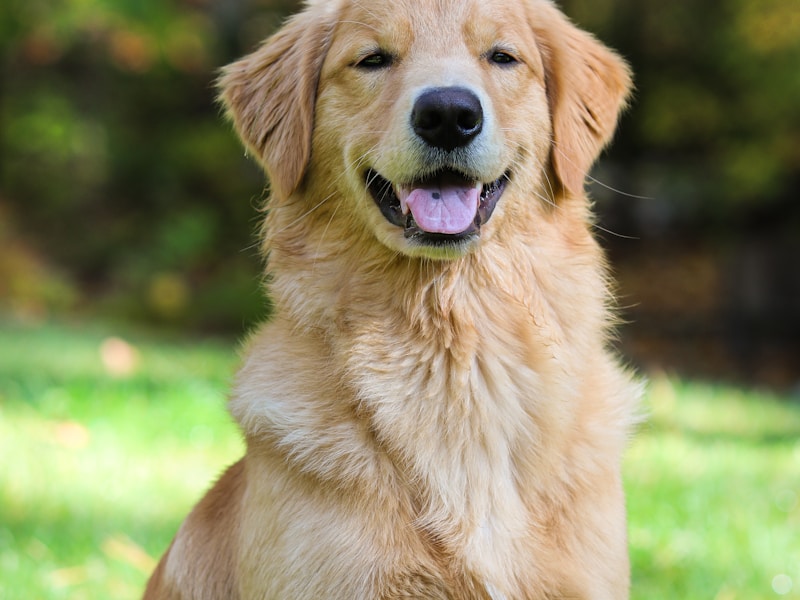
When trucker Jeffrey Simmons died in a tractor-trailer crash on a West Virginia interstate, his dog Hennessy was pulled from the wreckage uninjured. What happened next — a collar, a shelter network, a FaceTime call across state lines — says something about how far people will go for a dog's dignity.
On the evening of June 23rd, around 5:25 p.m., a tractor-trailer traveling westbound on I-64 near South Charleston, West Virginia, went off the road near Exit 54. The cab teetered at the edge of a bridge. Huge plumes of smoke rose from the front of the truck. Firefighters arrived, and the scene became what such scenes always become — controlled chaos, radio calls, the smell of burning metal.
The driver, Jeffrey Simmons, 63, of Iowa, did not survive. When responders reached the vehicle, they found something else: his dog, a mixed-breed named Hennessy, alive and uninjured in the wreckage. That word — uninjured — ran through every account of the incident, and it is the kind of fact that contains a whole story inside it if you let it.
The life of a trucker's dog
Surveys cited by trucking industry groups put the number at roughly 40 percent of America's 3.54 million truck drivers sharing a cab with a pet — almost always a dog. Not as cargo. As company, as co-pilot, as the presence that keeps the long hours from collapsing into silence.
The cab becomes home for these dogs. They learn which truck stops have grass along the lot's edge, which stretches of highway take two hours and which take five, which exits mean a real break and which are fuel-only. They learn the route the way people learn a neighborhood — not from a map, but from repetition and smell and the particular quality of afternoon light through a windshield at 65 miles an hour.
Hennessy was that dog for Jeffrey Simmons. She was with him when the truck went off the road. She was with him until the end. The smoke was still rising when firefighters pulled her out.
What a collar can hold
Hennessy was brought to the Kanawha-Charleston Humane Association (KCHA) in West Virginia. Shelter staff, as they always do, checked what information the dog was carrying. On her collar: an Iowa area code. A phone number that belonged to a state 1,200 miles away. That tiny piece of plastic and ink became the first thread.
KCHA posted a public appeal online, asking if anyone could identify Hennessy's original shelter. The network did its work. By Tuesday evening, they had found the Animal Rescue League of Marshalltown, in Iowa. The Marshalltown shelter, in turn, used their records to contact Simmons' surviving family.
The family comes forward
The family's response was immediate. They wanted to retrieve Hennessy. They wanted to care for her. In the immediate aftermath of losing someone — the paperwork, the grief, the hundred things that require attention before any of the grief can really land — Simmons' family made the dog a priority.
We will work to get her back to her remaining family. To his family: we are so sorry for your loss.
— Kanawha-Charleston Humane Association, via Facebook
On Wednesday morning, June 24th — less than 36 hours after the crash — the Animal Rescue League of Marshalltown arranged a FaceTime call between Hennessy and her owner's family in Iowa. What happened in those few minutes of video, a shelter dog looking at a phone screen at familiar faces, was small and enormous at the same time.
Seeing and hearing a familiar face
This morning, they were able to FaceTime with Hennessy, and it seemed to lift her spirits tremendously. Seeing and hearing a familiar face made a world of difference for this sweet girl.
— Animal Rescue League of Marshalltown, via Facebook
There is something worth pausing on here: the choice of the word "spirits." Shelter staff — people who see hundreds of animals in stress and grief — watched Hennessy's behavior change when she heard familiar voices. They called it her spirits lifting. They meant it literally.
The science is specific on this. Researchers at Eötvös Loránd University in Budapest published the first evidence that dogs can recognize individual humans by voice alone — not just that a voice is familiar, but which specific person it belongs to, even from a pre-recorded sample. Separate fMRI work from the same group found that dogs have voice-processing brain regions that function similarly to the equivalent areas in humans, and that emotionally charged sounds from familiar people produce stronger neural responses than any other stimulus. On a phone screen, a dog may not fully understand what they're seeing. But the voice comes through clearly.
Dogs don't grieve the way people do, or perhaps they grieve more purely — without narrative or explanation, just the felt absence of someone who was always there. A 2022 study of 426 dog owners, published in Scientific Reports, found that 86 percent reported significant behavioral changes — less eating, less play, more sleeping, more seeking of human comfort — in their surviving dog after the death of a companion in the household. Hennessy had been pulled from a truck that was on fire. She had been transported to an unfamiliar kennel in an unfamiliar state. And then the screen lit up, and the voices she recognized came through it, and something in her changed.
The trip to West Virginia
The family is now making plans to drive to West Virginia and bring Hennessy home to Iowa. The shelter in Marshalltown wrote that they are working to get her back "as soon as possible." The details — who drives, which route, how long — are the kind of logistics that families sort out quietly, between phone calls and arrangements. What is clear is that nobody in Simmons' orbit looked at Hennessy as a complication. She is his dog. She is coming home.
Two shelters coordinated across state lines for a dog they had never seen before. Staff checked collar information and made calls into an unknown network. A FaceTime window was opened across a thousand miles of highway. Every one of these small acts was technically unnecessary. Nobody was obligated. They did it anyway.
What she carries with her
Dogs who travel with working people often develop a kind of portable calm — an ability to settle into the rhythms of whoever they are with, wherever they happen to be. Hennessy rode the highways of the American interior with Jeffrey Simmons. She knew the particular sounds and smells of a truck cab at night, the rest-stop routines, the way the engine idled at certain speeds. She knows them still.
When the family comes to West Virginia and puts her in their car for the drive back to Iowa, she will be doing something she has done before — moving through American geography with people she loves, looking out a window at the passing road. It will feel familiar, even through the grief. The road always felt like coming home with him. Now it is just coming home.