She sat still for 48 hours while 86 other dogs were carried out around her
Doges Editorial · 2026-05-22 · 5 min read
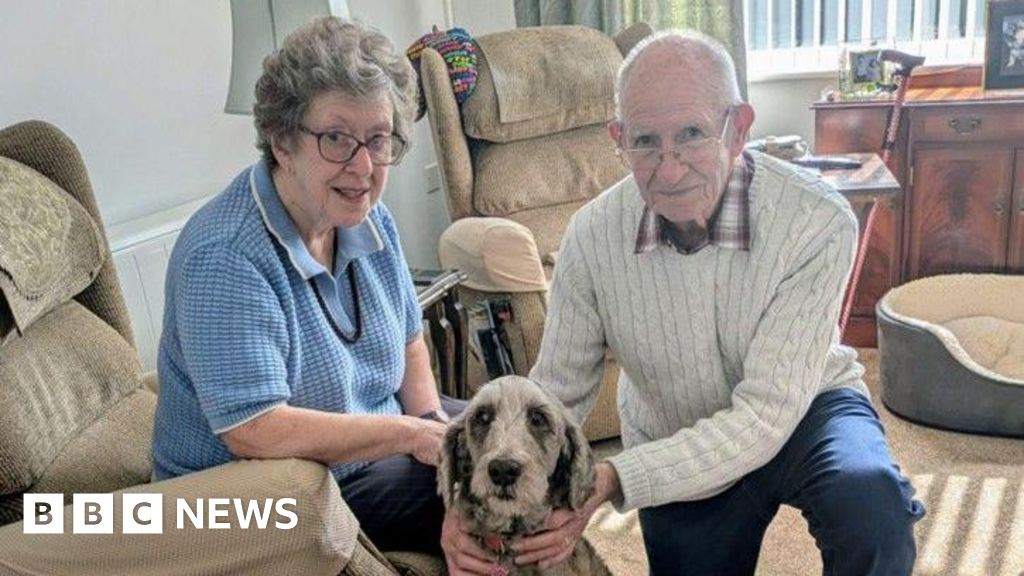
Gracie, a 13-year-old poodle cross rescued from a 250-animal hoarding situation in January, waited alone for two days before being claimed — then found her forever home with an 84-year-old woman in Norfolk who called the rescue centre every single day.
She sat still while the other dogs were carried out. Eighty-six animals had been rescued from the overcrowded property before anyone came back for Gracie. The hours passed — twelve, twenty-four, forty-eight. The 13-year-old poodle cross stayed exactly where she was, in a bedroom inside a house that had held 250 animals. Her fur had matted into something closer to felt. She didn't pace, didn't bark. She just waited, as if she understood that someone would eventually come back for her.
The house nobody could forget
In January 2026, the RSPCA received a call about a property somewhere in England — the location has been kept undisclosed — where 250 animals had been found living in conditions that welfare workers described as unlike anything they had seen. Photographs showed poodle crosses stacked in rooms, one howling at the ceiling, another pressed into the cavity of a wood-burning stove. The RSPCA pulled 87 dogs from the property; the charity Dogs Trust took in others.
Carl Saunders, branch manager of the West Norfolk RSPCA, took in 12 of the dogs at the Eau Brink rehoming centre. He saw the photograph that circulated on social media — the dozens of dogs in that living room — and said it was one he could "hardly strike" from his mind.
When we first saw her [Gracie], honestly it was just heart-breaking. She was in such an awful condition she was so matted. Apparently she sat very placidly and waited for all the other dogs to be taken out around her and she sat there for 48 hours just waiting. It was almost as if she knew she was being rescued.
— Carl Saunders, West Norfolk RSPCA branch manager
What they found underneath the fur
When Gracie arrived at the centre, the shaving took a long time. The fur came off in layers — matted into what Saunders described as an almost unrecognisable mass. Underneath: an old dog, a lean one, a calm one. Pressure sores on her legs from lying on hard surfaces for extended periods. Dry, scaly skin. Patches where fur had simply stopped growing.
She submitted to the whole process without protest. No snapping, no flinching. Just the same patience she'd shown in that bedroom — steady, contained, waiting.
"She virtually had no fur left on her by the time we finished," Saunders said. But she was clean. And she was safe.
The daily phone call
Twenty miles from the centre, an 84-year-old woman named Maureen Elmer had started calling. Every day. She had a specific request: something small, something that could sit on her lap. She and her husband Richard, 86, lived near Downham Market in Norfolk. They had space, time, and the kind of home that had been waiting for a dog to walk into it.
Senior dogs — typically classified as seven years or older, though the threshold shifts by breed — are consistently among the hardest to rehome. Rescue organisations across the UK report that older dogs wait far longer than puppies or young adults. They're passed over by people who want more years, or who worry about escalating vet bills. A 13-year-old dog, rescued from a hoarding situation, matted and with a skin condition: on paper, not an easy sell.
Saunders listened. He had 12 dogs to place and a daily caller who knew what she wanted. He knew Gracie.
When she sat down
When the Elmers came to meet Gracie, she walked to them and sat down. That was it. No performance, no drama, no anxious circling. She was simply present in the way that old dogs can be — focused, quiet, already done with uncertainty.
She had chosen us — her nature is so beautiful she hasn't got a bad bone in her body. She is the most perfect dog.
— Maureen Elmer
Richard offered his own measure of the exchange. The RSPCA, he noted, had trusted an elderly couple to care for a senior rescue dog — had looked at two people in their eighties and seen capable, devoted owners rather than a risk. "Sometimes at our age it can feel like people seem to forget you," he told the BBC. "But this wasn't the case here."
The fur grew back
Months later, Gracie's coat has come back. Not just grown back — transformed. Saunders described it as fluffy, soft, something he genuinely couldn't reconcile with the bare, bedraggled dog he'd shaved down in January.
Her fur is growing back beautifully, it's so fluffy and soft I can't quite comprehend she is the same dog we took in and it warms my heart that we found this lovely situation for her.
— Carl Saunders, West Norfolk RSPCA branch manager
In Norfolk, Maureen has settled into a rhythm. Gracie sleeps on the chair. She gets her belly rubbed. She tolerates — mostly — an extraordinary amount of kissing. "I think I drive her crazy," Maureen admits. "But we love her."
What a 48-hour wait can teach you
There is something in Gracie's story that anyone who walks a senior dog will recognise — the way a dog with years behind them moves through the world differently. More considered. More alert to small things. The morning walk becomes less about speed and more about noticing: the quality of the light, a smell that wasn't there yesterday, the corner that is worth standing at for exactly as long as it takes.
Gracie sat still in that house for 48 hours and waited for people she had never met to come back and collect her. Now she has a lap and a reason to get out of bed in the morning — and she has given one to someone else in return.
She's given us a reason to get up in the morning.
— Maureen Elmer
The West Norfolk RSPCA Eau Brink centre still has dogs waiting. Carl Saunders doesn't make a hard sell. He just tells you about Gracie — about what was underneath all that matted fur — and lets the story do the rest.