Your dog's anxiety may be written in the same genes as yours
Doges Editorial · 2026-05-14 · 5 min read
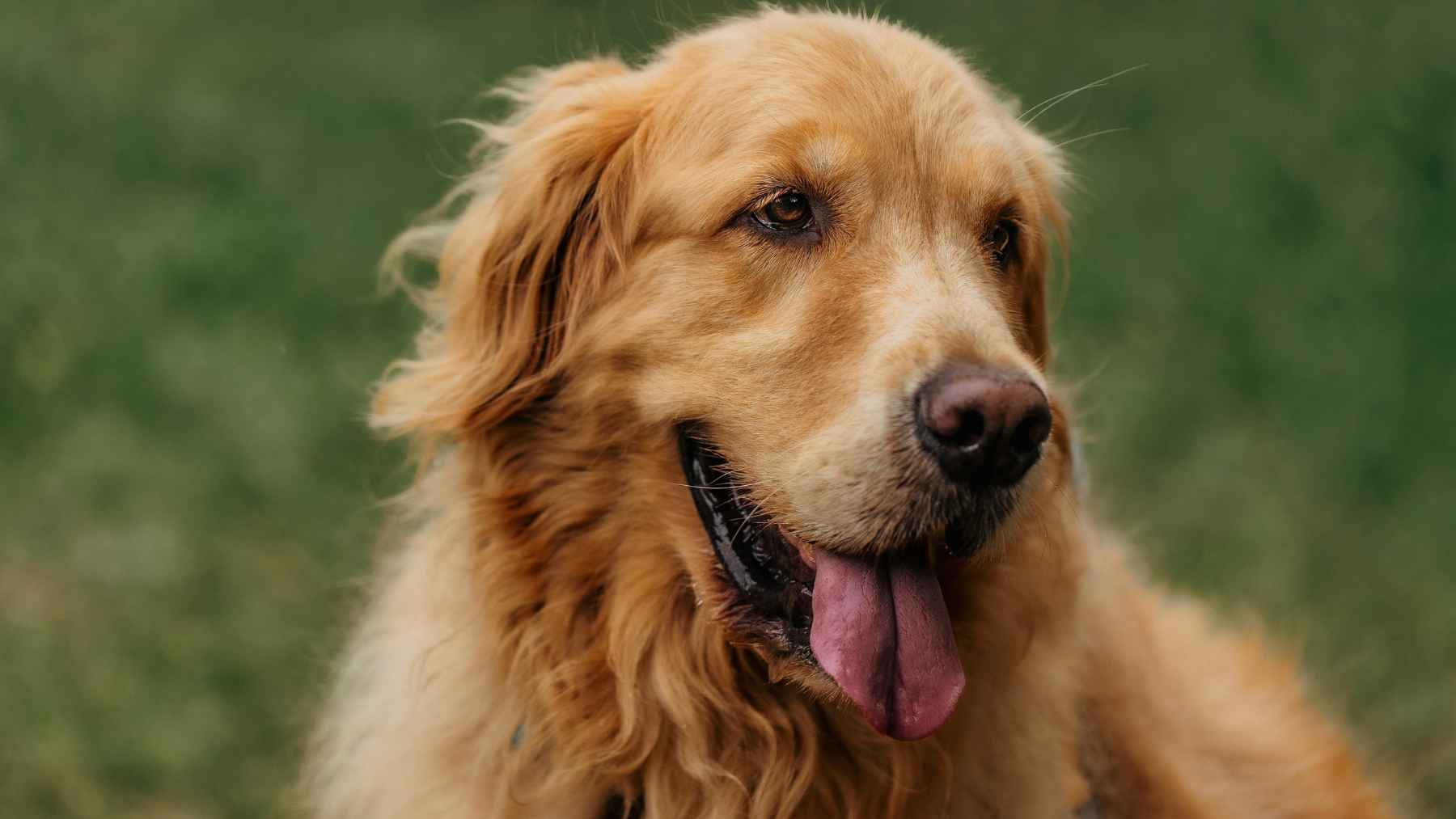
A Cambridge-led study of 1,343 golden retrievers found that genes shaping their fear, trainability, and stress responses significantly overlap with genes linked to anxiety, depression, and intelligence in humans.
Your golden retriever flattens at the sound of the doorbell. She shakes in the vet's waiting room. The garbage truck sends her under the bed. You have tried training, patience, and every calming technique the internet recommends, and still: the garbage truck. A new genetics study from the University of Cambridge suggests you may have been asking the wrong question. The problem isn't what she learned. Part of it is what she inherited.
The study, published in PNAS by researchers at Cambridge and reported this week in Ecoticias and other outlets, found that genes associated with anxiety, fear, trainability, and stress responses in golden retrievers overlap substantially with genes linked to the same traits in humans. Some of what lives in your dog's nervous system, it turns out, traces back to the same deep evolutionary architecture as yours.
1,343 dogs, a decade of data
The researchers drew on the Morris Animal Foundation's Golden Retriever Lifetime Study — a longitudinal project tracking more than 3,000 golden retrievers across the United States since 2012. Each year, the dogs' owners complete the C-BARQ questionnaire: 73 behavioral assessments covering everything from aggression to touch sensitivity to how the dog handles being left alone. It is one of the most detailed behavioral datasets assembled for any single breed.
After genetic quality filtering, the team worked with roughly 1,343 adult dogs between the ages of three and seven. They ran genome-wide association studies on the behavioral scores — scanning the genome for DNA variants that correlated with specific traits. This is the same statistical method used to locate genetic risk factors for human conditions like depression, schizophrenia, and anxiety disorders, applied here at unprecedented scale to a single dog breed.
What the genome revealed
The analysis identified 12 genetic loci — regions of the genome — significantly associated with eight behavioral traits. The traits ranged from dog-directed aggression and stranger-directed fear to trainability, separation-related problems, and what the researchers called non-social fear: the kind of specific, seemingly irrational panic that strikes when a dog encounters a certain bus, a particular sound, or that one garbage truck.
Eighteen candidate genes appeared near those loci. Twelve of them had already been associated with at least one human psychiatric, temperamental, or cognitive trait. The gene PTPN1, located near the locus linked to dog-directed aggression, has been connected in human studies to educational attainment, cognitive performance, and major depressive disorder. ROMO1, which appeared near the trainability locus, has been associated in humans with intelligence and emotional sensitivity.
Striking
The findings are really striking.
— Dr. Eleanor Raffan, University of Cambridge researcher, on the overlap between canine and human behavioral genetics
What this doesn't mean: that one gene causes one emotion, cleanly and mechanically. What it does mean: that the biological systems underlying stress, fear, and learning have a shared evolutionary history in humans and dogs — and that this history shows up in both genomes in parallel ways. The machinery is old. Both species have been running some version of the same emotional software for a very long time.
The dog isn't broken
These results show that genetics govern behavior, making some dogs predisposed to finding the world stressful.
— Enoch Alex, first author, University of Cambridge
That reframe matters more than it might seem. A dog who hides during thunderstorms, trembles around strangers, or freezes when an unfamiliar person enters the room isn't misbehaving or undertrained. She may simply be wired to experience the world more intensely than other dogs. That's not a failure of ownership. It's a characteristic — the same way anxiety runs in human families, not as a judgment but as a fact.
If your golden retriever cowers behind the sofa every time the doorbell rings, perhaps you might have a bit more empathy.
— Anna Morros Nuevo, University of Cambridge researcher
A shared environment, a shared load
Daniel Mills of the University of Lincoln put the broader implication plainly: dogs in our homes share not only our physical environment, but may also share some of the psychological challenges associated with modern living. Our dogs move through the same world we do. They hear the same traffic, navigate the same disrupted schedules, absorb the same ambient noise. We built a particular kind of modern life, and our dogs are fully inside it.
The study used data from a single breed — golden retrievers are unusually well-studied and genetically documented, which is why the Lifetime Study has been able to track more than 3,000 of them for over a decade. The findings will need to be replicated in other breeds before broad generalizations can be drawn. But the overlap is striking enough that the researchers are confident it points to something real.
What this means in practice
For owners, the practical takeaway is almost the opposite of resignation. This isn't a reason to give up on anxious dogs — genetics influence behavior, they don't fix it. Environment, socialization, and consistent positive experience still shape how a predisposed dog actually moves through the world. Knowing that a dog's anxiety has a biological basis gives you a more accurate picture to work with, and spares you the false conclusion that you've done something wrong.
A dog who is wired to find strangers alarming may never love crowded dog parks. But she can learn that the morning walk ends at the same corner every time, that the truck passes and the world continues, that the pattern holds. Predictability is a form of safety, and that is something every owner can offer.
This is also an argument for consistency in a dog's daily life. A routine that the dog can predict — the same departure time, the same route, the same sequence of cues — costs the owner almost nothing and provides a nervous dog with something genuinely useful: a world that behaves the way she expects it to. The walk is not just exercise. For an anxious dog, it is also practice in the idea that the world is legible, that patterns hold, that today ends the same way yesterday did.
Notice what slows your dog down on tomorrow's walk. The intersection where she always pauses and looks back. The sound that makes her tuck her tail. She is reading the world constantly, more acutely than we usually appreciate — and some of what she feels when she reads it, it turns out, comes from the same deep place it comes from in us.