River makes history: the UK's most ambitious dog study just hit 10,000 puppies
Doges Editorial · 2026-05-13 · 5 min read
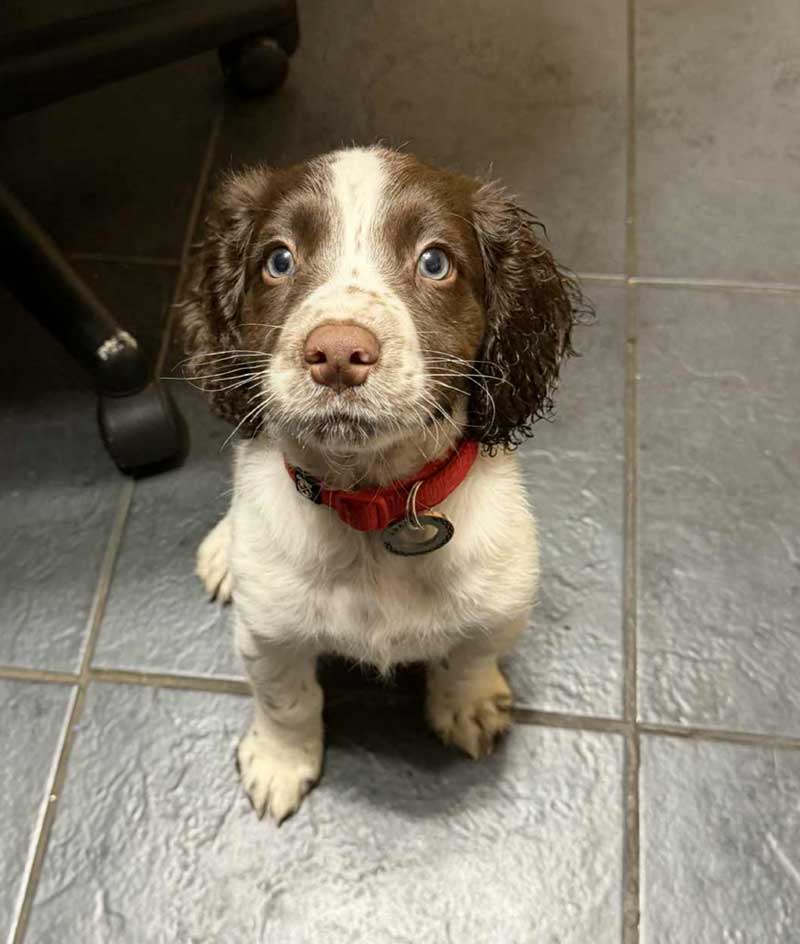
Dogs Trust's Generation Pup study — the most comprehensive investigation into dog health and behaviour ever conducted in the UK — has reached the milestone it set out to hit a decade ago. The 10,000th puppy enrolled is a six-month-old English Springer Spaniel named River from Halifax.
On a Tuesday morning in Halifax, a six-month-old English Springer Spaniel named River bolted across the living room to investigate a doorbell. Then he immediately circled back to find his housemate — an older dog named Lyric — to see what Lyric made of the whole thing. River is curious, his owner Sarah says. He loves new people and animals. He and Lyric snuggle when it's time to rest. He is, by any ordinary measure, exactly the kind of dog this decade of research was built around.
This month, River became the 10,000th puppy enrolled in the Generation Pup study — the UK's most comprehensive long-term investigation into dog health and behaviour, run by Dogs Trust, the country's largest dog welfare charity. That number, ten thousand, had been the stated goal since 2016. With River's enrolment, recruitment is officially closed. Ten years in, the science is ready to do what it set out to do.
A decade of watching dogs grow up
Generation Pup launched in May 2016 with a deceptively simple question: what shapes a dog's health and wellbeing over a lifetime? Not just breed, not just genetics — but all of it together. The environment a puppy grows up in. The relationships they form. The diet they eat, the routines they keep, the strangers they meet or don't meet in those critical early weeks.
Every puppy that joined filled out an evolving portrait. Owners answered detailed questionnaires about their dog's behaviour, daily routine, diet, social life, and health — year after year, as the dogs aged from bouncy puppies into adults and eventually into seniors. The study covers dogs from across the UK and Republic of Ireland, enrolled when young and followed, in many cases, for the entire arc of a life.
That depth is the point. A snapshot tells you what a dog is like today. A decade of snapshots tells you something closer to why. May 2026 marks not only the enrolment of the 10,000th puppy but the tenth anniversary of the very first recruit — making it a double milestone: a decade of data gathered, and the enrolment chapter officially closed. What comes next is analysis, insight, and the slow, careful work of turning questionnaires into guidance.
Why 10,000 — and why that number was the goal
The target of 10,000 was set from the beginning — not as a round number to aspire to, but as a statistical minimum. Dog health research has a scale problem. A study of 50 dogs can identify something interesting. A study of 500 can surface a pattern. A study of 10,000 — spanning thousands of different breeds, backgrounds, living situations, and owner types — starts to approach something that can be called reliable.
With that cohort, researchers can begin to determine whether aspects of early life — the exercise a puppy gets, the level of social contact, the consistency of daily routine, the diet fed — are meaningfully connected to behavioural problems, anxiety, chronic illness, or early death. Those connections, once identified, can become guidance. And guidance, in the hands of vets, trainers, breeders, and rescue workers, can change outcomes.
Dogs Trust operates 21 rehoming centres across the UK including in Leeds and Manchester. The people who work in them know, better than most, that many dogs arrive through no obvious fault of their own — owners overwhelmed, behaviours that escalated, warning signs missed in puppyhood. Understanding what shapes a dog in their first year is one of the most direct paths to shortening that pipeline.
Meet River, puppy number ten thousand
River arrived at the study the way most puppies arrive at most things: sideways, with confidence. His owner Sarah, who lives in Halifax with River and the older dog Lyric, says the pairing has been uncomplicated from day one — the two dogs settled together quickly, and River has been exploring the world at full speed ever since.
He has fitted in so perfectly with the family, we sometimes pinch ourselves. We are still learning as River is learning but so far, so good! He is best of friends with our other dog Lyric and they love snuggling up together when it's time for a rest. River is curious, brave and loves meeting new people and other animals.
— Sarah, River's owner
For Sarah, joining a long-running scientific study was less about being part of history and more about what the research might mean for future dogs. Her thinking cuts to exactly what the study is trying to accomplish.
We believe that something like Generation Pup could help immensely with the crucial early part in a dog's life and ultimately help break the cycle of dogs ending up in rescues through no fault of their own.
— Sarah, River's owner
The cycle she's naming is real, costly, and heartbreaking. A study scaled to 10,000 over a decade is one of the few things capable of actually mapping it — and then, perhaps, interrupting it.
What the researchers will do with all of it
Jane Murray, Dogs in Society Deputy Head of Research at Dogs Trust, describes Generation Pup as an attempt to understand not just what dogs are like at any given moment, but how they got there — to trace the invisible threads between a puppy's earliest experiences and who that dog eventually becomes.
This important research study aims to deepen our understanding of how early life experiences influence the health and behaviour of dogs throughout their lives. I want to extend heartfelt thanks to River's owners, and all the thousands more who have been instrumental in the success of Generation Pup so far — their dedication has been the foundation of every insight we have discovered, and every impact we have created.
— Jane Murray, Deputy Head of Research, Dogs Trust
With recruitment closed and data collection continuing, the next decade of Generation Pup looks quite different from the first. Researchers can now start drawing longitudinal conclusions — how a puppy's first year predicts adult behaviour, which environmental factors appear protective, which appear to be risk signals. The generation of dogs in this study is literally aging. River is six months old. The earliest recruits from 2016 are now ten — senior dogs in many breeds. The cohort spans an entire canine life, and researchers will watch the second half of it unfold.
A generation coming of age
There's something fitting about the word 'generation' in this study's name. Not for the sentimentality it carries, but because it reflects the biological reality of the research. Dogs live compressed lives relative to ours. A ten-year longitudinal study on dogs covers something like an entire human adulthood — in terms of what the subjects experience, endure, and become.
What emerges from Generation Pup will eventually inform veterinary care, training guidance, adoption support, and breeder practice. It may help identify behavioural warning signs that appear in puppyhood and that, caught early, don't spiral into something that ends with surrender. It may also — quietly, piece by piece — help us become better at reading the dogs who live with us.
Not as blank slates waiting to be trained, but as animals whose inner lives are shaped by genetics, environment, experience, and all the small choices made in that first curious year. This morning in Halifax, River is snuggling with Lyric. He doesn't know he's changed anything. But the ten-thousand-strong data set that now includes him will eventually matter to dogs he'll never meet — pups who'll benefit from what his ordinary, joyful, doorbell-investigating life helped the scientists understand.