Every disease has a scent
Doges Editorial · 2026-06-08 · 5 min read
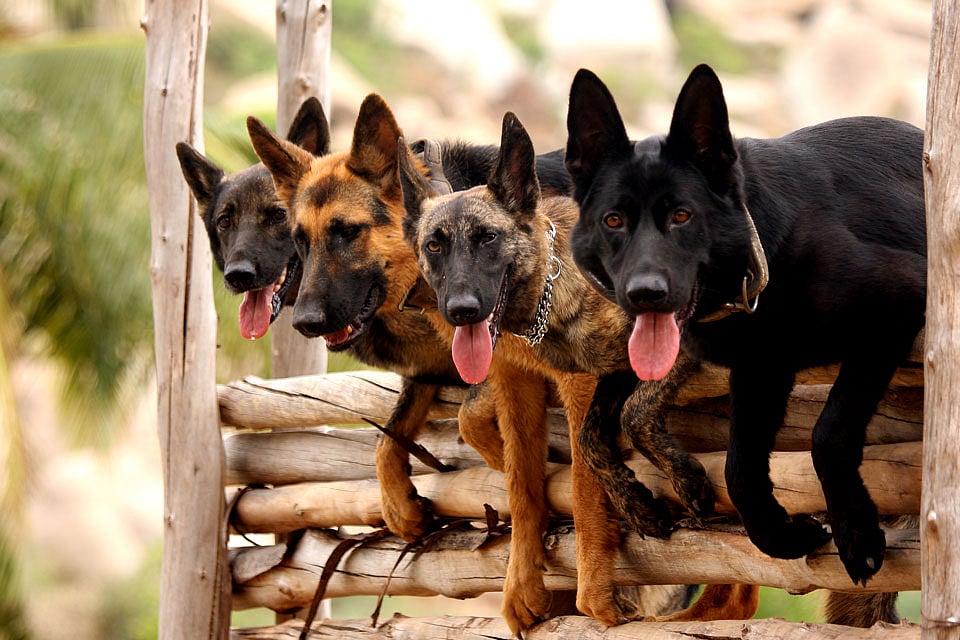
On a former pomegranate farm outside Bengaluru, 15 trained dogs are helping a startup detect cancer from a single breath. Their Phase 2 trial, published in the Journal of Clinical Oncology, reported 91.5% sensitivity across seven cancer types — including at the earliest, most treatable stages.
A person breathes normally for ten minutes. That is the entire procedure. They are wearing a cotton face mask — not much different from the kind worn during the pandemic — and when the ten minutes are up, the mask is sealed and shipped to a laboratory on the outskirts of Bengaluru. There, on a former pomegranate farm, a trained dog lowers its nose over a small air inlet, pauses, and either moves on or sits. What happens in that pause may be one of the more remarkable uses of canine biology in the history of medicine.
What dogs have always known
Dognosis, the Bengaluru startup behind the technology, was founded by Akash Kulgod — a UC Berkeley-trained researcher whose father is a physician in Belagavi — and Itamar Bitan, a former trainer for the Israeli Special Operations K-9 unit. The idea came to Kulgod during the COVID-19 pandemic, watching his father's clinic overwhelmed, while studies from around the world were quietly showing that dogs could identify coronavirus infections through scent, often with remarkable reliability.
The question that wouldn't leave him: if dogs can detect disease, why isn't the capability being used at scale? The answer, as Kulgod eventually came to see it, wasn't about the dogs. It was about the infrastructure around them — the absence of a reproducible, scientifically defensible method for translating what a dog's nose knows into clinical data.
We've known for over two decades that dogs are capable of detecting multiple types of cancers with high accuracy. The challenge has always been building a system around canine olfaction that is reproducible, scalable, and aimed at a clinical problem worth solving.
— Akash Kulgod, co-founder and CEO of Dognosis
The farm, the masks, the dogs
The process begins with volatile organic compounds — VOCs — the chemical signatures that human breath carries, which change in detectable ways when disease is present. The cotton mask captures those compounds during the breathing window. It is then sealed, stored under cold-chain conditions, and evaluated at Dognosis's lab, where 15 trained dogs work in a controlled environment: individual workstations, uniform lighting, sensors embedded in the testing surfaces.
The company has built two proprietary systems around the dogs. DogSense is a brain-computer interface that records EEG signals and behavioral data as each dog works. DogOS is the machine learning platform that processes those neurological signals, respiration patterns, and behavioral cues to produce a quantifiable output — converting the dog's response into something that can be charted, audited, and compared across sessions.
Every sample presented here is presented in exactly the same way so that when the dog responds to it, we can record the outputs precisely. This data is then processed through AI systems trained using algorithms to convert what is usually considered subjective behaviour into objective scientific analysis.
— Suba, Head of R&D, Dognosis
The study: 1,502 people, seven cancers
The Phase 2 trial enrolled 3,275 participants in total across six hospitals in Karnataka: 1,773 to train the detection model, and 1,502 in the masked test cohort. Of those test participants, 283 had biopsy-confirmed cancer and 1,219 did not, spanning seven major cancer groups including head and neck, breast, and lung. The dogs and the Bayesian model together achieved 91.5% sensitivity (95% CI: 88.0–94.8) and 90.8% specificity (95% CI: 89.1–92.5), with an area under the ROC curve of 0.962 — a figure associated with strong diagnostic tools. Sensitivity at Stage I and II, when treatment options remain widest, was 89.6%: the system holds its accuracy precisely where early detection matters most, which most screening approaches struggle to achieve.
Seven dogs participated in the study itself: four Beagles, one Labrador, one Labrador-Indie mix, and one Dutch Shepherd-Belgian Malinois mix, each trained over ten weeks using reward-based methods. Analysis showed that fewer than 2% of the variation in their responses came from differences between individual dogs — meaning the system performs consistently regardless of which animal is on duty.
There is a 90 per cent sensitivity and specificity, which means that if someone has cancer, the dogs are able to identify it around 90 per cent of the time.
— Dr. Swaratika Majumdar, oncologist partnered with Dognosis
Why the cost matters as much as the accuracy
The results were published in the Journal of Clinical Oncology — one of the most influential publications in cancer research — making Dognosis's Phase 2 trial the largest study of its kind. But Kulgod's focus, from the beginning, has been on a different number: the company estimates its screening process could be more than ten times cheaper than many conventional cancer screening packages.
In India, where the study was conducted, cancer often goes undetected until late stages because early-detection tools are expensive, geographically concentrated in cities, and require infrastructure that most towns don't have. A test that requires only a face mask and a dog, that produces results without drawing blood or running a scan, looks quite different in that context than it might in a country where colonoscopies are a routine Tuesday.
The dog trainer's view
Edo, the dog trainer at Dognosis, has spent his career working with K-9 units in environments where the stakes of a dog's nose are immediate and high. He puts the work happening on this former pomegranate farm in a category of its own.
I think this is among the most special detection works being done with dogs anywhere in the world, and it is possible here in India.
— Edo, dog trainer, Dognosis
Commercial deployment is targeted for early 2027, pending regulatory engagement in India and the United States. Pricing has not been finalized, though affordability remains central to the company's stated mission.
What the nose already knows
None of this will surprise anyone who's watched their dog stop dead on a morning walk, nose dropped to the pavement, investigating something imperceptible to every other living being on the street. The olfactory system of a dog contains roughly 300 million scent receptors — compared to six million in a human nose — and the part of a dog's brain dedicated to analyzing smell is proportionally about 40 times larger than ours. Dogs don't just smell more. They smell in layers and in time, building what amounts to a chemical narrative of who passed through a space, how long ago, and in what physiological state. Over 40 double-blind peer-reviewed trials have now demonstrated that this capacity extends to disease: cancers, Parkinson's disease, malaria, COVID-19. Earlier canine studies reported prostate cancer sensitivities above 91% from urine samples alone. Dognosis's Phase 2 study is the largest yet conducted and the first to demonstrate consistent accuracy at early cancer stages.
What Dognosis is doing — what all canine detection science is gradually doing — is building the translation layer between what dogs already know and what human medicine can act on. The dogs on that farm outside Bengaluru are not performing tricks. They are doing what they've always done. We are, finally, learning to listen.