Five Months Missing. Thirty Miles From Home. Dusty Made It Back.
Doges Editorial · 2026-05-06 · 7 min read
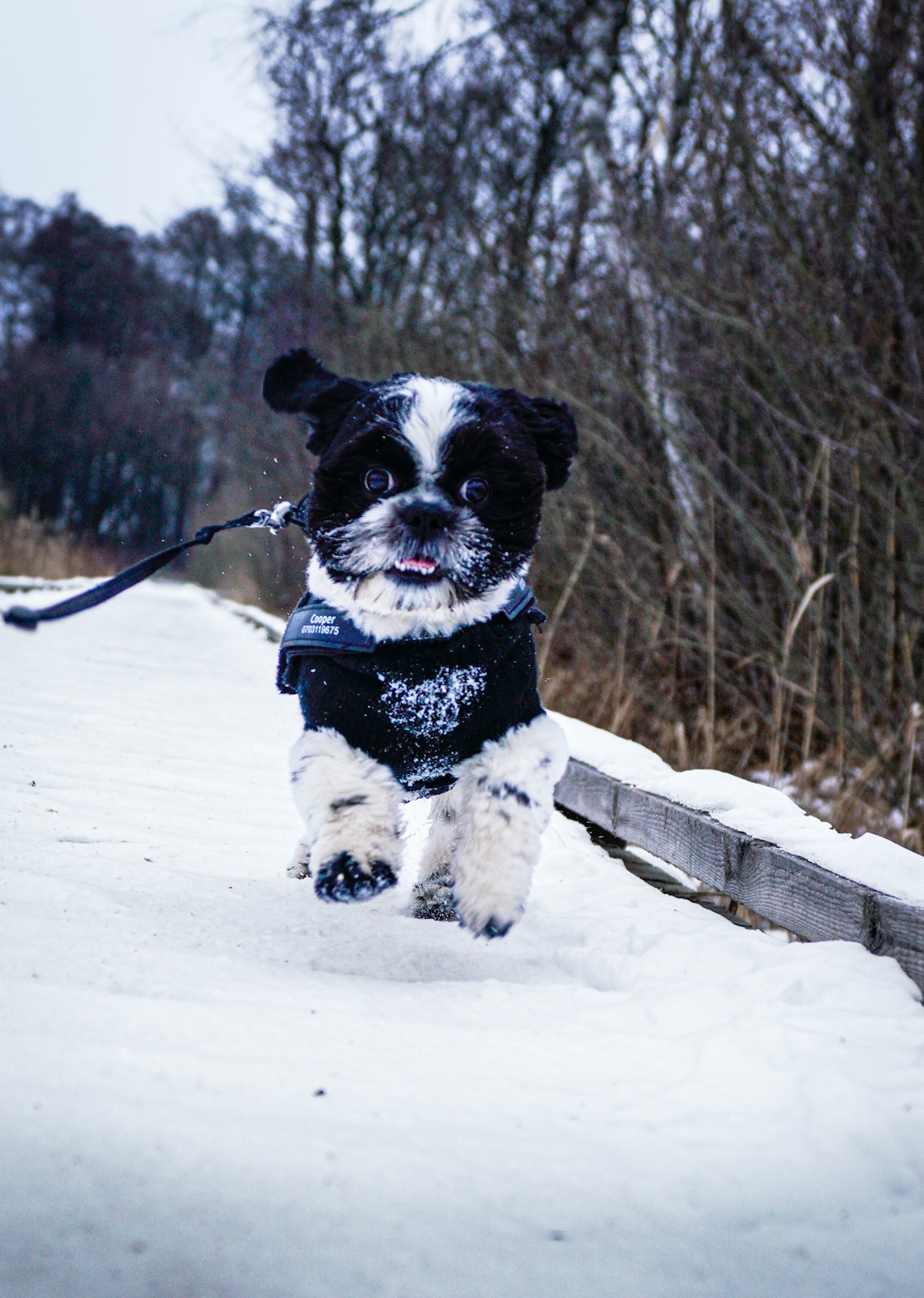
Dusty disappeared from Fond du Lac County on Thanksgiving Day 2025. He survived Blizzard Elsa, historic April rainfall, and nearly five months alone — traveling roughly 30 miles before a trap, a chip, and one scan brought him home.
The Door Was Open for a Moment
Dusty disappeared on Thanksgiving Day, 2025. The door was open for a moment — as it sometimes is on holidays, with family coming and going, the attention divided in every direction — and then he was gone. His family in Fond du Lac County, Wisconsin spent the following hours, and then days, and then weeks searching. By December the searches had grown desperate. By January, with Blizzard Elsa rolling through the region, hope for the small dog became very thin.
On April 29, 2026 — five months and two days after Thanksgiving — a trap was sprung in Kaukauna, Wisconsin, nearly thirty miles from where Dusty was last seen. Inside was a frightened, muddy dog who had been living wild through one of the harshest winters and wettest springs in recent regional memory. When the microchip scanner touched his skin, the number matched the registration on file. Dusty was going home.
What Those Five Months Contained
To understand how extraordinary Dusty's survival was, consider what the region went through between November 2025 and April 2026. Blizzard Elsa struck in January, bringing snowfall measured in feet and temperatures that dropped well below zero for days at a stretch. Then April arrived with what weather services called historic rainfall — sustained precipitation that flooded roads, fields, and low-lying areas across much of eastern Wisconsin.
Dusty, a small domestic dog with no wilderness training and no human support, survived all of it. He found food — likely from garbage and small prey. He found shelter in culverts, under structures, in whatever protected pocket the landscape offered. He navigated his own route through the countryside, covering approximately thirty miles over five months, moving steadily away from his original location and toward somewhere none of us can explain.
Nobody knows the route he took or exactly what he encountered. What is known is that at some point his wandering brought him close enough to Kaukauna that a sighting was reported, and that report led to a recovery operation that finally brought him in.
The Trap and the People Who Set It
Catching a dog who has been living wild for months is not a simple thing. A dog that has survived alone long enough has developed real wariness of humans and will avoid direct approach with impressive consistency. The standard method is a humane trap — a wire cage with a food lure — set where the dog has been spotted, left without human presence, and checked at intervals.
In Dusty's case, the effort was supported by The Hope Highway, an animal welfare organization that specializes in exactly this kind of long-distance recovery. The Kaukauna Police Department acknowledged their help directly in a public statement about the reunion.
Thanks to the incredible assistance of The Hope Highway, a trap was set and Dusty was finally safely captured. Even better — because Dusty was microchipped, he was quickly identified and reunited with his family.
The chip made a five-month search definitively, instantly resolvable. Instead of weeks of uncertainty — comparing photos, checking behavioral cues against what the family remembered — the scanner answered the question in seconds. It took a few more hours to arrange the reunion. But the outcome was never in doubt from the moment the chip was read.
What Microchipping Actually Does
A microchip does not track your dog's location. It is not a GPS device and transmits no signal. It is a passive transponder — about the size of a grain of rice, implanted under the skin near the shoulder blades — that responds to a scanner by broadcasting a unique identification number. That number connects to nothing unless it is registered in a searchable database with current contact information.
That distinction is the most important thing to understand about microchipping. The chip is only as useful as the registration behind it. An outdated phone number, an email address no longer monitored, or a registration that was never completed renders the chip nearly useless as a reunion tool. Dusty's chip was current. That is the whole story — the difference between a dog lost for five months and a dog lost forever.
A microchip is only as powerful as the registration behind it. Update your information every time your address or phone number changes — the chip stays in the dog forever, but the database entry needs a human to keep it current.
The Wild Miles
There is something quietly awe-inspiring about what Dusty did, even if he had no awareness of doing it. He was simply trying to survive — finding food, avoiding danger, moving through the world on instincts that domestic dogs carry from their wild ancestry. But in doing so, he covered ground that would challenge many humans on a planned hike with gear and maps.
Lost dogs frequently travel farther than their owners expect. Research on lost dog behavior consistently finds that searches confined to the immediate neighborhood miss a significant percentage of animals who have moved miles beyond the area of disappearance. Community sightings reported to microchip registries and lost pet networks often locate dogs in locations that feel improbable — until they don't.
What Dusty's Story Tells Us
The practical takeaways from Dusty's story are not complicated. If your dog goes missing, cast your search net wide immediately. Partner with organizations like The Hope Highway that have specific experience in trap-and-capture recovery for dogs who have been loose for extended periods. Do not assume that because a dog is small or domesticated, it is incapable of surviving on its own at distance.
And before any of that: get your dog chipped, and keep the registration current. Update it every time you move, every time your phone number changes. It takes ten minutes online. It is the single most reliable act of preparation available against the worst kind of day.
The family spent five months not knowing. The scanner ended that in seconds. That gap — five months of not knowing, one second of knowing — is what a microchip is worth.
The practical steps for owners searching for a lost dog have been refined considerably by organizations like The Hope Highway over the past decade. The most effective search protocols now combine broad social media distribution in the first 48 hours with targeted physical searches in the immediate area, followed — if the dog is not recovered quickly — by a shift to trap deployment in areas where sightings are reported. The initial intensive search is important; so is the pivot to patience when the dog has been loose long enough to become wary of direct human approach.
Dusty's case illustrates why closing out a search too early is the most common mistake. The natural psychology of loss pushes people toward grief and acceptance. After five or six weeks without a sighting, the impulse to stop looking is understandable. The data from microchip reunions, however, shows that reunions happen at all timeframes — weeks, months, and occasionally years after disappearance. The chip means the information is preserved indefinitely. If Dusty had been picked up in January, in February, in March, the chip would have resolved it instantly, even if his family had given up hope.
Wisconsin's weather this past winter made Dusty's survival genuinely exceptional. The regional record shows temperatures well below zero Fahrenheit for extended stretches during Blizzard Elsa's passage in January. That a small domestic dog found adequate shelter and sufficient food through conditions like that speaks to something in the survival instinct of animals that we domesticated but did not entirely reshape. The wildness is still there, somewhere underneath the trained behavior and the comfort of a warm house. In Dusty's case, it was enough.
Families who have been through a long search also report that the reunion itself is disorienting in a specific way. The dog that comes back is not quite the same as the dog that left — it has been through something, and it carries that in its behavior, its wariness, its need for quiet and predictability as it decompresses back into domestic life. Dusty will need time. His family, who spent five months not knowing, will almost certainly give it to him without hesitation.
Source: Fox11Online, "Dog missing from Fond du Lac County for 5 months found in Kaukauna, reunited with family," April 2026.