Dogs and humans share the same fingerprint of aging
Doges Editorial · 2026-06-03 · 5 min read
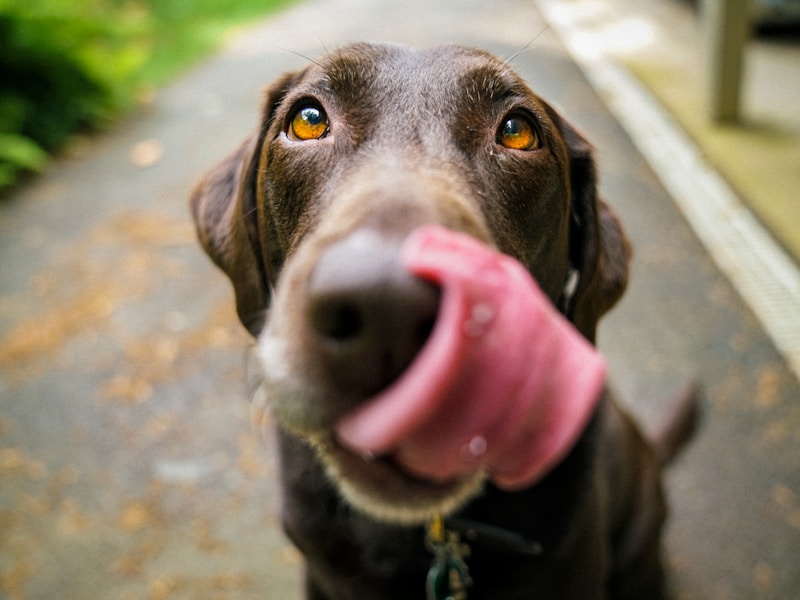
A landmark study from the Dog Aging Project found the same molecular signals that predict early death in humans also appear in our dogs — opening a new chapter in how we understand what it means to grow old together.
The blood sample that changed everything was not especially dramatic. A dog sat patiently in a clinic. A syringe went in and came back out. The vial was labeled and sent to the lab. By the time researchers at the Dog Aging Project finished analyzing it — along with thousands more just like it — they had found something nobody had quite documented before: the same chemical fingerprint that helps predict early death in humans also shows up in dogs, in the same patterns, carrying the same implications.
Thousands of dogs, one big question
Published this week in The Journals of Gerontology and announced in a June 1 press release from Texas A&M University's College of Veterinary Medicine & Biomedical Sciences, the new study set out to answer a deceptively simple question: Can the molecules circulating in a dog's blood tell us when that dog will die? The answer turned out to be yes — and what the researchers found when they compared those patterns against human longevity data was startling in its consistency.
Metabolites are the small molecules the body generates through its normal chemical processes: byproducts of digestion, respiration, cellular repair. They show up in blood and urine and carry, in their concentrations and ratios, a kind of running diary of what the body is doing at the cellular level. Researchers have used metabolite patterns in human longevity studies for years. This team, led by Dr. Kate Creevy, chief veterinary officer for the Dog Aging Project and a professor at Texas A&M, applied the same approach to dogs enrolled in the Project's community science study — animals whose owners had submitted blood samples alongside detailed annual health surveys over the course of their dogs' lives.
A metabolic fingerprint
Rather than hunting for a single magic molecule, the researchers examined thousands of metabolites at once. The goal was to identify groupings — constellations of signals — that correlated with shorter or longer lives. Individual markers can mislead; the architecture of how they relate to each other tells a more reliable story.
Some of my colleagues refer to it as a fingerprint. We often look at a pattern or grouping that has a relationship with better or worse outcomes rather than just looking at a single molecule.
— Dr. Kate Creevy, chief veterinary officer, Dog Aging Project
Those fingerprints emerged from the dog data. Then the team did something that made the findings remarkable: they compared them against five large, published human mortality studies that had used the same metabolite-based methods. In every single case, the patterns matched. Metabolites associated with shorter lives in dogs were associated with shorter lives in people. Metabolites linked to longer lives in dogs showed up the same way in human cohorts across five independent datasets.
The same signals, across two species
That consistency, replicated across five independent datasets, was the most striking element of the study. It wasn't a rough resemblance or a partial overlap. The whole framework transferred. The structure of which molecules predict longer life and which predict shorter life — across the metabolic fingerprint as a whole — appeared to be genuinely shared between dogs and people.
The molecules that are risky for dogs or protective against a sooner death are very similar to those in people, showing that we share important features of aging biology, which is really interesting and rewarding. Our findings also highlight the value of pet dogs as a model for studying long-term health and lifespan.
— Dr. Kate Creevy, Dog Aging Project
Creevy was careful about what the study does and doesn't claim. It identifies patterns; it doesn't yet explain the mechanisms behind them. Why do specific metabolic configurations shorten a life? What is actually happening inside the cells when those ratios shift? Those questions are now, for the first time, answerable — because researchers know which threads to pull. "If we understand why something happened," she said, "we have a greater chance of identifying ways to change it."
Why dog and human aging overlap

It shouldn't be entirely surprising that the aging biology of dogs and humans overlaps. We've co-evolved for at least 15,000 years, sharing environments, food systems, and the daily texture of domestic life. Dogs developed alongside us through agriculture and industrialization. They sleep in our beds, breathe our air, eat food manufactured under the same regulatory systems that govern ours. The big drivers of aging — inflammation, oxidative stress, metabolic dysfunction — don't check species membership before they get to work.
What makes this study distinct from earlier comparisons is scale and depth. The Dog Aging Project is one of the largest community science efforts ever mounted around dogs. Owners across the country enroll their animals, complete detailed annual surveys, and in some cases submit biological samples across multiple years of their dog's life. That longitudinal depth is something human longevity research took decades to build, and it's now becoming available for dogs.
The owners who enroll their dogs make everything possible. The dedication and commitment of these owners to participate in research and discovery to better the health of dogs is remarkable.
— Dr. Kate Creevy, Dog Aging Project
What this means for your dog today
The practical message from Creevy's team is both modest and reassuring. Many of the habits that support healthy aging in people appear to matter just as much for dogs: a healthy diet, a healthy body weight, maintained mobility, preserved cognitive engagement. These aren't dramatic interventions. They are the ordinary building blocks of a good daily life — the kind built through consistent movement, routine, and attention to what's changing.
"Frequently, we know a little more about this in people than we do in dogs," Creevy noted. "If we have the same targets, we'll be able to leverage human research to benefit dogs." Decades of human longevity research — the Nurses' Health Study, the Baltimore Longitudinal Study of Aging, the UK Biobank — could now inform what vets recommend and how scientists design future studies for dogs. The knowledge pipeline might run in both directions.
A loop that closes
There's a small and beautiful irony in all of this. For years, scientists studied dogs as models for human disease — useful proxies, stand-ins for experiments that couldn't ethically be run on people. Now the arrow is beginning to point the other way. The same dogs we take on morning walks, whose graying muzzles we watch with something between affection and quiet dread, may help us understand why we age, and how.
Your dog doesn't know any of this, of course. She's thinking about the route you'll take today, whether the squirrel will be at the corner, what's for dinner. But somewhere in her bloodstream — in the chemistry of her ordinary mammal life, carried in the same blood she's had since she was a puppy — is information that science is only beginning to learn how to read. And it turns out it says something about you, too.