The quiet survival advantage of owning a dog
Doges Editorial · 2026-06-24 · 5 min read
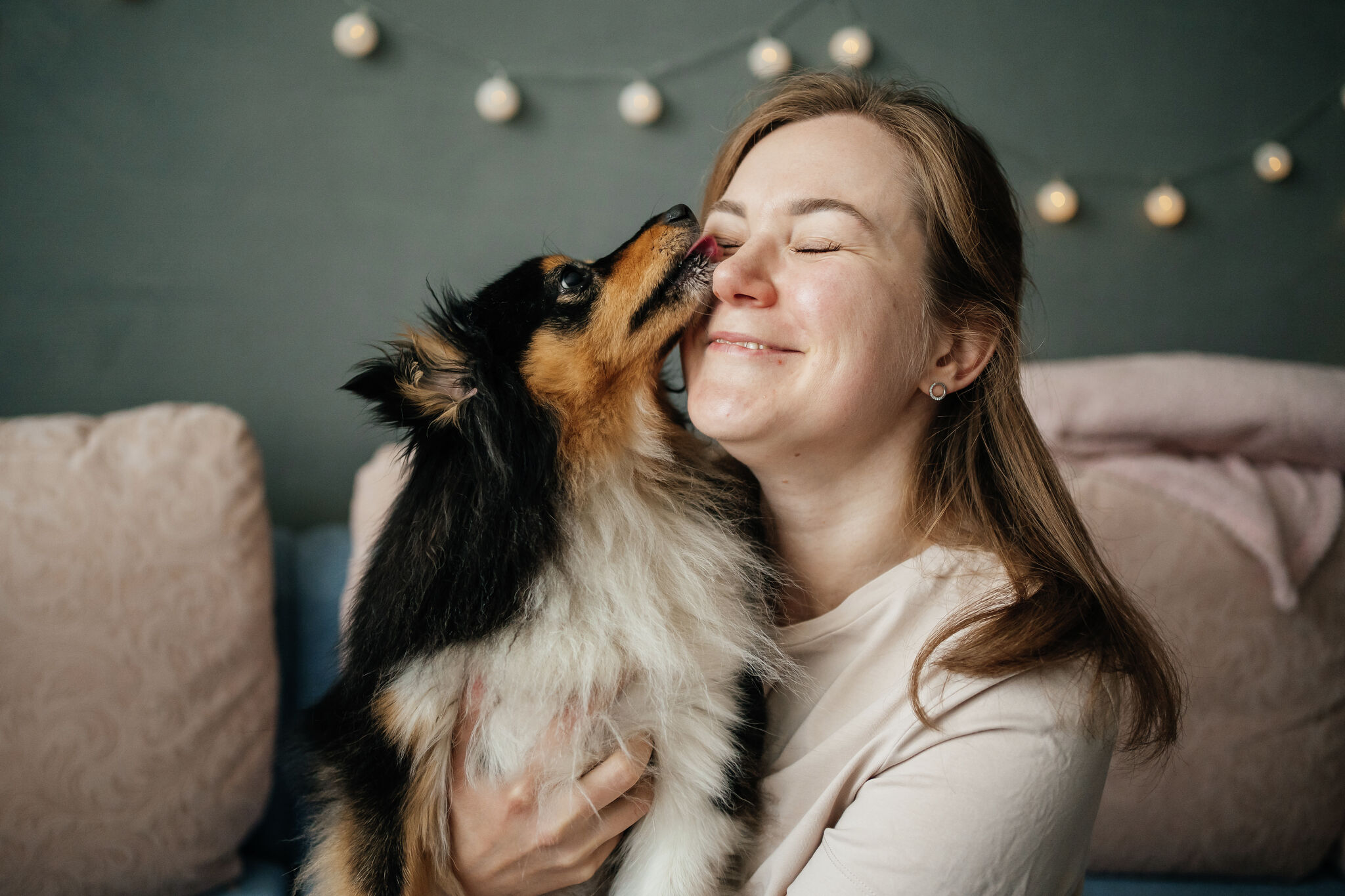
Dog owners face a 24% lower risk of dying from any cause over ten years — and a 65% reduced risk of dying after a heart attack — compared to non-owners, according to a 2019 meta-analysis of 3.8 million people in Circulation: Cardiovascular Quality and Outcomes. Researchers studying why have found the benefit runs considerably deeper than the daily walk.
Dog owners face a 24% lower risk of dying from any cause over a ten-year period than people who don't own dogs — and a 65% lower chance of dying in the year after a heart attack. Those numbers emerged from a 2019 meta-analysis of 3.8 million people across ten studies, published in Circulation: Cardiovascular Quality and Outcomes by researchers at the American Heart Association. What has occupied researchers since is the question of why, and the answer turns out to run deeper than the daily walk.
What the data shows
The meta-analysis, co-authored by Dr. Caroline Kramer at Mount Sinai Hospital in Toronto, appeared alongside a parallel Swedish study of more than 3.4 million adults that reached similar conclusions. Dog owners had a 31% lower risk of dying from cardiovascular disease overall. What makes those numbers notable is their consistency: they hold across different countries, different study designs, and different population groups, which tends to indicate something real rather than methodological noise.
Several studies suggest that companionship, emotional support and reduced loneliness contribute significantly to the health benefits seen with dog ownership. This effect appears particularly strong in people living alone, where dogs may help reduce social isolation and improve emotional well-being.
— Dr. Michael Roman, family medicine resident, New Milford Hospital
A stronger effect for those living alone
The survival benefit is not evenly distributed. The Swedish study — which tracked nearly 182,000 heart attack survivors and 155,000 stroke survivors using mandatory national dog registration records — found that dog-owning people living alone had a 33% lower risk of dying in the year after a heart attack, compared to 15% for those who lived with a partner or child. That gap suggests the dog is doing something specific in the context of isolation: providing structure, a reason to leave the house, and a form of social buffering that doesn't depend on other people. In a separate study of adults 60 and over, pet owners were 36% less likely to report feeling lonely than non-owners.
The walking explanation
The most intuitive explanation is also the most direct: dogs make people move. A study published in the Journal of Physical Activity and Health found that roughly 60% of dog owners walked their dogs for about 160 minutes a week — which happens to clear the CDC's recommended 150 minutes of moderate-intensity physical activity. Many dog owners accumulate this not through dedicated workout time but through the ordinary rhythm of two or three walks a day, spread across seasons and moods. Dr. George Kuchel, director of the UConn Center on Aging at UConn Health, recommends that his patients get a dog partly for this reason.
People who go for walks, climb stairs, do better than people who don't. Equally important, dogs are a wonderful mechanism for connecting with other people. Having a dog will encourage you, even force you to connect with people.
— Dr. George Kuchel, director of the UConn Center on Aging at UConn Health
The walking explanation has a complication, though, and researchers who cite these studies are honest about it. Depending on the study you consult, anywhere from 23% to 41% of dog owners don't regularly walk their dogs at all. The survival benefits to dog owners show up in mortality data even in populations that include those more sedentary owners — which means something else is also happening. The cardiovascular protection doesn't fully reduce to step counts.
The chemistry between dogs and people
That something else may have to do with what happens neurologically when humans and dogs interact. A 2015 paper in Science by Miho Nagasawa and colleagues at Azabu University in Japan found that the longer a dog and its owner exchanged mutual gazes, the larger the oxytocin increase in both — a self-reinforcing feedback loop that the researchers compared to the bonding chemistry between human mothers and infants. Critically, when the same experiment was run with wolves that had been raised by humans, neither mutual gazing nor the oxytocin response appeared at all. The effect is specific to domesticated dogs, and Nagasawa's team concluded it likely evolved over the roughly fifteen thousand years that dogs and people have been living alongside each other.
The American Heart Association notes that interactions with dogs can elevate oxytocin, serotonin, and dopamine while simultaneously lowering cortisol, the primary stress hormone. Lindsey Braun, vice president of research and operations at the Human Animal Bond Research Institute in Washington, D.C., emphasizes that the hormonal effects run alongside something more structural.
Every day, your dog needs to be fed, your dog needs to be walked, your dog needs to go to the veterinarian, you're doing things with them as they're by your side. That's important for physical health and mental health.
— Lindsey Braun, VP of research, Human Animal Bond Research Institute
What this actually adds up to
What this research adds up to is not a simple story. Dog ownership isn't a prescription, and the benefits aren't evenly distributed across all owners in all circumstances. A dog you never walk, in a household where the animal becomes a source of stress, likely doesn't produce the same effects as one described by Kathy Sullivan, a nurse in Connecticut who has four dogs and speaks about them with the conviction of someone who has watched them change patients' days.
You don't want to look through the door and not have that wagging tail and kisses and the unconditional love. There's no other unconditional love than the love that you get from a dog.
— Kathy Sullivan, RN, Trinity Health of New England
What the data keeps returning to, underneath the hormone studies and the mortality tables, is something that dog owners already know from the inside: the daily walk is where a lot of the benefit lives. Not just as a quantity of steps, but as a moment of mutual attention — a dog that needs to go out, a person who goes with them, the daily renegotiation of the world from the curb outward. That obligation, pressed on you reliably every morning regardless of mood, turns out to be a surprisingly durable health intervention. The dog doesn't know that. It's just time to go.
The research will keep accumulating. What it keeps finding, across different journals and different countries and different sample sizes, is that the relationship between dogs and the people who care for them is one of the oldest health partnerships we have — and that the simplest version of it, the leash and the door and the street, still does most of the work.