Dog Brains Started Shrinking 5,000 Years Ago. Scientists Think They Know Why.
Doges Editorial · 2026-05-09 · 8 min read
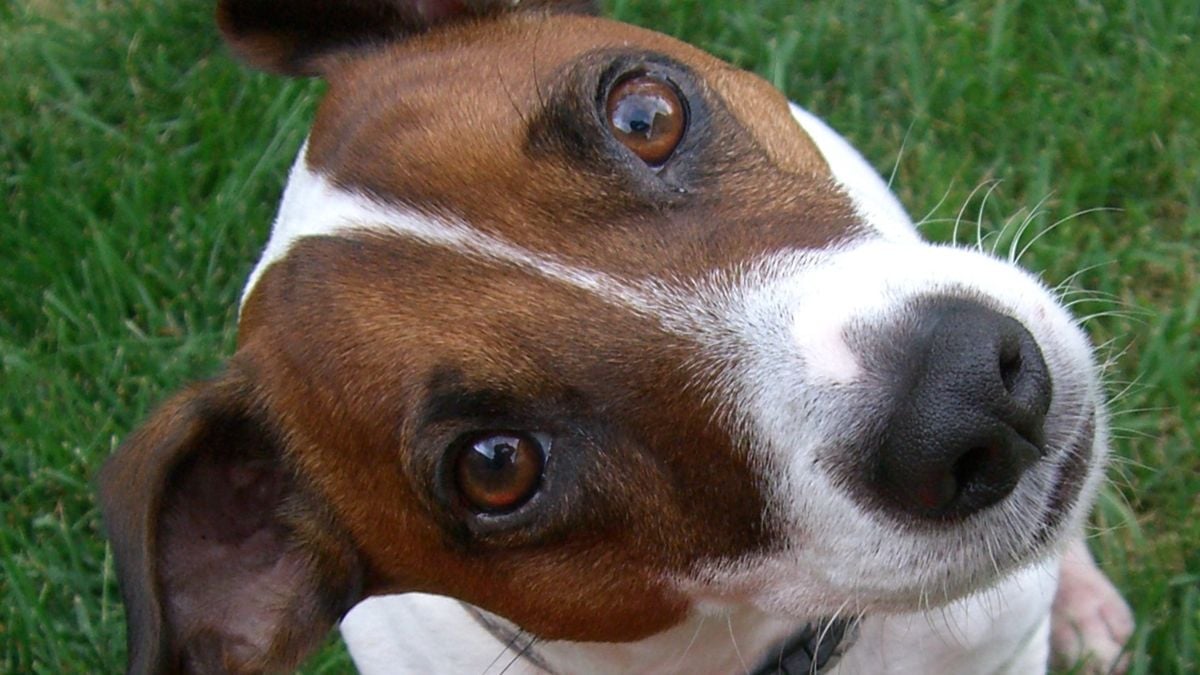
A new study pinpoints when dog brains began to decrease in volume — roughly 5,000 years ago, as humans transitioned from nomadic life to settled agriculture. The culprit, researchers believe, is us.
The dog sitting at your feet while you read this has a smaller brain than its ancestors. Not smaller in the way that variation between individuals produces — a few cubic centimeters here or there. Smaller in a directional, sustained, species-wide sense. For roughly the last five thousand years, domestic dog brain volume has been trending downward. A new study published in Evolution has pinpointed when this reduction began and identified the conditions that seem to have driven it. The findings are not entirely comfortable.
The study, led by Thomas Cucchi of the CNRS in France and collaborators across multiple institutions, analyzed skull measurements from hundreds of dog specimens spanning thousands of years of canine history. By tracking the endocranial volume — the internal skull space that correlates with brain size — across time, the researchers identified a turning point. The shrinkage began approximately 5,000 years ago. The timing corresponds with one of the most significant shifts in human civilization: the transition from nomadic hunter-gatherer life to settled agricultural communities.
## What Changed 5,000 Years Ago
For the roughly ten thousand years that preceded this inflection point — the long period during which wolves were domesticated and early dogs emerged as a distinct population — brain volumes in canines appear to have been relatively stable or even increasing. Dogs in nomadic contexts traveled with humans, worked alongside them in hunting and herding, navigated complex and unpredictable environments, and had to bring significant cognitive flexibility to their daily existence.
The shift to agriculture changed the terms. Settled humans in agricultural communities had different needs from their dogs — and those dogs lived different lives. The cognitive demands of guarding a fixed settlement, living in closer human proximity, and operating in a more structured and predictable environment were different from those of dogs navigating the open landscape with hunting bands. Less problem-solving. More routine. Less need for the full repertoire of independent canine intelligence.
## The Domestication Paradox
Brain shrinkage in domesticated animals is not unique to dogs. Domestic pigs have smaller brains than wild boars. Domestic cats have smaller brains than wildcats. Domestic sheep, cattle, and rabbits all show the same directional trend relative to their wild ancestors. The pattern is consistent enough that researchers have a name for it: the domestication syndrome, a cluster of physical and behavioral changes that tend to accompany the process of animals being selected for tameness and human compatibility.
The working hypothesis is that domestication selects, directly or indirectly, for reduced reactivity to stress and novelty — traits that make animals more manageable in human environments. Those traits appear to be linked, neurologically, to reduced development of certain brain structures, particularly those associated with fear response and environmental vigilance. You get a calmer animal, but you also get, incidentally, a smaller-brained one.
The study looked at skull specimens from archaeological sites across Europe and the Near East, covering the period from early domestication through the height of agricultural civilization. The consistency of the finding across geographically distant populations suggests this was not a local phenomenon driven by specific breeding practices but a species-wide response to the universal shift in human lifestyle.
> "The way our dogs live nowadays doesn't give them the opportunity to always express most of their intelligence. But they are extremely clever and domestication didn't make them stupid, but made them really capable of reading us and communicating with us." — Thomas Cucchi, CNRS
## Smaller Is Not Simpler
The instinct to read "smaller brain" as "less intelligent" is understandable but probably wrong, or at least incomplete. Brain size correlates with certain cognitive capacities but not all of them. What appears to have happened in domestic dogs is a reorganization as much as a reduction — certain neural pathways atrophied while others, particularly those related to social cognition and human communication, developed in distinctive ways.
Studies of dog social cognition over the past two decades have repeatedly demonstrated that domestic dogs have unusual sensitivity to human communicative cues — following pointing gestures, reading gaze direction, interpreting human emotional states through facial expression and vocal tone. These are capacities that wolves, even hand-raised wolves, do not reliably demonstrate. The domesticated dog brain, smaller in volume, appears to have been retuned for a specific purpose: understanding us.
> "When humans settled into agricultural communities, the cognitive demands on dogs changed fundamentally. They no longer needed to navigate open landscapes or problem-solve in unpredictable environments. The brain adapted to a world that no longer required the same degree of environmental intelligence." — Thomas Cucchi, CNRS
## What We Have Asked of Them
The timing of the shrinkage — beginning with agricultural settlement — suggests that dogs, like humans, were shaped by the transition to sedentary life. We built walls. We stayed in one place. We developed the rhythms of farming and fixed community. And our dogs, generation by generation, were selected for the qualities that made them useful and tolerable within those rhythms rather than the qualities that made them effective in the open landscape.
The implications for how we think about dogs today are worth sitting with. A dog living in a city apartment in 2026 is, in some sense, the endpoint of a five-thousand-year process of optimization for human domestic life. The brain that dog carries reflects thousands of years of selection pressure toward calmness, sociability, and legibility in human environments. It is smaller than what came before. It is also, in certain specific ways, more attuned to us than any other brain on earth.
## The Walk as Cognitive Environment
Cucchi's observation about dogs not always having the opportunity to express their full intelligence is not a criticism of pet ownership. It's an observation about environment. A dog navigating a novel trail, working out a tracking problem, encountering unfamiliar smells and terrain, is engaging cognitive capacities that a dog lying on a sofa is not. Both are legitimate dog activities. What the study raises quietly is whether the environments we create for our dogs are giving them enough of what their brains — whatever size they are — were built to do.
Five thousand years ago, somewhere in the transition from nomadic camp to agricultural settlement, a dog's world got smaller. The brain, responding to that smaller world, got smaller too. What we choose to give our dogs in return for that — the walks, the new routes, the unfamiliar terrain — is perhaps more significant than we've been giving it credit for.