The 15-year-old deaf dog who walked five miles and waited in the dark
Doges Editorial · 2026-05-28 · 5 min read
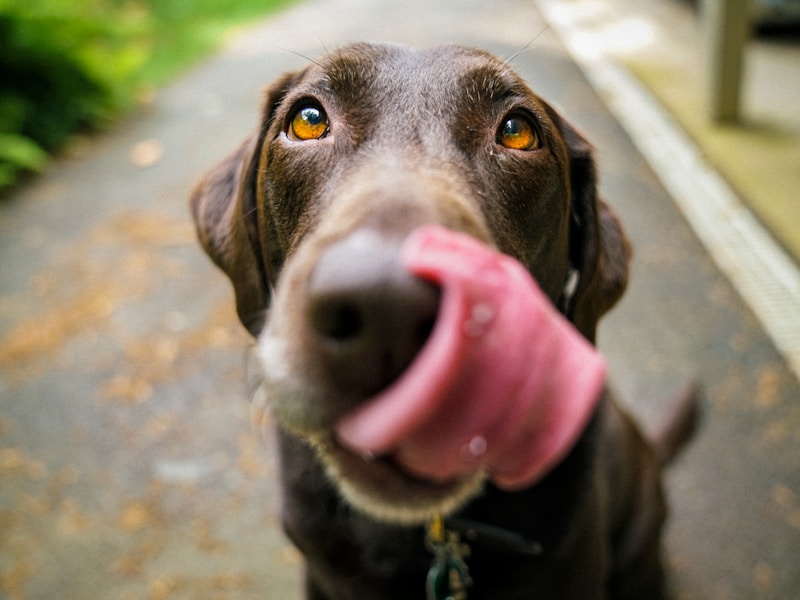
Lucy vanished from her Greenville, NC home on April 27. Deaf and partially blind, the 15-year-old dog was found three weeks later in a flooded drainage ditch — hypothermic but alive — after walking five miles on her own.
The drainage ditch off West Arlington Boulevard was seven feet deep and full of standing water when Greenville Police Officer Maya Ormond arrived that Tuesday morning, May 19. Someone behind a nearby business had spotted a dog down there — an old girl, gray-muzzled and soaked through, crouched at the bottom and completely still. Ormond climbed down to her. "She was frightened," she told The Charlotte Observer. "You can tell she's an old girl and my first reaction was: 'How did you get down there?'"
Twenty-one days, no collar, no voice to call for help
Lucy is fifteen years old. She is deaf. She is partially blind. On the morning of April 27, 2026, she slipped away from her home in Greenville, North Carolina — the only home she had known since she was nine months old — and walked out into a city she could not hear and could barely see.
Her family — Haley Witmer and Jamie Hancock — spent the next three weeks searching. They papered the neighborhood in missing-dog flyers. They retraced her likely routes. By early May, Witmer was writing on Facebook: "We do everything together, and I don't know what I'd do or where I'd be without her." Hancock told WITN that he had panicked almost immediately after she disappeared. "It was like a part of me was missing with her being gone."
We do everything together. And I don't know what I'd do or where I'd be without her.
— Haley Witmer, Lucy's owner, writing on Facebook during the search
Five miles into the unknown
The ditch where Ormond found Lucy is about five miles from the family's home — a long distance for any dog, but a remarkable one for an animal navigating entirely by scent and the dimmest periphery of vision. No sound to triangulate by. No voice calling her name. No traffic noise to warn her off a street. Whatever map Lucy had built over fourteen years of walking the same Greenville blocks, she was using it alone in a city that had no idea she was there.
Dogs build detailed neighborhood maps — scent-layered, corner by corner, deepened by years of the same routes in different weather and different light. Researchers have found that elderly dogs with diminished senses can follow familiar paths almost entirely from muscle memory and chemical trace. Lucy had been walking her neighborhood longer than some of the city's college students had been alive.
Where she went during those three weeks is not fully known. At some point she reached West Arlington Boulevard, and at some point she fell into the ditch. The walls were smooth. The water was cold and rising. She couldn't hear anyone pass above her.
What Ormond found in the water
The water at the bottom of the ditch was knee-high on a standing adult. The sides were steep. Getting in was easy; getting out, for a fifteen-year-old dog with no grip and failing strength, was not. Lucy had been down there long enough to develop early signs of hypothermia — her body temperature had dropped, her muscles were giving up, and she was no longer capable of standing on her own.
She could have been there a couple of days. She didn't move, didn't respond to anything. She was just shaking the whole time. She couldn't walk until we warmed her up.
— Officer Maya Ormond, Greenville Police Department Animal Protective Services
Carried out
Ormond had recently noticed Witmer's missing-dog flyers around town. When she looked into that ditch, she recognized the face. She waded into the cold water, assessed Lucy's state, and lifted her out with both arms — carrying her the way you would carry a child, not a dog.
Officer Wendy Landry helped from above. Together they got Lucy into a patrol vehicle and drove her directly to a veterinarian. The Greenville Police Department posted the news to Facebook that afternoon, May 19. The family still hadn't been reached — but the dog was warming up on a vet's exam table, and the search was over.

The call
Jamie Hancock was at work when his phone rang. The family had been searching for twenty-one days by that point — long enough to begin preparing, quietly, for the news they didn't want to receive. What came instead was the other kind.
It was the best day of my life. As soon as I got the call, I just dropped everything at work and just took off. I told my boss I gotta go, and I was out. She's my entire world. I love that dog.
— Jamie Hancock, Lucy's owner, speaking to WITN
Coming home, slowly
Lucy came home that Tuesday. She had lost weight — visibly so. She had wounds that needed care. She smelled like ditch water and three weeks of roads and rain. But she recognized the voices she couldn't hear by heart and the faces she could barely see, and within days Witmer said she was beginning to look like herself again.
"She did not suffer any life-threatening injuries, but has lost a lot of weight and has wounds that are being treated and cared for," Witmer said after the reunion. "She came back home with us and is already looking more like herself. She is expected to make a full recovery. We are so grateful to the Greenville Police Department for animal protective services and everybody who was involved in her care."
What a dog carries home
There is a particular quality to a dog who has spent fifteen years in one place. They know where the morning light hits the kitchen floor. They know the precise squeak of the back door. Their mental map of a neighborhood isn't just routes — it is relationships: the tree that always has squirrels, the gate that opens, the neighbor who gives treats. All of that, built up over years of the same walks in different weather, is not simply erased by deafness or failing sight.
Lucy walked five miles through a city she could not hear and waited, shaking, at the bottom of a drainage ditch, for someone who would recognize her face from a flyer. Ormond was that person. The rest — the lifting, the warming, the call, the reunion — followed from that one act of paying attention.
On your next walk with your dog — especially your older one, the one who pauses at the same corner every time and has strong opinions about which route — pay attention to what they are reading in the air. They are building something you cannot see, block by block, step by step, that they may one day need to find their way home.