The wellbeing gap that only sleeping with a dog can open
Doges Editorial · 2026-06-13 · 5 min read
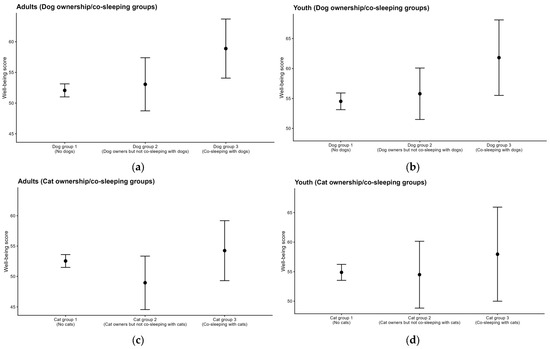
A new study from Chiba University asked nearly 4,000 people about their pets, their beds, and their sense of wellbeing. Dog co-sleepers scored meaningfully higher. Cat co-sleepers showed no difference at all.
Most nights, it goes like this: somewhere around eleven o'clock, a dog settles its weight against your legs, sighs once, and drops into sleep before you do. You lie there listening to it breathe. At some point you fall asleep too. In the morning you are — most dog owners would agree — fine. Maybe better than fine.
Here is what the data says: among 2,675 adults given the WHO-5 Wellbeing Index, those who shared a bed with their dog scored significantly higher than people who owned no pets at all (p = 0.025). Those who shared a bed with a cat showed no measurable difference — in either direction. The study was conducted by Kaori Endo, Keiichi Shimatani, and Norimichi Suzuki at Chiba University and published this year in the peer-reviewed journal Clocks and Sleep. They recruited nearly 4,000 participants in total and asked them something precise: how are you, really, on a standardized scale that has nothing to do with animals at all?
The study, in plain language
The study design was straightforward. Volunteers completed a questionnaire called the WHO-5 Wellbeing Index — a five-question tool developed by the World Health Organization and validated across decades of clinical research in dozens of countries. The questions ask about mood, energy, and rest: whether you feel cheerful, whether you wake up refreshed, whether you feel active and engaged in the hours that follow.
The sample sorted naturally. Of the adult participants, 9.9 percent owned dogs and 9.5 percent owned cats. Among the dog owners, 44.5 percent reported co-sleeping with their dog — defined as sharing the bed. Among cat owners, 44.1 percent said the same about their cats. The rates of co-sleeping were nearly identical between the two groups, which is what makes the results that followed genuinely interesting.
Dogs and cats part ways
The researchers used a statistical method called analysis of covariance — adjusting for age, sex, and household income — to compare WHO-5 scores across three groups: people who owned no pets, people who owned a pet but did not share the bed, and people who co-slept with their pet.
In adults, dog co-sleepers scored significantly higher on the WHO-5 than people who owned no pets at all. The difference was statistically reliable — a p-value of 0.025, meaning there's about a 1-in-40 chance of seeing a gap that large by random chance alone. The association was not found for dog owners who kept their pets out of the bedroom.
Dog co-sleepers exhibited significantly higher well-being scores compared to non-owners.
— Kaori Endo, Keiichi Shimatani, and Norimichi Suzuki — Chiba University, Clocks and Sleep (DOI: 10.3390/clockssleep8020025)
For cat owners, the picture was different. No significant association emerged between cat co-sleeping and WHO-5 scores in adults — in either direction. The cats were there, occupying the same physical space, at nearly identical rates. Their presence simply didn't register on the wellbeing measure.
Why dogs and not cats
The study doesn't answer this question definitively — that would require a different kind of research — but the team offered two candidate explanations, both worth considering.
The first is emotional security. Dogs are, behaviorally, oriented toward their owners in a way cats typically are not. A dog sleeping in the bed is actively present to its owner — responsive to movement and sound, generating a kind of low-level social warmth. The neurochemical basis for this has been documented. A landmark 2015 study in Science by Miho Nagasawa and colleagues at Azabu University found that sustained eye contact between a dog and its owner triggers a mutual oxytocin surge — the same bonding hormone that governs parent-infant attachment in humans. Female dogs given oxytocin via nasal spray spent 150 percent more time gazing at their owners, who in turn experienced a 300 percent spike in urinary oxytocin. Nagasawa's team called it an oxytocin-gaze positive loop: self-reinforcing, mutual, activated by proximity and attention. A dog in the bed is, among other things, a nightly cue that can engage this system.
The second explanation is indirect. People who sleep with their dogs may simply walk more. Dogs require outdoor time in a way cats don't, and the daily practice of morning and evening walks contributes to physical activity levels that, on their own, support wellbeing in well-documented ways.
People who co-sleep with their dogs may also be more likely to walk them regularly, which could contribute to improved well-being.
— Research team, Chiba University
The two explanations aren't mutually exclusive, and the researchers didn't try to separate them. Both might be partly true. Together they sketch a picture of dog co-sleeping as part of a broader pattern — not just a nighttime arrangement but a relationship that shapes the structure of a day from the moment it starts.
What the study can't tell us
While we emphasize the potential benefits of co-sleeping on well-being, the reverse may also be true; individuals with higher baseline well-being may be more predisposed to choose co-sleeping with their pets.
— From the study's published conclusions, Clocks and Sleep
Cross-sectional studies — those that collect data at a single point in time rather than following people across months or years — can identify associations but cannot prove cause and effect. This study is no exception. It's possible that happier people are simply more likely to let the dog into the bed. The association runs both ways, and the data alone can't untangle them. That's not a flaw in the research so much as an honest acknowledgment of what a study like this can and cannot do.
The sleep paradox
There is a nuance here that sharpens the finding rather than undermining it. A 2024 nationally representative US study, published in PMC and surveying more than 1,500 adults, found that dog co-sleepers actually reported worse perceived sleep quality and greater insomnia severity than non-co-sleepers. That might seem to contradict the Chiba results — but it doesn't, because the two studies are measuring different things. The WHO-5 does not ask how soundly you slept. It asks whether you felt cheerful, calm, active, and refreshed in the hours that followed. You can sleep slightly worse and feel measurably better. The divergence between those two outcomes may be the most interesting thing the Chiba data shows: what the dog is doing at night is neurochemical, not just behavioral, and the body registers it as wellbeing regardless of the interruptions.
Youth findings and a broader picture
The study also surveyed younger participants, using the same co-sleeping questions alongside an age-adjusted wellbeing measure. The results were more mixed among youths — suggesting that the relationship between pet co-sleeping and wellbeing may evolve across different life stages and household contexts. The adult association was the study's clearest finding.
What does hold across both groups is the consistency with which dogs and cats produce different results on this kind of measure — not because cats are worse companions, but because the structure of the relationship is different. Cats co-sleep on their own terms. Dogs co-sleep on yours.
A Tuesday morning, for example
None of this will surprise anyone who shares a bed with a dog. What the study does is put numbers to something most dog owners already believe, and it does so carefully enough to be worth citing. The WHO-5 is not a casual survey; it's a clinical instrument validated across populations for decades.
The deeper implication is something the researchers don't spell out, but which follows from their two proposed mechanisms — and from the oxytocin science that underlies the first of them. A dog in the bed is, in many respects, a commitment to a morning walk. And a morning walk is its own form of medicine — one that studies consistently associate with reduced anxiety, better mood, and a steadier sense of purpose in the hours that follow.
So the dog settled against your legs at eleven, sighing once before you do. In the morning, the two of you go out. The data suggest that that walk — even a short one, even in bad weather — is doing something the numbers can actually measure. Whether the dog started it or you did is a question the study can't answer. It almost doesn't matter.