More than half of all dogs have gum disease, and most owners don't know it
Doges Editorial · 2026-05-13 · 4 min read
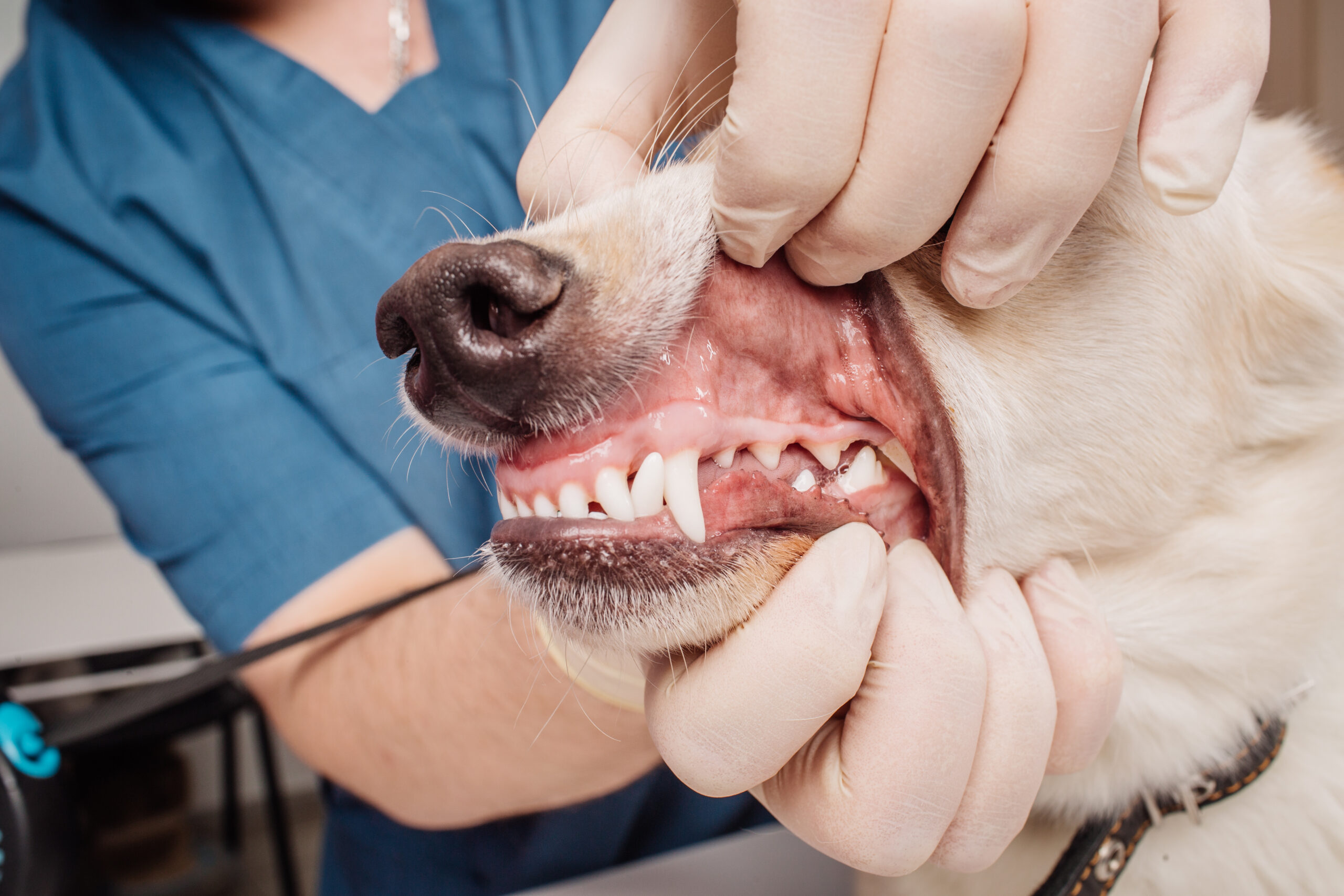
A new study of 12,753 dog owners across the US and Canada found that over 50% reported periodontal disease in their dog. The behavioral connection — fear, low energy, stress — may be the most important finding of all.
Most dogs will let you look at almost anything before they'll let you touch their muzzle. Pull back a lip and there's often a flinch — a low head, a sidestep, a quiet withdrawal. It's easy to read as sensitivity or personality. A new study published this month in the Journal of Small Animal Practice suggests it might be something else entirely: pain.
The research, conducted by scientists at the Waltham Petcare Science Institute and reported by the British Small Animal Veterinary Association on May 11, 2026, surveyed 12,753 dog owners across the United States and Canada. The finding at the center of it: more than half of pet dogs — 50.5 percent — have owner-reported periodontal disease. That is not a number that should be easy to scroll past.
What the Research Actually Found
Periodontal disease — the progressive deterioration of the gums and the structures that anchor teeth in the jaw — is already known to be common in dogs. What this study adds is scale and granularity. Researchers asked owners to report on their dogs' dental diagnoses, oral care habits, overall health, and behavior. By design, the data reflects what owners know and report, which means the true prevalence may be higher still. Proper diagnosis of periodontal disease requires anesthesia, and many owners never get that far.
Of the risk factors the study identified, age was the clearest. Dogs eight years and older had significantly elevated risk; dogs under four had the lowest. Small and toy breeds were disproportionately affected: the American Cocker Spaniel, Papillon, Yorkshire Terrier, Cavalier King Charles Spaniel, and Pomeranian all showed elevated risk. Large breeds had the smallest odds of disease, likely due to less crowded dentition and better airflow between teeth.
Our findings support numerous existing reports regarding canine periodontal disease and its associated risk factors. They also highlight key issues regarding the management of PD. It's our hope that the risk factors we've highlighted could contribute to earlier identification and prevention in the future.
— Dr. Alex Jemmett, lead researcher, Waltham Petcare Science Institute
The Behavior Connection No One Talks About
The finding that stopped me reading wasn't the prevalence statistic. It was the behavioral one.
Dogs with periodontal disease in this study were significantly more likely to be described by their owners as fearful, timid, very stressed, very reserved, and low energy. They were less likely to be rated as having excellent overall health and mood.
Dogs with periodontal disease were significantly more likely to be described by their owners as fearful/timid, very stressed, very reserved, and have low energy, and were less likely to be associated with excellent overall health and mood.
— Study finding, Journal of Small Animal Practice (2026)
This is worth sitting with. A dog who has grown quieter over the past year, who flinches when you reach toward their face, who seems less enthusiastic in the mornings — these can all look like personality or age. The data suggests they may sometimes be the behavioral signature of chronic oral pain. A dog with an infected gumline and receding bone support is not having a comfortable day. Of course they're more guarded. Of course they move with more care.
The Oral Care Finding That Surprised People
The study also tracked which oral care methods were associated with lower versus higher prevalence of periodontal disease — and the results are more complicated than the packaging on most dental products would suggest.
Dogs that used chew toys and rawhide or animal-based chews had lower prevalence. Dogs whose owners used liquid or gel products, powder-based products, or toothbrushing were associated with higher prevalence. That sounds backward, but the researchers note it likely reflects selection bias: owners who reach for active dental care products are often doing so because their dog already has a diagnosed problem. The products aren't causing disease. But the finding underscores that many standard dental care products may not be solving it, either — and that simpler interventions like appropriate chew access deserve more credit than they often get.
Why It Gets Missed
Periodontal disease develops quietly. Plaque forms on tooth surfaces, hardens into tartar, and begins to work its way below the gumline, where the ligaments and bone that hold teeth in place start to break down. A dog living through this process doesn't stop eating, doesn't yelp every time they chew. They adjust. They favor one side. They lose enthusiasm for harder textures. They get careful around their face.
The high prevalence in toy breeds has a structural explanation: these dogs tend to have crowded dentition, with teeth packed into smaller jaws, creating more surface area where plaque accumulates and fewer places for natural airflow. A Yorkshire Terrier's mouth is managing problems that a Labrador's mouth doesn't. Brachycephalic dogs — the flat-faced breeds — showed lower reported rates, but the researchers flag this as likely underdiagnosis: anesthesia is high-risk for these breeds, meaning they're examined less often, not necessarily healthier.
What This Means for Your Dog
The researchers are careful not to prescribe a specific protocol — that conversation belongs with a vet. But a finding that half of dogs may have active periodontal disease is, at minimum, a reason to ask about it at the next routine checkup if you haven't already. And to notice: Is your dog resistant when you approach their face? Has their energy shifted gradually over the past year or two? Have they become more reserved, less bouncy, less interested in the things they used to love?
The signs are there. They can look like a lot of other things. But under a vet's flashlight, with an anesthetic and a probe, they stop looking ambiguous.
On your next walk, watch your dog work through the smells on a fencepost or a patch of grass. That investigation — the thoroughness of it, the focused interest — requires a mouth that isn't hurting. When it starts to hurt, the investigation gets shorter. The walk gets smaller. It happens so gradually that most owners don't mark the moment it began. The study is asking us to look earlier than that moment.