Your anxious dog's thunderstorm panic may start in their gut, not their head
Doges Editorial · 2026-05-24 · 5 min read
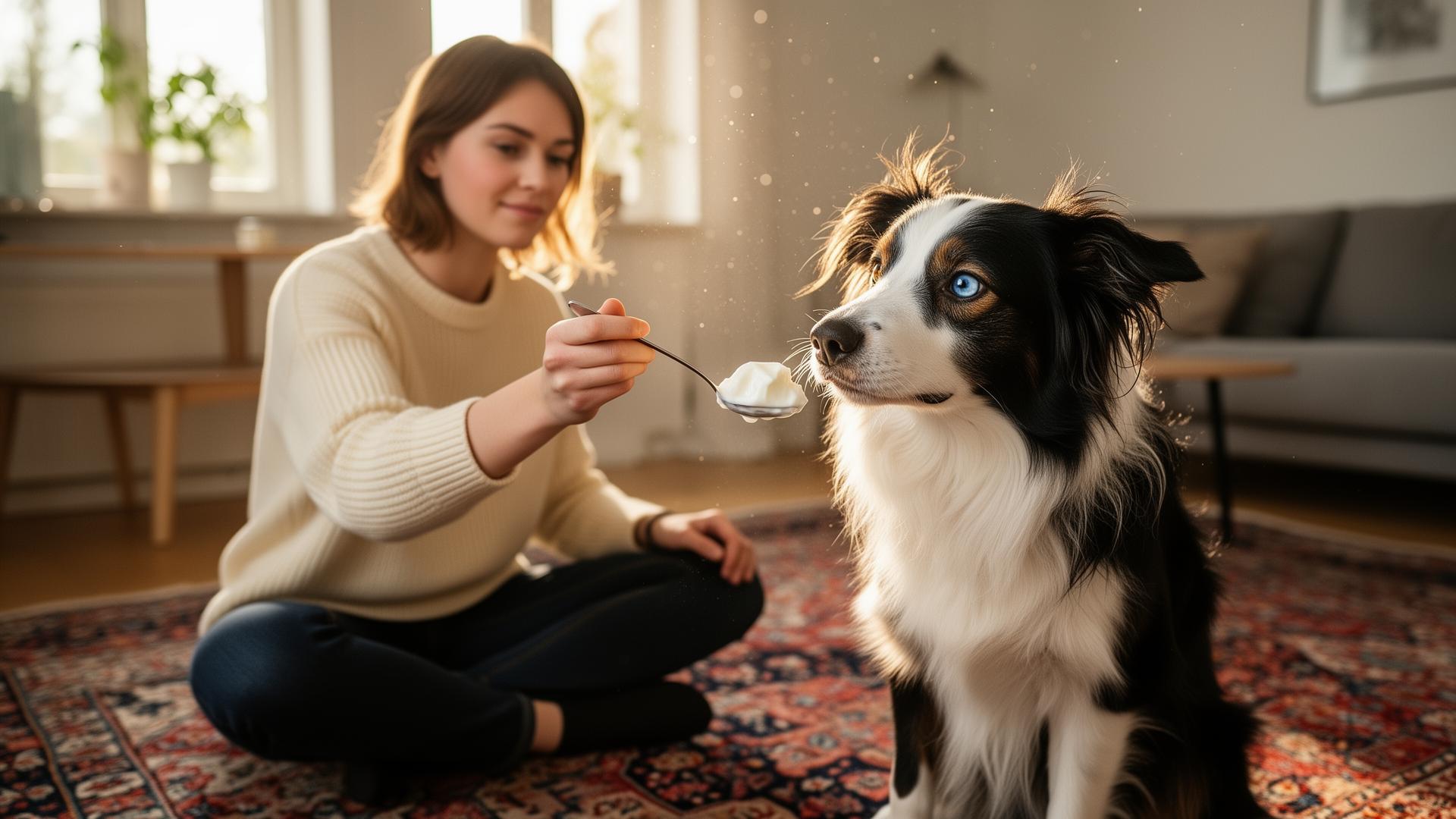
A new University of Helsinki study of 622 dogs finds fearful and noise-sensitive animals share a distinct bacterial signature — opening an unexpected door to treating canine anxiety through diet and daily movement.
There is a particular misery to watching your dog fall apart during a thunderstorm. The panting. The shadow that glues itself to your side. The pacing that doesn't stop even after you've sat down on the floor and wrapped your arms around them. You try what you can — the tight-fitting shirt, the white noise, the same soothing voice — and sometimes it helps, and sometimes it absolutely doesn't, and you still don't fully understand why.
A 2026 study from the University of Helsinki, published in Animal Microbiome and led by Professor Hannes Lohi, suggests that part of the answer may be living in your dog's gut. Researchers found that fearful and noise-sensitive dogs share a distinct bacterial fingerprint compared to their calmer housemates — a finding that reshapes how we think about canine anxiety, and quietly raises a new question about what we're putting in their bowl.
Six hundred and twenty-two dogs, and a sharper question
Lohi's team at Helsinki's canine genetics lab recruited 622 pet dogs from 27 different breeds. Dog owners completed validated behavioral questionnaires covering fearfulness, noise sensitivity, separation-related behavior, and aggression. Fresh fecal samples were then collected at home and shotgun-sequenced — meaning researchers mapped every bacterial species present, along with every metabolic pathway those bacteria were actively running.
The team wasn't asking the blunt opening question of this field: do anxious dogs simply have more or fewer gut bacteria in total? They asked something sharper: which specific microbes track with which specific behaviors, and what are those microbes actually producing? The distinction matters. It points the research toward mechanisms rather than correlations — toward why, not just whether.
The bacteria that was missing
Dogs scoring high on fearfulness and noise sensitivity showed consistently lower levels of certain short-chain fatty acid producers — particularly two bacterial genera called Faecalibacterium and Blautia. They had higher levels of Lactobacillus species previously linked to stress responses in rodent models. Their overall microbial diversity was reduced, a pattern well-established in human anxiety and depression research.
Most significantly, the fearful dogs showed lower predicted output of GABA precursors and tryptophan-pathway metabolites — the compounds the brain relies on to regulate fear itself. GABA is the nervous system's primary calming neurotransmitter. Tryptophan is the amino acid the body converts to serotonin. Their relative absence in the gut is not an abstract biochemical finding. It reaches all the way up to how a dog behaves on a stormy afternoon.
The signal held even after controlling for breed, age, diet type, and whether the dog lived in a city or the countryside.
— Lohi et al., Animal Microbiome, 2026
The gut-brain conversation
The gut-brain axis is a two-way conversation that scientists have been mapping for decades in humans, and more recently in dogs. Bacteria in the colon ferment dietary fiber into short-chain fatty acids like butyrate, which calm gut inflammation and signal to the vagus nerve — the long highway that runs from the digestive system up to the brainstem. Some microbes synthesize neurotransmitter precursors directly. Others modulate the release of cortisol.
When that ecosystem shifts — through chronic stress, repeated antibiotic courses, highly processed food, or simply a rough start in the first weeks of life — the downstream effects reach behavior. The trillions of microbes in your dog's intestine are not passive tenants. They are metabolically active in a way that shapes mood and stress response continuously, in both directions.
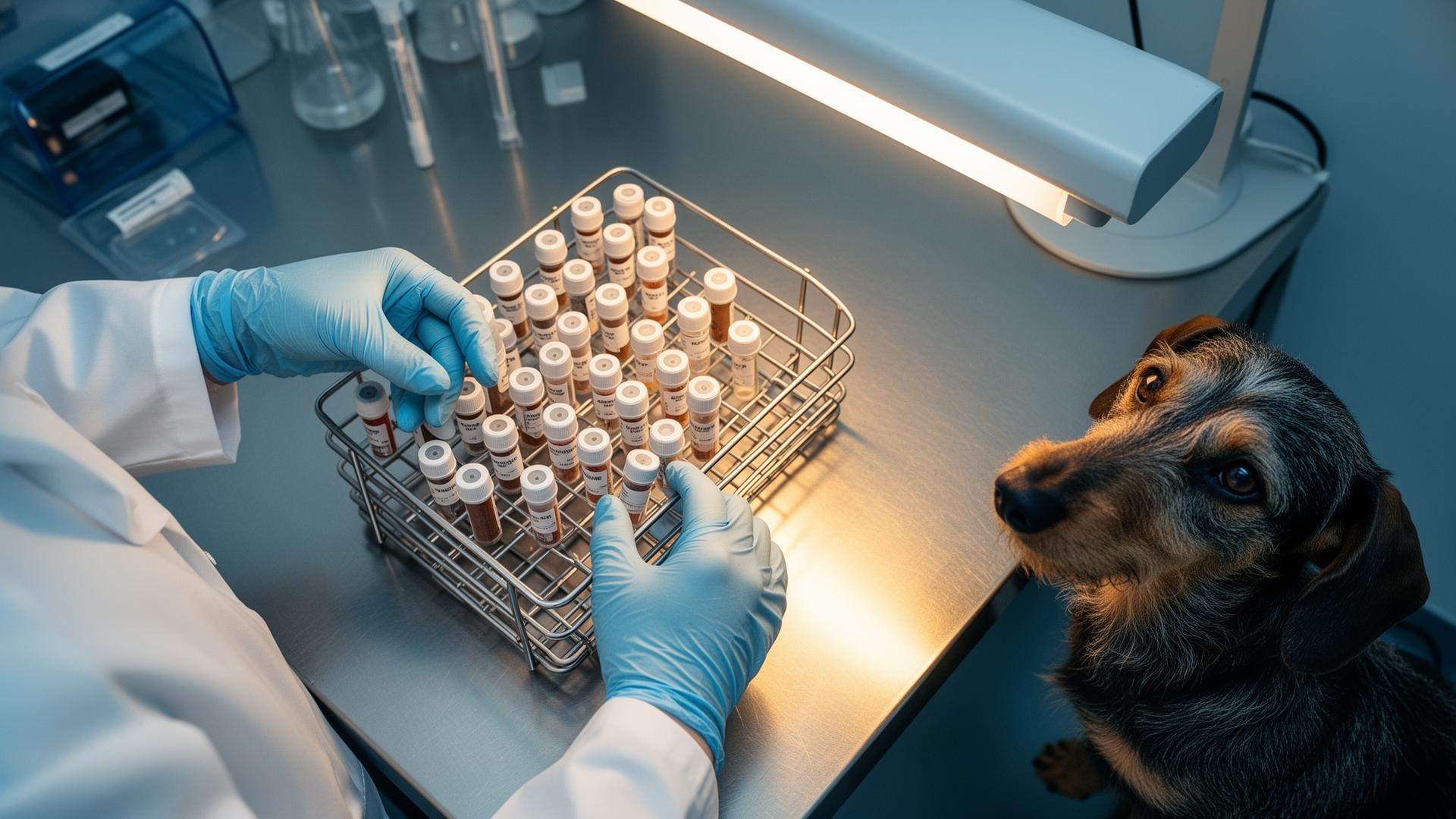
Does this mean probiotics will fix the thunderstorm panic?
Not on their own — and the Helsinki authors are careful about this. Association is not causation. A single fecal snapshot cannot prove the bacterial deficit caused the anxiety rather than the other way around. Stressed dogs eat less, sleep worse, and shed gut diversity as a direct result of the fear itself. The arrow runs both ways, and untangling it requires longitudinal trials, not a snapshot.
That said, two small randomized trials cited in the paper found that targeted probiotic strains — particularly Bifidobacterium longum — measurably reduced noise reactivity in dogs over six weeks. Lohi's group is now running a fiber-supplementation trial in eighty noise-phobic dogs, with results expected in 2027. The interventional science is in its early days, but it's moving.
Small randomized trials have already shown that targeted probiotic strains can measurably reduce noise reactivity in dogs over six weeks — but results vary by dog and by strain.
— Lohi et al., Animal Microbiome, 2026
What this means for your dog today
The study doesn't hand owners a pill. But it sharpens a few practical levers worth taking seriously right now. Rotating protein sources and adding cooked, dog-safe vegetables — pumpkin, green beans, carrot — gives gut bacteria more substrates to ferment and diversifies the ecosystem. Antibiotic courses, when genuinely necessary, are worth following up with a veterinary-grade probiotic. And ultra-processed, single-ingredient diets may be more connected to anxious behavior than owners have generally been told.
There is one finding in the paper that sits differently if you're someone who walks your dog every morning. Exercise independently boosts the same short-chain fatty acid producers that anxious dogs were found to lack. Faecalibacterium and Blautia — the bacterial genera that were depleted in fearful dogs — are among the organisms that thrive in physically active animals with varied diets. A long, unhurried walk is one of the things that helps them grow.
Your dog's nervous system and their gut microbiome are in continuous, two-way conversation. What goes in the bowl echoes up to the brain, and what happens on the morning walk echoes back down to the bacteria. The thunderstorm will still be loud. But the dog standing in it may be better equipped — from the inside — than anything you could buy them.