Two miles off Bamburgh, a dog was waiting on a kayak
Doges Editorial · 2026-06-11 · 4 min read
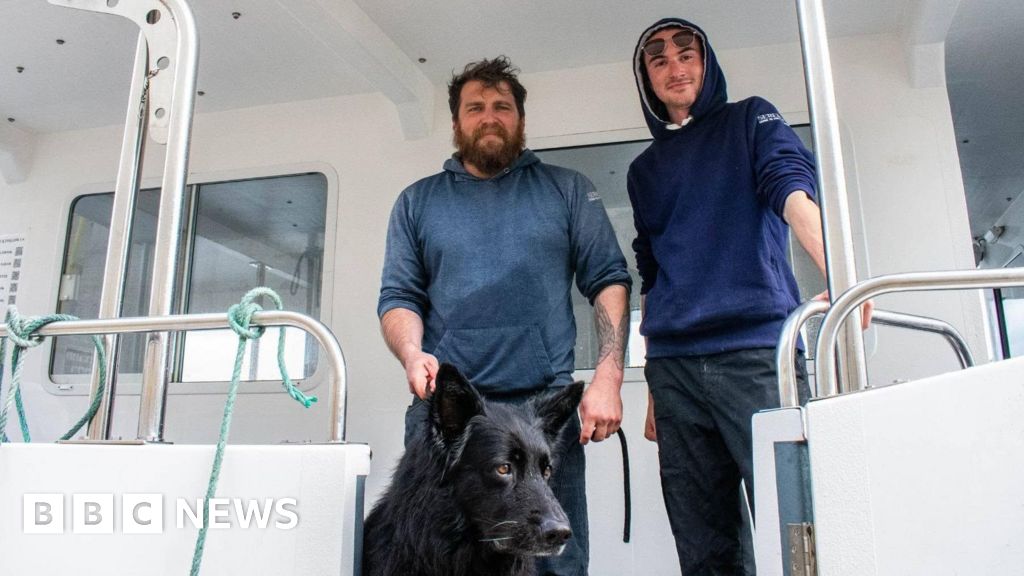
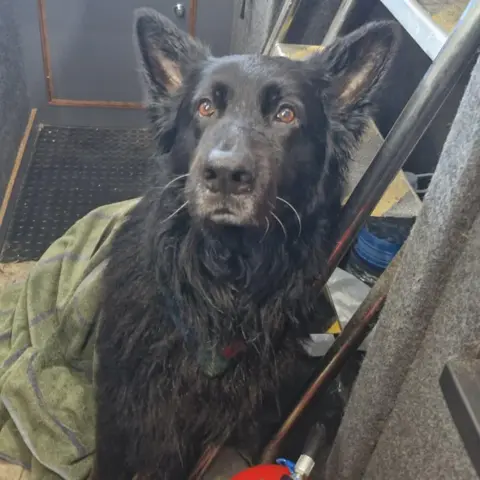
Bruce, a black Alsatian, drifted more than two miles into the North Sea on an inflatable kayak before a tour boat crew pulled him out by the scruff of his neck and wrapped him in towels.
On a Sunday afternoon at Bamburgh beach, on the long strip of sand beneath the castle's grey stone walls, an Alsatian named Bruce clambered into an inflatable kayak. His owner, Arron, had put him there for a moment of fun — paddling at the shoreline, the Farne Islands visible on the horizon and a westerly wind coming in off the open North Sea. Then a gust took the kayak. Reported first by BBC News on June 8, 2026, it was the beginning of a rescue that would involve the coastguard, the RNLI, local fishing boats, and one tour boat crew that happened to be in the right place.
Arron swam after the kayak. He got far enough into the water to understand the current's intentions before turning back. If he had kept going, the coastguard would have been searching for two subjects instead of one. He did the right thing. He called for help.
A call goes out across the water
The Seahouses Coastguard Team launched. RNLI volunteers from Seahouses put their lifeboat in the water. Local fishing boats and tour operators joined the search. The original coastguard call had reported a person in difficulty — then it emerged that the person had made it safely back to shore, and what was adrift out there was a dog.
Aboard the Serenity, a tour boat running excursions to the Farne Islands, Captain Jimmy Reid and his crewman Aaron Fordy were heading back to port after dropping off passengers. They heard the coastguard broadcast and diverted. Reid had ten years of experience in these waters. Every time before, someone else had found whoever needed help. He made his best estimate of where the wind and current would have carried the kayak and pointed the Serenity toward it.
Four kilometers from shore
They were searching more than two nautical miles out when Fordy spotted something from the upper deck. The inflatable was low in the water and drifting further east. Bruce was huddled inside it, cold and still, the Northumberland coastline already small behind him.
The North Sea off Bamburgh in early June runs around 11 degrees Celsius. Bruce had been out there for close to an hour. Reid brought the Serenity alongside. Fordy reached down with a harness. For a moment it looked like it was over. Then the harness slipped and Bruce fell into the sea.
The scruff of his neck
Fordy went over the side after him. He grabbed Bruce by the scruff and held on. Reid seized his crewman's legs from behind and the two men hauled the dog up and over the rail together. That grab — that one second of reaction — was the difference.
My crewman, Aaron, reached down and grabbed him by the scruff of the neck. If he hadn't grabbed him like that it would have been the end of the any sort of rescue effort.
— Captain Jimmy Reid, Serenity Farne Islands Boat Tours
Fordy has two Alsatians of his own. Reid said the rescue hit his crewman in a particular way — that particular combination of animal, cold water, and a harness that slips at exactly the wrong moment. It was the kind of save that leaves you running through it again afterward.
I went through this heart-wrenching thing of thinking the dog was going to go in the water and stay there. So, when we actually got him on board and knew he was safe and knew the hard bit was over, we were both very elated.
— Captain Jimmy Reid
Cold, soaked, and shaking
Bruce was hypothermic. The crew wrapped him in towels, one layer then another, and brought up the boat's heat while the Serenity turned back toward Seahouses Harbour. He was a big dog in a small space, exhausted and disoriented, the worst of his experience still somewhere in his body even if the kayak and the open water were now behind him.
A dog's normal body temperature sits between 101 and 102.5°F (38.5–39.1°C) — warmer than a resting human's. Veterinarians set the hypothermia threshold at 99°F, below which heart rate slows, breathing shallows, and coordination collapses. Water at 11°C strips heat from a wet coat far faster than cold air alone, and older dogs face heightened risk because their thermoregulatory capacity diminishes with age. The crew's instinct to use towels rather than direct heat was the right call: applying a hot-water bottle directly to a severely hypothermic dog can trigger dangerous cardiovascular changes. Gradual, layered rewarming — exactly what they did — is what veterinary first-aid guidelines recommend. (PetMD, petmd.com/dog/conditions/cardiovascular/dog-hypothermia; American Red Cross Pet First Aid)
The RNLI volunteers retrieved the inflatable kayak and brought it back to shore. Hugh Fell, the duty launch authority at Seahouses RNLI, praised Arron's decision to turn back from his swim.
We are a station of dog lovers and completely understand the owner's desire to save Bruce. However, he did exactly the right thing returning to shore and preventing himself from becoming a casualty. A big thank you to the good Samaritan vessels who joined the search.
— Hugh Fell, Duty Launch Authority, Seahouses RNLI
Back on solid ground
When the Serenity docked at Seahouses Harbour, Arron was there. He thanked the crew and the RNLI volunteers. He left with his dog, still damp, probably smelling of the North Sea in that particular way that takes a few days to fade entirely.
Arron put it simply afterward: "I don't know what I would have done if he wasn't found. I couldn't bring myself to leave him, but there's nothing I could do when he got so far out. Bruce is okay, home safe and sound, thanks to the Serenity crew and everyone involved."
A first in ten years
For Reid, it was the first time in a decade of coastguard searches that his crew had found the subject on their own — no other vessel reaching it first, no handoff, just the Serenity and two men deciding where to look. It was also, he noted, the first time the subject had been a dog.
"He looked like an older dog," Reid said, "and to be able to get him back on board was absolutely amazing."
It's the kind of story that makes you think about what the water keeps and what it gives back. There's a version where the harness holds, where the rescue is tidy and no one goes over the side. And there's the version that actually happened: the slip, the lunge, the grip. The outcome was the same in both versions. It's the detail in the second one that stays with you.
If you walk your dog near water — a beach, a riverbank, anywhere with a current — there's something in Bruce's story that lands differently after you know it. Not a warning exactly. More like a reminder that the dog you're walking is always, in some part of their animal brain, reading the horizon too.