Blue's tail, and the vet who refused to let it go
Doges Editorial · 2026-06-25 · 5 min read
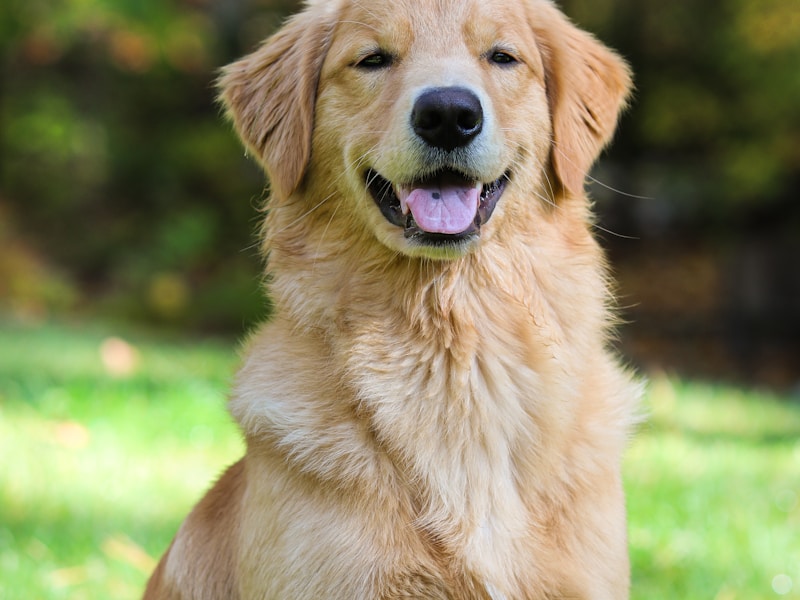
Blue, an eight-year-old Labrador retriever in Austin, Texas, fractured his sacrum in a parking-lot accident and lost all movement in his tail. The standard recommendation was amputation — but his neurologist found a single 2018 paper about cats, adapted the technique, and gave Blue back his wag.
On a late March afternoon in Austin, Texas, Blue was doing exactly what eight-year-old Labrador retrievers do near open fields — sprinting, tail going, the whole world in front of him. His owner Ian Weiss brought him out to a field, a vehicle pulled up, and in the moment before Blue reached it, something went wrong. The driver, unaware the dog was directly in front of the tire, rolled forward at single-digit miles per hour. The rear axle passed over the back of Blue's pelvis, and the tail that Weiss describes as Blue's primary form of communication went completely, immediately still.
Blue could still walk. He remained continent. Those were the encouraging signs: this was not a spinal cord catastrophe. But by the time he arrived at Pet Specialists of Austin, a 24-hour emergency hospital, the tail that Weiss cheerfully acknowledges poses a genuine hazard to coffee tables was not moving at all. It hung limp and unresponsive, as if it had simply stopped being part of him.
The standard answer wasn't good enough
Three days after the accident, Dr. Elizabeth Passmore, a veterinary neurologist at Pet Specialists of Austin, got her first careful look at Blue. Imaging showed a fracture at the S3 segment of the sacrum — the very rear of the spine where it connects to the pelvis — with the first vertebra of the tail effectively detached. For this type of sacral fracture, the standard recommendation is tail amputation.
Before she accepted that path, Passmore tested what remained. She pressed lightly on the base of Blue's tail. He flinched — an involuntary response that told her what she needed to know. Pain sensation was still intact.
Because he had pain sensation intact, we thought if we could bring everything back together, it's possible that with rest and time, the movement nerves could come back.
— Dr. Elizabeth Passmore, veterinary neurologist, Pet Specialists of Austin
The distinction matters more than it might appear. Veterinary neurologists classify peripheral nerve injuries into three types. Neurapraxia is a temporary functional block — the nerve is bruised but structurally intact, and function returns on its own. Axonotmesis means the axon itself is damaged, though the surrounding sheath survives; these nerves can regenerate at roughly 1 millimetre per day, a slow rebuild that can take weeks to months. Neurotmesis — complete severance — does not recover, full stop. Pain sensation at the injury site acts as a proxy for which category you're in, because completely severed nerves cannot carry any signal at all. For Blue, a flinch at his tail base was, neurologically speaking, the most important thing that could have happened.
One paper, fifteen cats, zero dogs
When Passmore searched the medical literature for a surgical alternative to amputation, she found exactly one useful reference: a 2018 paper by Caraty, Hassoun, and Meheust, published in the Journal of Small Animal Practice (doi: 10.1111/jsap.12773), describing a procedure performed on 15 cats with similar injuries. The technique involved drilling a 1.1mm bone tunnel at the base of the dorsal spinous process of S2, then passing non-absorbable polypropylene suture around the transverse processes of the displaced vertebra on both sides, progressively tightening the knots to restore alignment without overcorrecting. Eleven of those 15 cats regained tail movement; among the responders, recovery took between 3 and 90 days.
There was no documentation in any published paper that the technique had ever been used on a dog. The anatomy isn't identical, and any adaptation would require Passmore to draw on her own knowledge and judgment in ways the literature couldn't guide. She decided to try it anyway.
It's a bit of a kick in the pants and an adrenaline rush, actually. Falling back on our practiced techniques and skills of neurosurgery is what gives us the confidence to explore the new frontier.
— Dr. Passmore
The surgery that hadn't been done before
The operation took two and a half hours and was performed the same day Blue arrived at the specialist facility. Passmore decompressed the nerve roots, removed bone fragments and blood clots, and realigned the fractured vertebrae using a suture-sling technique adapted from the Caraty paper. Rather than a metal implant, she used the thickest non-absorbable suture available, threaded in a double-pass pulley design built to hold for Blue's entire lifetime.
He went home the following morning, already looking more comfortable than he had since the accident. The work was done. What remained was time.
One week, then five
Within seven days, the very tip of Blue's tail began to move.
At the five-week recheck appointment, Blue arrived and proceeded to conduct himself as if the previous two months had been a minor inconvenience. He rolled on the floor, asked for belly rubs, and did zoomies between the exam tables while Passmore watched from across the room.
He literally forgot about the whole injury.
— Dr. Passmore
Today, Blue swims again — shorter sessions than before, building back toward his pre-accident distance on Passmore's timeline. No further rechecks are expected as long as his recovery continues on its current trajectory.
What a tail is worth
The tail is forgotten as part of one of the important anatomic structures of the body. While some owners may say it's just a tail that's injured, I would argue that it deserves attention just as much as if it were an arm or a leg.
— Dr. Passmore
In Labrador retrievers, the tail is essentially a second language. A Lab at rest, a Lab uncertain, a Lab who just heard the leash click — these dogs use the same body to produce entirely different broadcasts. There is the slow, tentative wag when something is uncertain; the furious full-pelvis rotation when the front door opens; the particular rhythm reserved for the person who arrived exactly when expected. To amputate a tail, in a breed that lives this way, is not simply to remove a limb. It is to silence something.
The science of what a tail communicates turns out to be more intricate than most owners realize. Research first published in Current Biology found that dogs wag asymmetrically: positive emotions bias the movement to the right, while stress or uncertainty biases it to the left — a neurological pattern that reflects the same hemisphere specialization found in human emotional expression. Speed, height, and direction all carry specific information for other dogs reading it. In retrievers, the full-pelvis circular rotation is associated with the highest positive arousal states. A silent tail does not merely stop signaling happiness. It removes a vocabulary that other dogs read fluently and that attentive owners have been interpreting, without quite knowing it, for as long as they've had one.
Passmore hopes to formally document the procedure in the veterinary literature, so the next clinician who faces this injury in a dog knows there is a path other than amputation. She credits the emergency team who first stabilized Blue and made the specialist referral possible.
Because of the specialty care that he received, he now gets to keep his tail. I hope he wags it for years to come.
— Dr. Passmore
For Ian Weiss, the five-week recheck was when he knew Blue was truly back — not the imaging, not the neurological score, but the zoomies. A Lab who goes that fast in an exam room has clearly moved on. Somewhere in Austin, a coffee table is once again under genuine threat. That means everything went right.