Six years without a name, then a family who would keep her anyway
Doges Editorial · 2026-06-01 · 5 min read
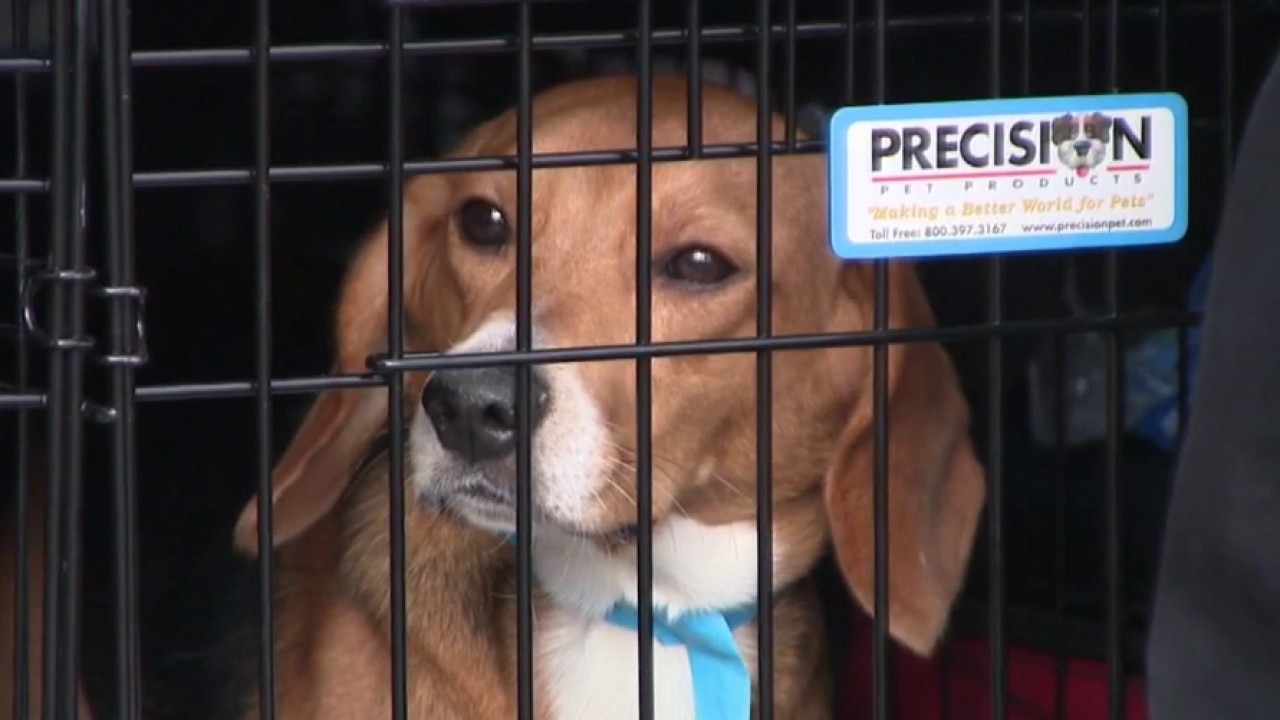
Bailey spent six years as a breeding beagle at a Wisconsin research facility, never having a name of her own. When she was finally freed, the Truax family chose to adopt her — cancer diagnosis and all — because even a short life can be a good one.
Bailey arrived at the Truax house in Mukwonago, Wisconsin the way research beagles often arrive in new places: moving carefully, reading the room, waiting to learn what would be asked of her. She was six years old. She had produced litters for an industry she had no choice in. And until the Wisconsin Humane Society wrote a name on a card outside her kennel run, she had never had one.
Over the past month, her name has become Bailey. The family who found her — Jeanne and Lyle Truax — has decided that however many days she has, they will be the best ones of her life so far. Even after the diagnosis. Especially after the diagnosis.
A kennel in Dane County, and a deal that changed things
Ridglan Farms was a commercial beagle breeding operation in Dane County, Wisconsin, that for years supplied the American scientific research industry with dogs. In 2025, state officials cited the facility for hundreds of animal welfare violations. Then, in late April 2026, two large animal welfare nonprofits — Big Dog Ranch Rescue and the Center for a Humane Economy — struck a deal to purchase approximately 1,500 of its dogs. On May 1st, the kennel doors began to open.
Bailey was among the first wave. She entered the Wisconsin Humane Society system quiet and uncertain, carrying no personal history beyond her breeding records. WHS put out a call for foster families. Before Jeanne Truax had even finished reading the announcement — before she had thought through one particular conversation — she had already applied.
Something just tugged at me to do this and help a beagle.
— Jeanne Truax, adoptive owner
The part she forgot to mention
Truax had acted faster than she had communicated.
I hadn't told Lyle I already applied, and he looked at me and said, 'We're fostering, right?' and I said yeah.
— Jeanne Truax
Lyle said yes. Bailey came home. And she began, cautiously, to learn the grammar of a house. What a couch was for. That the smell of someone cooking usually meant something good was coming. That the humans in her new space moved toward her slowly, and didn't need anything from her in return.
Coming out of her shell
Six-year-old beagles from breeding facilities arrive with a particular kind of wariness — not fear exactly, but something more like the absence of all the things you build when you're raised to know what warmth is. Bailey started accepting treats from hands instead of floors. She started following Jeanne from room to room. She began to exhibit, in small increments, something that looked a lot like trust.
Beagles were bred for exactly this kind of attentiveness — for reading terrain, for patience, for persisting toward something. For six years, Bailey's attention was pointed toward one narrow purpose. Now it was expanding, slowly, into the full width of a family's daily life. The kitchen. The back porch. The spot near the window where the afternoon light came in.
Then she had to go back to the Humane Society for a routine spay — standard procedure before an adoption is finalized. That's when they found the cancer.
The diagnosis
The discovery was made during what should have been a simple surgery. The veterinary team found a mass. The diagnosis was uncertain in its timeline: cancer that could cut her life short, though no one could say by how much. The Humane Society told the Truaxes. The Truaxes did not step back.
They adopted her.
The math of Bailey's situation is striking in its simplicity. A life that might be short. A disease that arrived before she had a chance to understand what a real walk felt like. A family that chose her anyway, because — as Fox6 Milwaukee put it — they were determined to prove that even a short life can be a good one.
She's trying. She's trying really hard to be a dog.
— Jeanne Truax
What trying actually looks like
There's something specific and real in that phrase. Trying to be a dog means learning what most dogs know from puppyhood: that you can stretch out fully on a soft surface without waiting to be told to stop. That a patch of afternoon sunlight on the kitchen floor is for lying in. That the sound of a door opening is usually an invitation, not an order. That when humans sit nearby and do nothing in particular, that is itself a form of companionship.
Bailey is learning all of this at six. In a Wisconsin suburb. With a family who waited for her even though she didn't know she was being waited for.
The numbers behind Bailey's story
Of the 1,500 beagles that began leaving Ridglan Farms in early May, more than half are now in forever homes — an adoption pace that surprised even the rescue coordinators. Most of these dogs arrived never having walked on grass for pleasure, never having chosen a direction for themselves on a leash. The reports coming in from their new families carry the same language: cautious at first, then curious, then something that starts to look like ease.
Each of those transitions — from cautious to curious to easy — takes a specific number of days. It's different for every dog. Bailey is somewhere in the middle of hers.
The only measure that matters right now
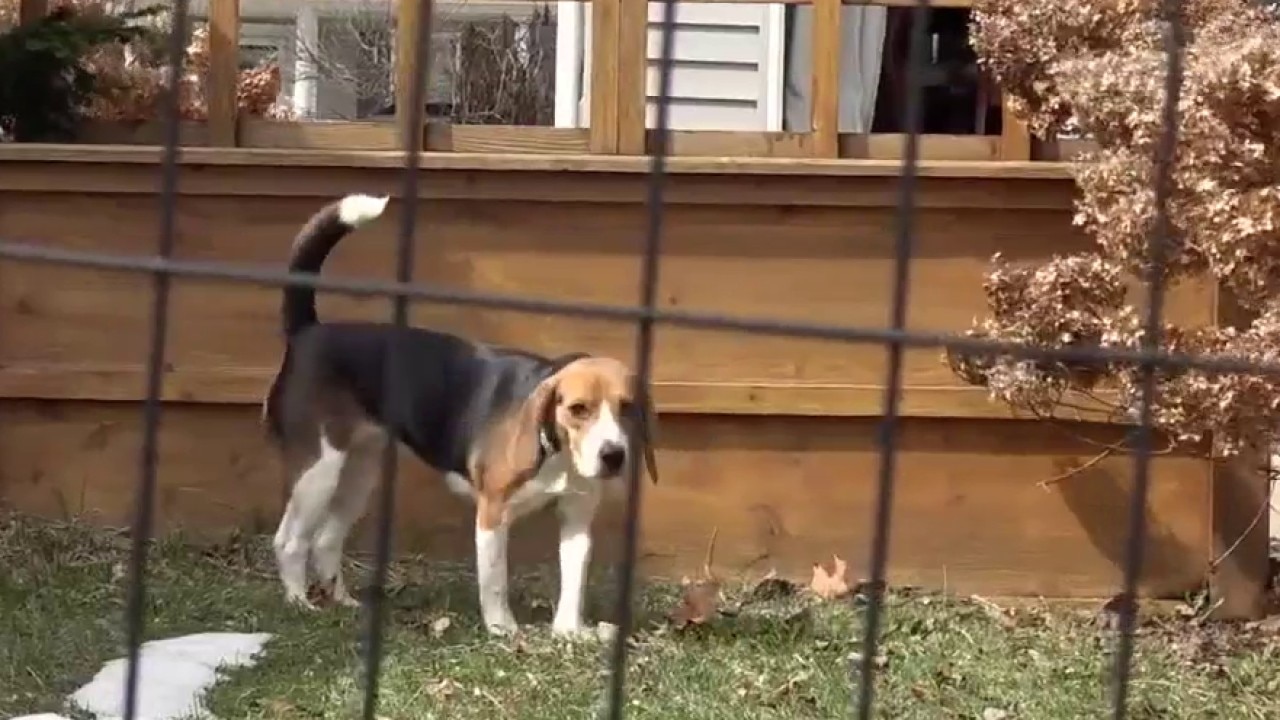
Jeanne Truax isn't measuring Bailey's recovery in weeks or prognoses. She's measuring it in mornings: the first time Bailey wagged her tail without flinching at the follow-through, the first time she came to find them in a different room on her own, the first time she stood at the back door with intent — with the idea that she wanted to go somewhere, not that she was being taken somewhere.
That's the thing about a dog who has spent her whole life oriented toward what others need from her. The day she starts wanting something for herself — a smell to investigate, a warm spot to lie in, a person to follow — is the day the numbers stop mattering as much.
Bailey is a beagle. She was bred to follow a nose through thickets and meadows for as long as it takes, through all kinds of weather, without giving up. She is applying exactly that tenacity now — to the slow and patient work of learning that she has arrived somewhere she is allowed to stay.