14,200 years ago, a dog walked with people through the Ice Age. Its genome is in your dog
Doges Editorial · 2026-05-20 · 6 min read

A landmark Nature study sequenced 216 ancient canid genomes and found that genetically distinct dogs were already living with hunter-gatherers across Europe by 14,200 years ago — long before farming, long before anything we call civilization.
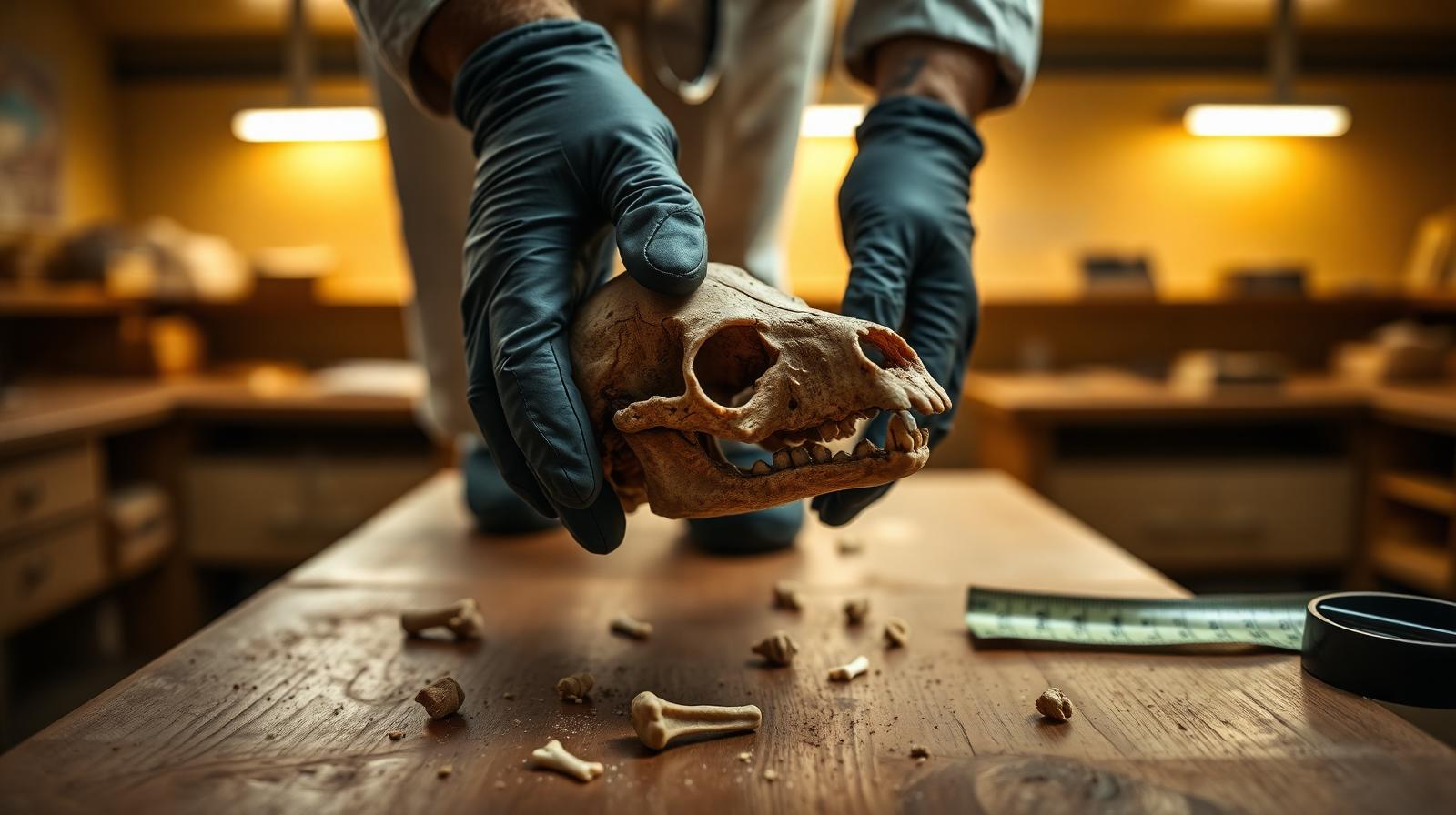
Somewhere above Lake Constance in northern Switzerland, a dog walked alongside people during the last gasp of the Ice Age. The winters were brutal, the landscape stripped bare by glacial retreat, and yet this dog and its human companions were moving through it together. When the dog died, its bones came to rest at a cave called Kesslerloch. This spring, scientists extracted DNA from those remains and found something that should make any dog owner pause: it was already, unmistakably, a dog like ours.
That dog died 14,200 years ago. A new study published in Nature — led by Anders Bergström at the University of East Anglia and Pontus Skoglund at the Francis Crick Institute in London — analyzed 216 ancient canid remains from across Europe and Anatolia, including 181 from the Paleolithic and Mesolithic periods, and built the first genome-wide picture of how dogs came to be woven into European life. The findings rewrite what we thought we knew about when and why dogs became ours.
What the researchers actually did
The team developed a genome-wide DNA capture technique that enriched ancient endogenous DNA by up to one-hundredfold — essentially amplifying the faint, degraded genetic material that survives in bones that have been in the ground for millennia. Of the 216 canid remains they studied, they were able to confirm 141 as definitively dog rather than wolf, and to map how those dog populations were related to each other across time and geography.
What they found rewrites the timeline. By 14,200 years ago — well before the invention of agriculture, well before horses were domesticated, well before anything we usually associate with organized human civilization — genetically distinct dog populations were already living alongside hunter-gatherers across Europe and Anatolia. The Kesslerloch dog wasn't an experiment at the edge of domestication. It was part of a relationship that had already been running for generations.
The oldest dog data that we recovered are from a 14,200-year-old dog from the Kesslerloch site in Switzerland... dog genetic diversification had started well before 14,200 years ago.
— Bergström et al., Nature (2026)
When the farmers arrived and brought their own dogs
Around eight to nine thousand years ago, a wave of Neolithic farmers moved out of Anatolia and into Europe, spreading agriculture and a new way of organizing life. They brought dogs. Those Anatolian dogs — genetically distinct from the Ice Age dogs that European hunter-gatherers had been living with — arrived as a second lineage, partly displacing, partly blending with the dogs already there.
This mirrors what happened to the humans themselves. But with one crucial difference: the dog replacement was less complete. Across most of Europe, Neolithic farmers almost entirely replaced the local hunter-gatherer human populations, genetically speaking. The dogs were more resilient. Mesolithic dog ancestry — the Ice Age lineage that predated farming — survived in the genomes of Neolithic dogs, and the study found it can still be detected in European dog breeds today.
Mesolithic dogs contributed substantially to Neolithic, and, ultimately, probably also modern, European dogs.
— Bergström et al., Nature (2026)
Dogs predate everything else we domesticated
The study reaffirms something easy to overlook: dogs were the only domestic animal to predate agriculture. Cattle, sheep, horses, pigs — all came later, once humans had settled and began farming fixed plots of land. Dogs came earlier, in the mobile world of hunter-gatherers who moved with the seasons, following game across vast, cold landscapes that looked nothing like a farm. They chose each other in motion.
This is not just archaeological trivia. It shapes the fundamental nature of the dog-human relationship in a way that other domestic animals don't share. Cattle relate to humans through labor and food production. Dogs relate to humans through proximity and movement. The first dogs weren't working animals in a field. They were companions on the walk — on thousands and thousands of walks, before any of us thought to count them.
What the Kesslerloch dog's genome already showed
The 14,200-year-old Kesslerloch dog already showed greater genetic affinity to later European dogs — Mesolithic, Neolithic, and modern — than to the dogs living contemporaneously in Asia. Genetic diversification between dog populations had already started before 14,200 years ago. Which means our dogs didn't spring from a single moment of ancient taming. They emerged from a long, messy, co-evolutionary conversation between humans and wolves that gradually, irreversibly, produced something new.
The study also found that dogs overall show about a one-third reduction in genetic diversity compared to late-glacial wolves — a classic signature of domestication, the result of a founding population that began living in close proximity to humans and being selectively shaped by that closeness. By 14,200 years ago, that process was already well advanced.
Your dog is a layered mosaic, not a tame wolf
The paper's most useful takeaway for anyone who lives with a dog: stop thinking of your dog as a wolf with different manners. The dog on your couch is a layered genetic mosaic — Ice Age hunter-gatherer dogs, Neolithic farming dogs, Bronze Age herding dogs, and every breeding decision made in the last few centuries, stacked on top of each other over 14 millennia. That deep ancestry quietly shapes behavior, learning style, and the specific way certain breeds move through the world.
What 14,200 years sounds like on a Tuesday morning
You wake up before the alarm because the dog does. You put on clothes in the dark, find the leash on the hook where it always is. The dog turns circles at the door the way it always does. You step out into whatever weather the morning has arranged, and the dog's nose goes down immediately, reading the night's events in the grass along the fence.
The Kesslerloch dog 14,200 years ago did something functionally similar, alongside a person whose name we will never know, in a landscape buried under metres of sediment. That dog didn't know it was participating in something that would last. It was just walking with its people in the cold. Bergström and his colleagues have now shown that some of its genome, passed forward through 140 centuries of dogs, is almost certainly in your dog too.