Every walk you take is protecting your dog's brain
Doges Editorial · 2026-05-22 · 5 min read
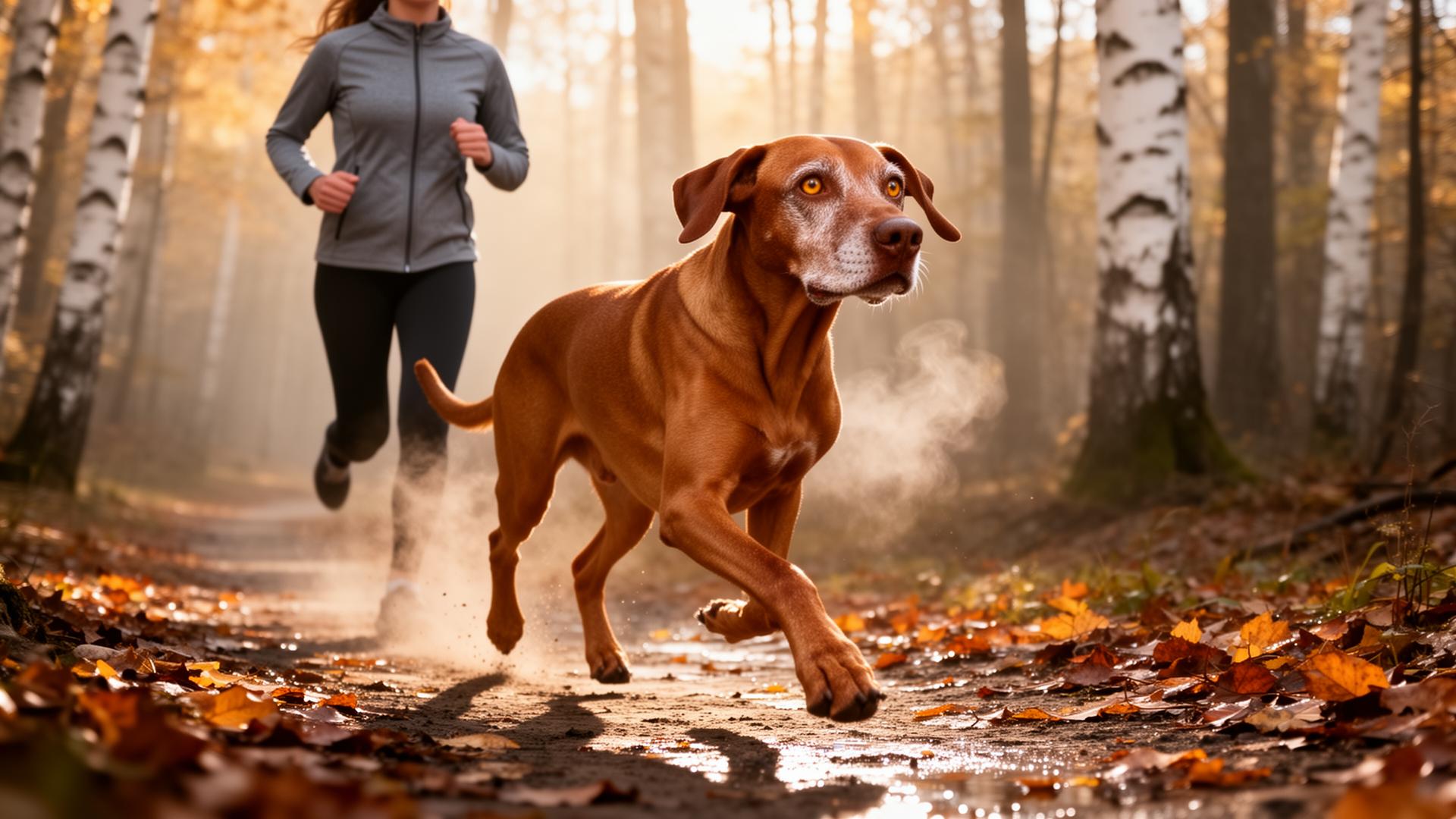
A 2026 study of 858 senior dogs found that a lifetime of shared physical activity — not breed, not diet, not genetics — is the single strongest protection against canine cognitive decline. Small dogs benefit the most and are helped the least.
By the time a dog reaches 15, research suggests more than half will show signs of what veterinarians call Canine Cognitive Dysfunction — the dog's version of Alzheimer's. The disorientation in familiar rooms. The standing in corners, staring at the wall. The aimless wandering at 2 a.m. that breaks owners' hearts. For years this felt like an inevitable feature of getting old.
A study published on April 27, 2026 in Frontiers in Veterinary Science challenges that sense of inevitability in a specific and practical way. Researchers at ELTE Eötvös Loránd University in Budapest surveyed 858 senior dogs — all older than seven — and their owners, asking about lifetime activity, what sport or activities they did together, and why the owner had originally chosen their breed. Then they matched those answers against scores on a validated cognitive dysfunction scale.
The results produced a clear ranking. Of all the lifestyle factors they measured, the single strongest protection against cognitive decline wasn't diet, wasn't breed, and wasn't veterinary care. It was whether the dog had spent a lifetime doing physically and mentally demanding things together with their person. Lead by researchers Lugosi, Dobos, and Pongrácz, the study is covered in detail by PawPulse (pawpulsedog.com), which also links to the original paper via DOI 10.3389/fvets.2026.1833531.
What the Budapest researchers found
The study divided dogs into four groups by function: cooperative working breeds (Border Collies, German Shepherds, Labradors), independent working breeds (Huskies, sighthounds), toy breeds (Yorkies, Maltese, Chihuahuas), and mixed-breed companions. They measured lifetime sport participation — not just current activity, but the dog's whole history across its life.
Dogs that had been sports companions their entire lives — agility, canicross, herding trials, IGP, scent work, dock diving — scored dramatically better on the Canine Cognitive Dysfunction Rating Scale than dogs kept as domestic or breeding animals. The association was strong: p < 0.001, meaning the probability of this pattern appearing by chance is less than one in a thousand.
An active life, shared with you, is the closest thing dogs have to a dementia drug — and it is free.
— ELTE research team summary, as reported in Frontiers in Veterinary Science
You don't need a competition title
The more surprising finding was this: even without formal sport, joint activity with the owner was independently protective — reaching its own statistical significance at p = 0.037. The dog didn't need an agility ribbon. Daily off-leash hikes, trick training, scent games in the kitchen, consistent fetch — these counted. What mattered was the combination of physical demand, mental engagement, and doing it together with a human.
That last part — together — appears to be doing something that solo backyard time cannot replicate. The social and cognitive load of working with a person, navigating their cues, reading their body language, processing a changing environment alongside them — all of that seems to actively build neural resilience in ways that lying in a sunny patch of garden does not.
The study authors define meaningful joint activity broadly: structured sport (agility, flyball, canicross, rally obedience), working tasks (search and rescue, scent detection, hunting trials), or consistent owner-led sessions — long hikes, swim sessions, trick training, nosework classes, even a reliable daily game of fetch. The common thread is regular, demanding, mentally present activity done with the person on the other end of the leash.
Small dogs are the hidden risk group

Here is where the study gets uncomfortable for many owners. Toy breeds — Yorkies, Chihuahuas, Maltese, Pomeranians, Bichons — are precisely the dogs least likely to be enrolled in sport, taken on demanding hikes, or given structured training into old age. They are often carried. They are often kept warm and still. They are often given a gentle pass on anything that feels like real work.
But toy breeds also live the longest — routinely reaching 15 to 17 years — which means they spend more years inside the CCD risk window than almost any other dog. And the ELTE data shows they benefit the most from joint activity. Cooperative and independent working breeds had some built-in cognitive resilience even when only sporadically active. Toy breeds and mixed-breed companions did not. They only aged well cognitively when their owners actively and consistently engaged them.
The practical implication is blunt: if you have a Maltese who mostly sits on the sofa, the study's findings suggest that dog needs structured engagement more urgently than a Border Collie who works sheep on weekends.
Why how you chose your dog also matters
One finding in the paper is easy to overlook and worth a moment. Owners who chose their dog based on health and sound behavior (p = 0.042) or high breeding quality (p = 0.004) when acquiring their puppy ended up with significantly lower CCD scores years later. Owners who chose their breed because it was fashionable or rare? No protective effect at all (p = 0.830).
The researchers suggest this reflects something real about owner mindset. People who thought carefully about health at the point of acquisition may be the same people who walk more, train more, and engage their dog consistently across its whole life. Intentionality at the beginning tends to show up in the day-to-day.
What to change this week
This is a questionnaire study, not a randomized trial — you cannot cleanly isolate the effect of activity from all the other things that active, engaged owners do differently. The ELTE researchers are careful about that. But the size of the effect (the single strongest predictor in the dataset), the dose-response pattern, and the convergence with long-term data from the Dog Aging Project make the practical takeaway difficult to dismiss.
The CCD risk window typically opens around seven or eight years. Subtle signs — unusual hesitation in a familiar room, a moment of not responding to their name, a slight shift in nighttime sleep — often appear months before any formal diagnosis. The study suggests that prevention starts well before those signs show up, ideally with a pattern of activity established from puppyhood and maintained throughout life.
A passive leash walk along the same familiar sidewalk sits near the bottom of what the study counted as protective. An off-leash trail, where your dog is navigating terrain and making choices, scores higher. Ten minutes of training — 'sit,' 'stay,' 'find it,' anything that requires your dog to think and read you — scores higher than ten minutes of sitting beside you on a bench.
The dog who spends a lifetime working problems out alongside the person on the other end of the leash, the study says, is the dog who keeps those neural connections firing longest. Whatever you were planning to do with your dog this morning — that's the medicine.